
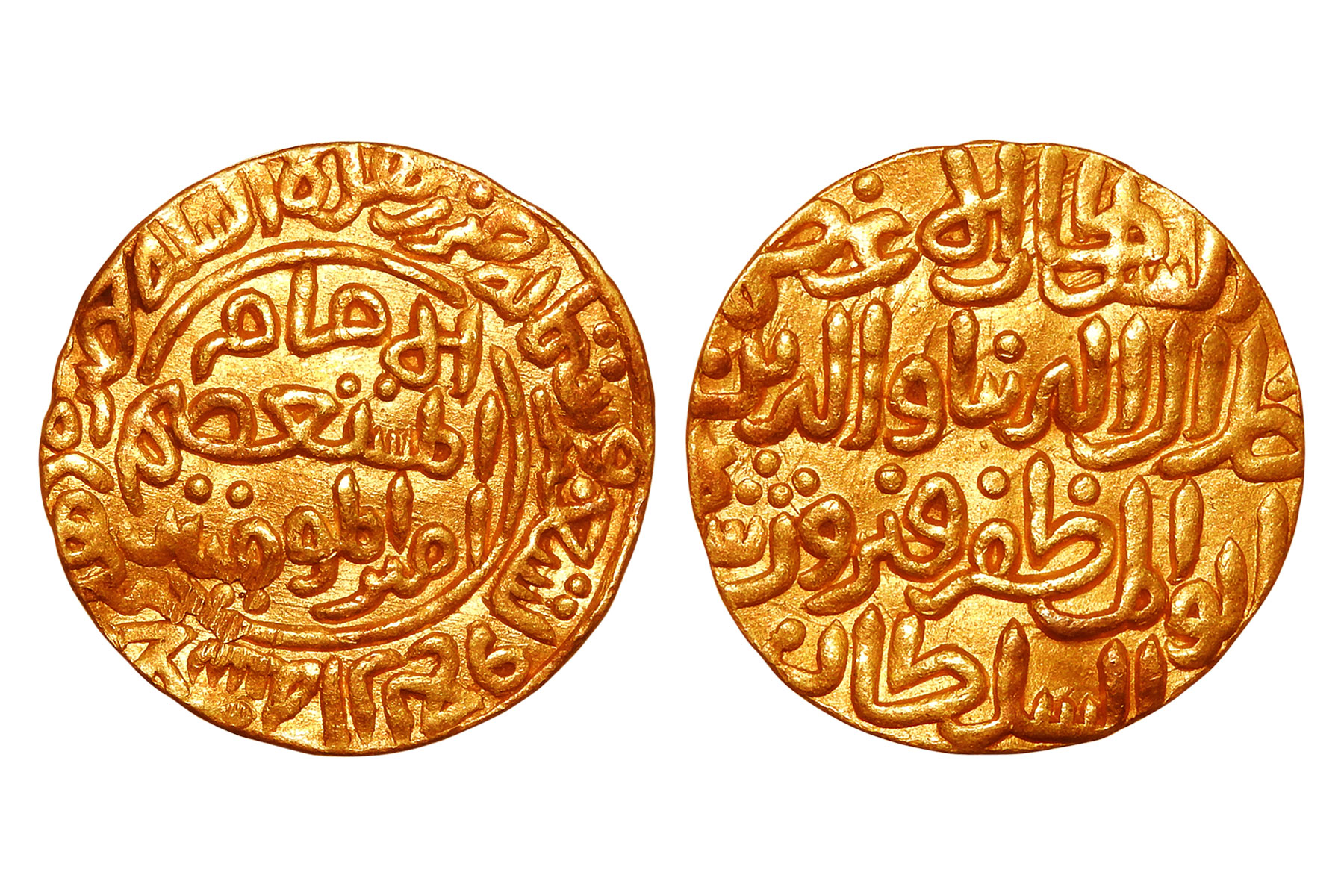
Lot No : 91
Auction No : 8
Delhi Sultanate, Jalal al-din-Firuz Shah(c. 1290-1296CE), Gold Dinar, 10.80grms, Obv. al-sultan al-a'zam jalal al-dunya wa'l din abü'l muzaffar firüz shah al-sulțān, Rev. al-imam legend with caliph al-Must'asim, AH694, Minted at Hazrat Delhi, G&G#D196, Almost Uncirculated, Rare. Jalāl-ud-Dīn Firuz Khalji was the founder and first Sultan of the Khalji dynasty of the Delhi Sultanate, He came to power during the Khalji Revolution, deposing the infant ruler Shams ud-Din Kayumars and ending the preceding Mamluk (Slave) dynasty. Born Malik Firuz, he had been a senior commander under the Mamluks before seizing the throne. His reign was noted for its relatively mild and conciliatory approach, attempts to stabilize the nobility, and repelling a Mongol invasion. Jalāl-ud-Dīn also led campaigns that captured Mandawar and Jhain, though he failed to take the stronghold of Ranthambore. In 1296, he was assassinated by his nephew and son-in-law, Alauddin Khalji, who succeeded him and began a more aggressive phase of Khalji rule
160000
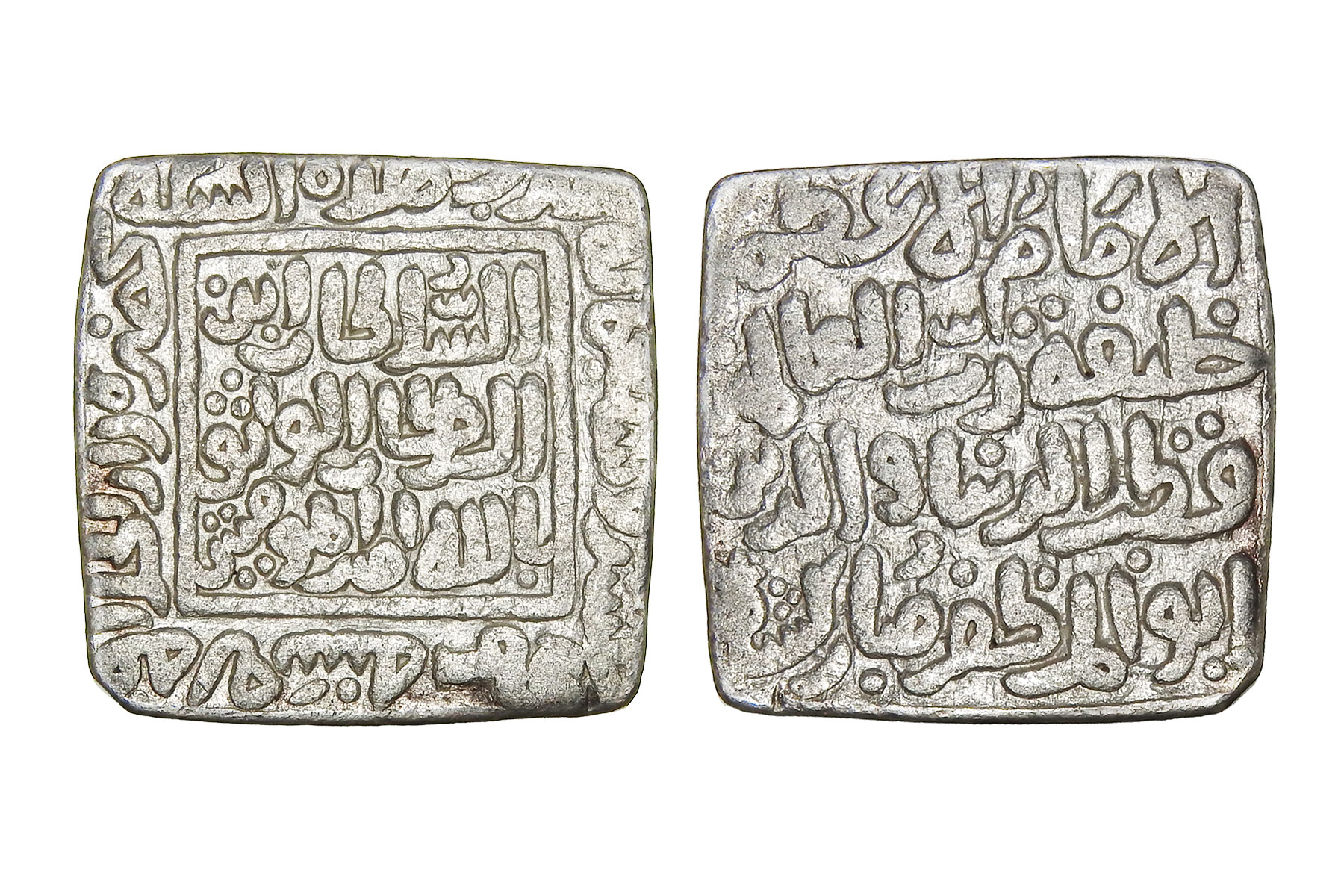
Lot No : 92
Auction No : 8
Delhi Sultanate, Khalijis, Qutb al-Din Mubarak, (c. 1316-1320CE), Silver Square Tanka, 10.50grms, AH719, legend: al-imām al-a'zam khalifa rabb al-'alamin qutb al-dunya wa'l dīn abū'l muzaffar mubārakshāh al-sultan ibn al-sultan al-wathiq billāh amir al-mu'minin, G&G#D261, Very Fine+, Rare Qutb al-Din Mubarak was the son of Alauddin Khalji. After Alauddin’s death, he ascended the throne as a minor, struggled to control rebellious nobles, and was ultimately poisoned by palace conspirators, leaving the Sultanate unstable. His assassination paved the way for Shihabuddin Omar Khalji, his cousin, to briefly succeed him before Jalaluddin Khalji’s consolidation of power.
18000
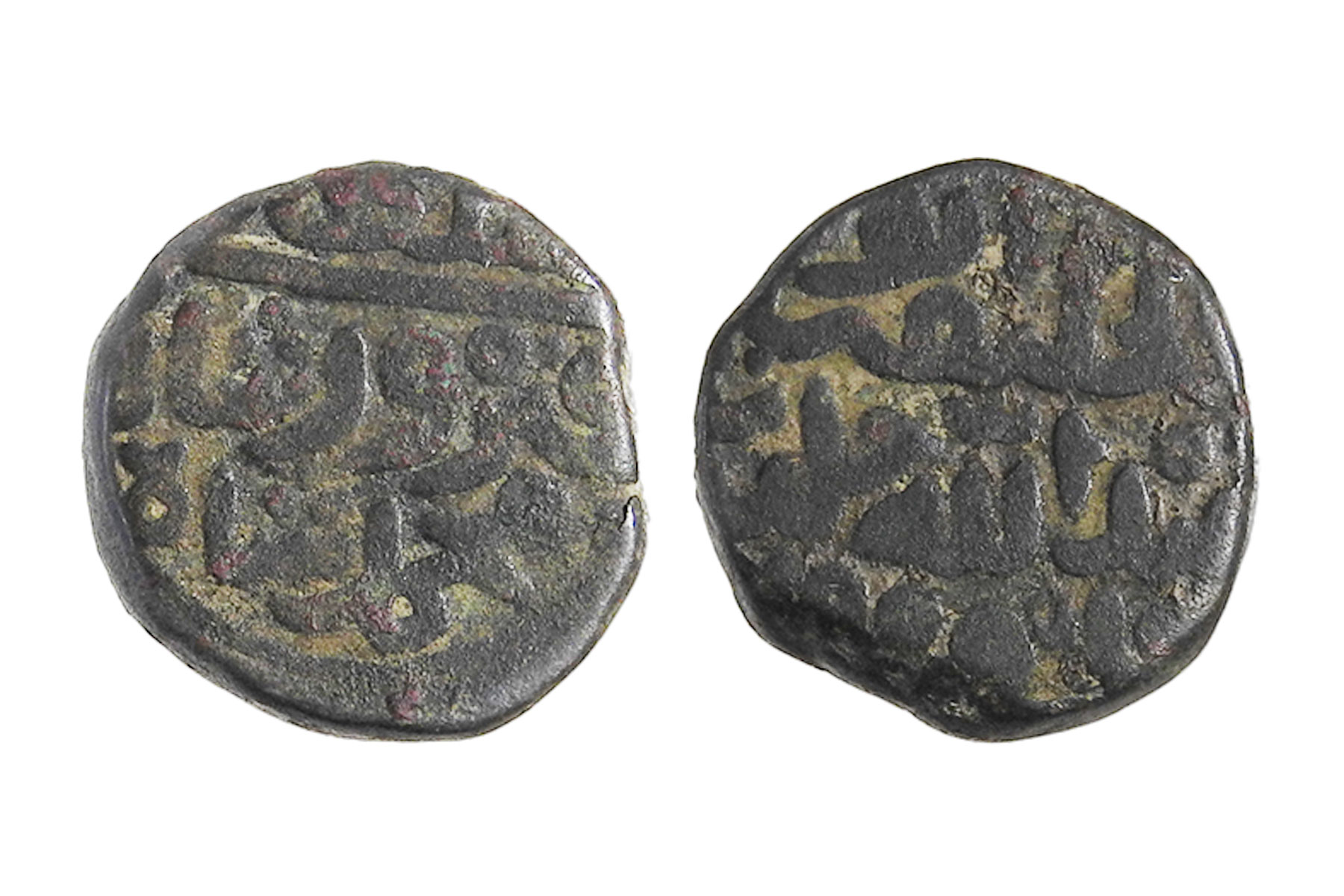
Lot No : 93
Auction No : 8
Delhi Sultanate, Tughluqs, Muhammad bin Firuz as Regent, (c. 1390-1392CE), Billion 5/6th Tanka, 8.80grms, with the name of the caliph Abu Abd Allah, Obv. Muhammad shah fīrüz shāh sulțānī read from the bottom upwards, Rev, al-khalifa abū 'abd allāh khulidat khilafatuhu, G&G#D588, Very Fine+, Very Scarce. Muhammad bin Firuz, better known as Firoz Shah Tughlaq, was the son of Rajab, a younger brother of Ghiyas ud-Din Tughlaq, making him the cousin of Muhammad bin Tughlaq. He rose to power during a crisis and spent his reign suppressing provincial rebellions, fighting Rajput chiefs, conducting campaigns in Bengal, Sindh, and Gujarat, preferring tributary settlements, and relying on Turkic nobles and frontier governors as key allies.
5500
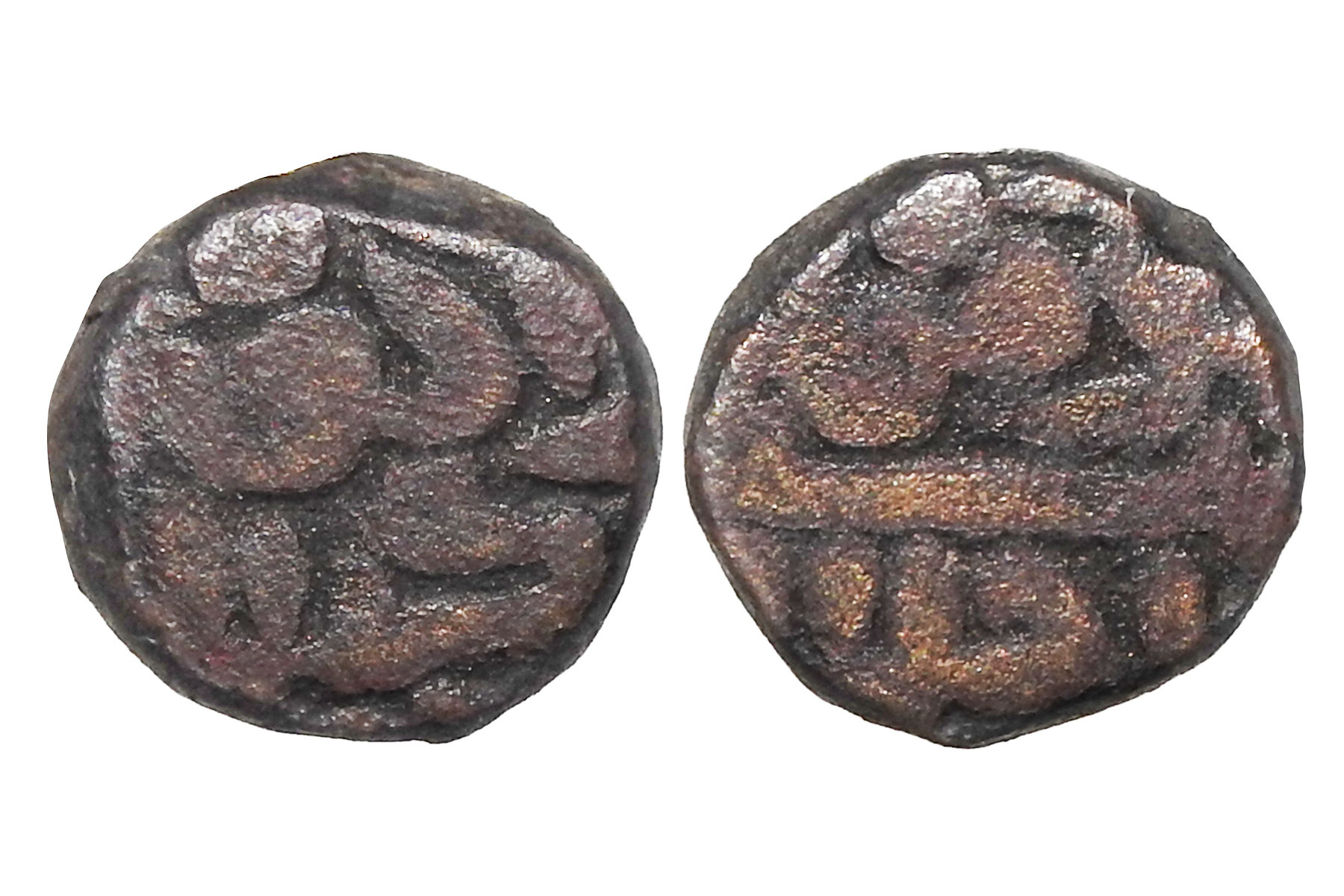
Lot No : 94
Auction No : 8
Delhi Sultanate, Ibrahim Shah Lodi(c. 923-932CE), 1/4 Tanka, 2.10 grms, Obv. al-mutawakkil ala'l rahman ibrahim shah sikandar shah sulļān, Rev. fi zaman amir al-mü'minin khulidat khilafatuhu, G&G#D713, Ibrahim Shah Lodi was the last ruler of the Lodi dynasty of Delhi. His reign was marked by internal rebellions from Afghan nobles and conflicts with Rajput forces under Rana Sanga. In 1526, he was defeated and killed by Babur at the First Battle of Panipat, leading to the establishment of the Mughal Empire in India.
8000

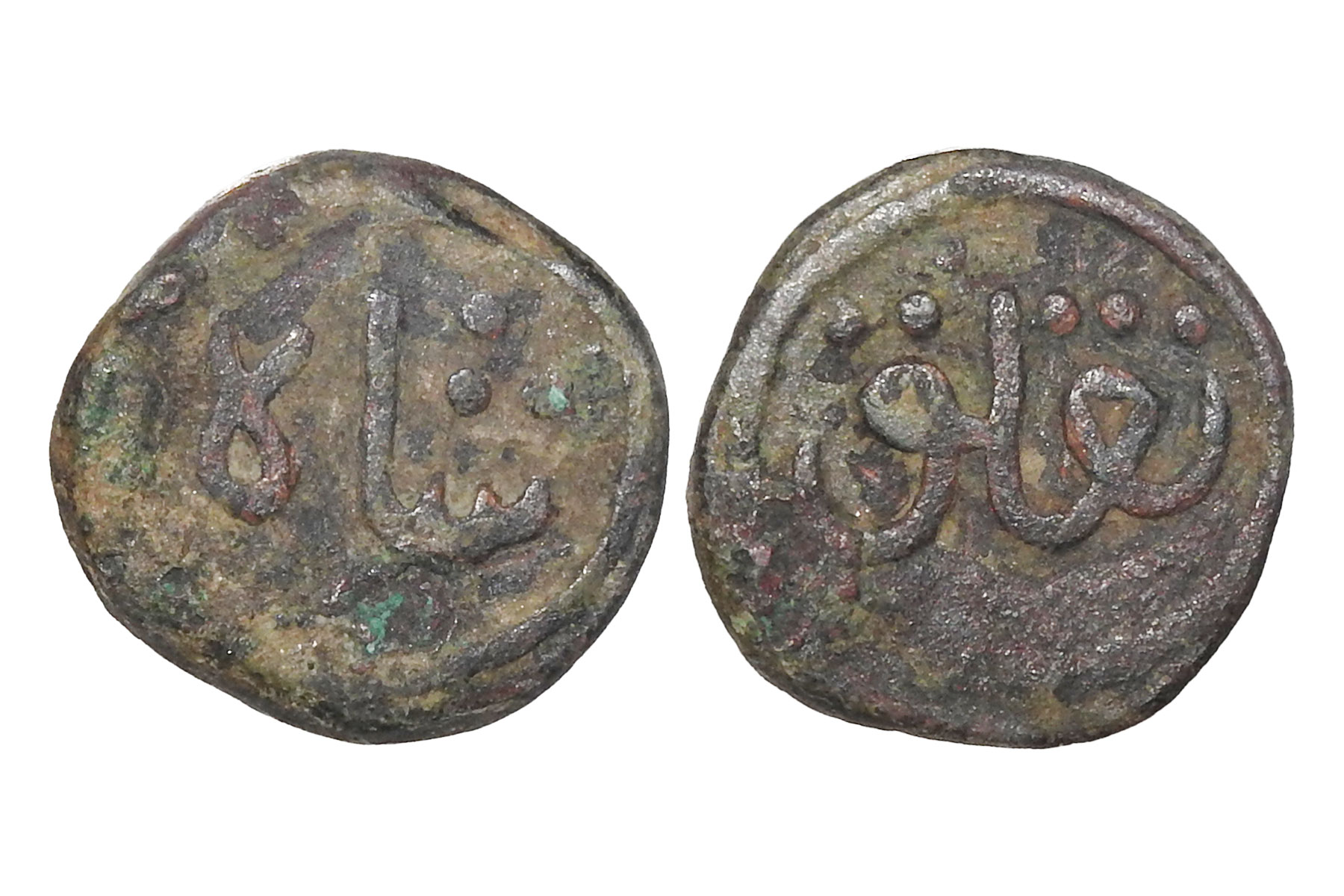
Lot No : 96
Auction No : 8
Delhi Sultanate, Tughluqs, Ghiyath al-din Tughluq, (c. 1320-1325CE), Copper Paika, 3.50grms, Obv. Tughluq, Rev. Shah, G&G#D314, Very Fine. Ghiyath al-Din Tughluq founded the Tughluq dynasty, defeated the Khaljis, crushed rebellions in Bengal, Warangal, and the Deccan, repelled Mongol threats, restored financial stability by reversing harsh taxes, and built Tughlaqabad Fort, re-establishing firm central authority in Delhi.
1200

Lot No : 97
Auction No : 8
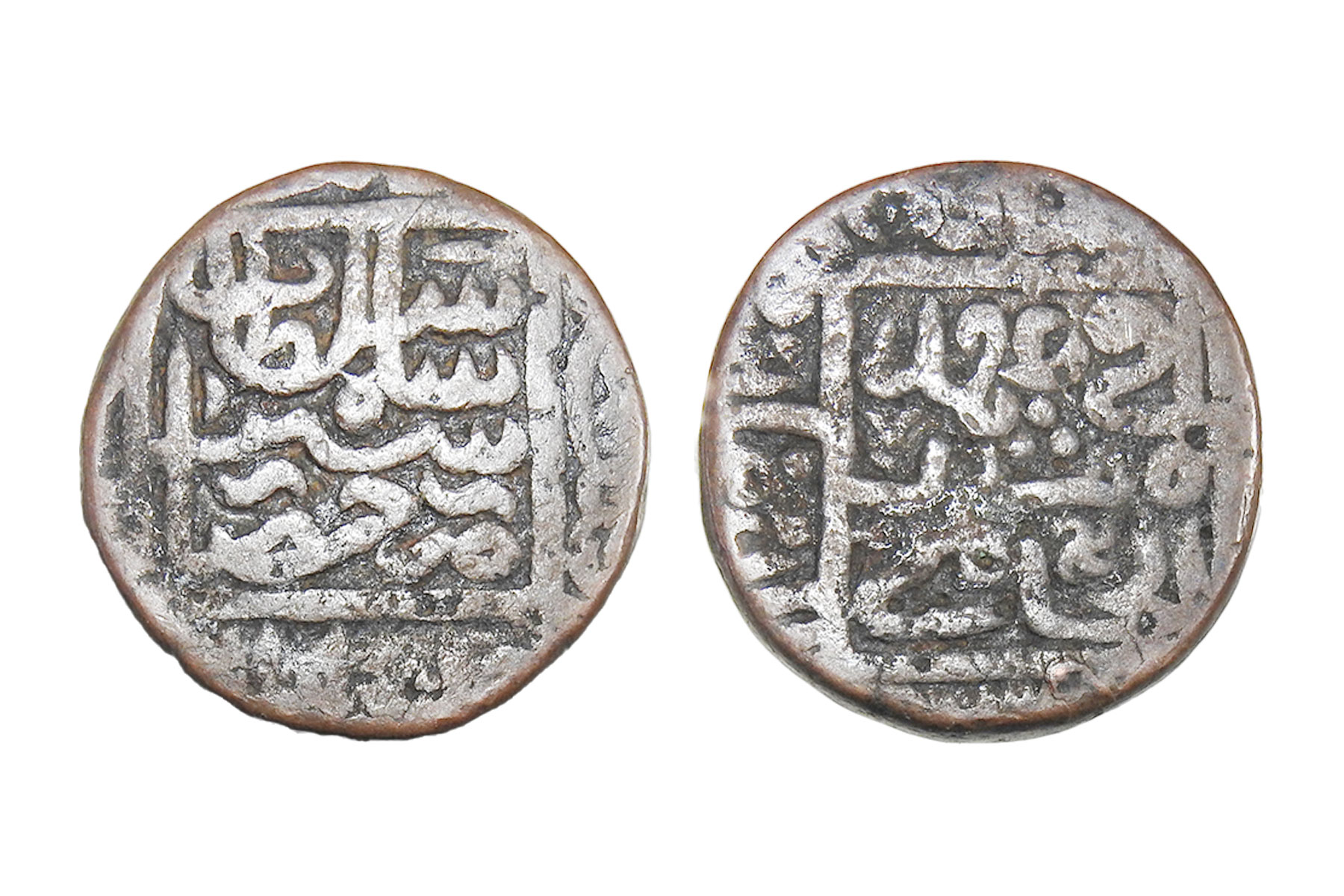
Lot No : 98
Auction No : 8
Delhi Sultanate, Suris, Sher Shah Suri(c. 1538-1545CE), Copper Paisa, 19.80grms, Minted in Hissar, Obv. in square: sher shah sulțān darb abū, Rev. in square: ft 'ahd (a)l-amir al-hāmī. in margins, parts of al-sultan al-'adil al-dīn al-dayyan, Swastik as MintMark, G&G#D857, Very Fine, Very Scarce. Sher Shah Suri had a strong connection to Hisar (Hissar-i-Firoza), which he used as a strategic military and administrative centre in north India. From Hisar, he controlled routes to Punjab and Rajasthan, stationed troops, collected revenue, and secured the northwest frontier during his wars against the Mughals and Rajput chiefs.
2200
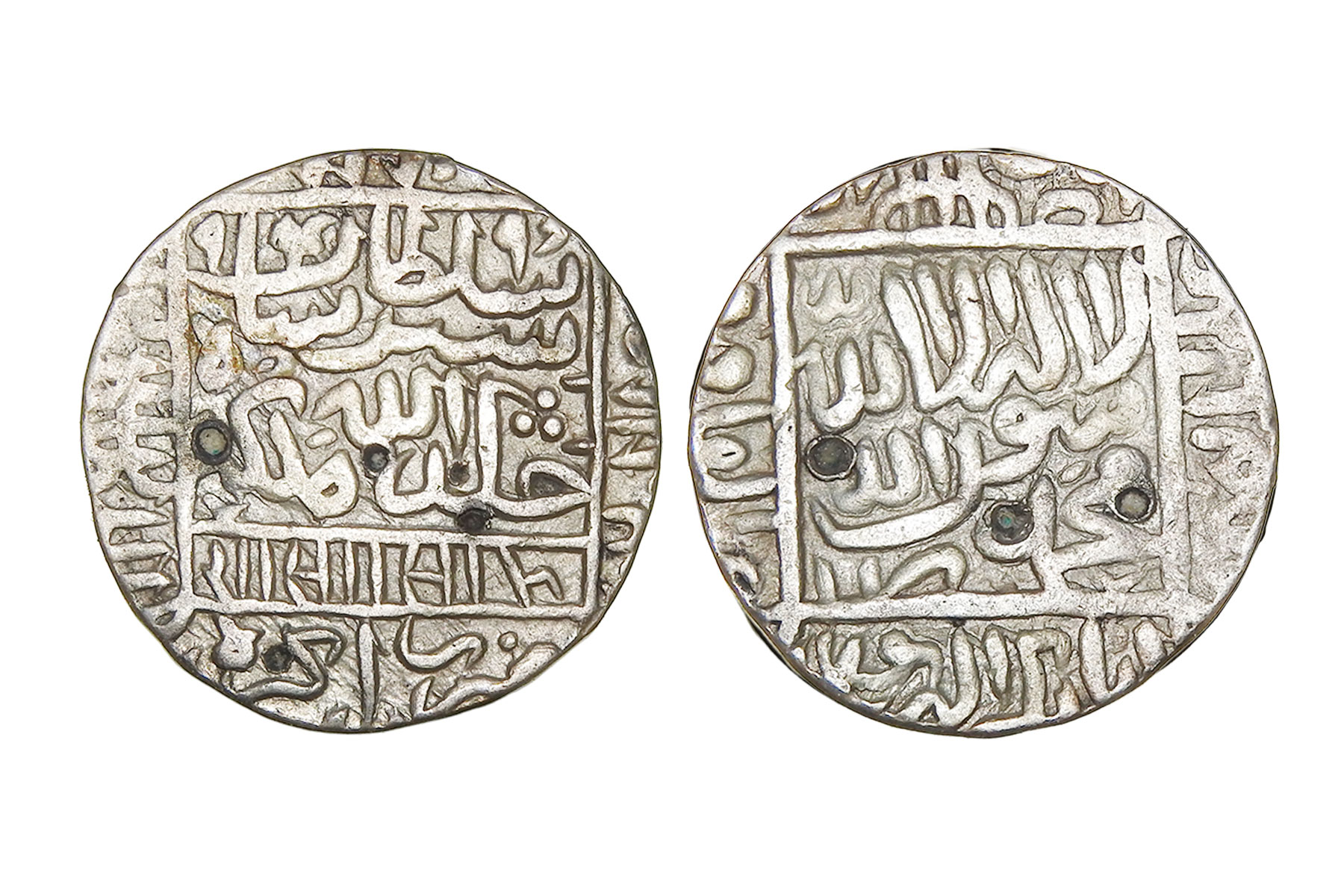
Lot No : 99
Auction No : 8
Delhi Sultanate, Suris, Sher Shah Suri(c. 1538-1545CE), Silver Rupee, 11.20grms, Minted in Agrah, Standard Type, AH949, Names of three caliphs, G&G#D770, Very Fine+, Very Scarce. After defeating Humayun at Chausa (1539) and Kannauj/Bilgram (1540), Sher Shah occupied Agra, seized the Mughal treasury, and used the city as a forward base against remaining Mughal loyalists. He shifted the imperial focus away from Agra toward Delhi, reducing Agra’s political primacy while consolidating Sur control over the Indo-Gangetic plain
3900
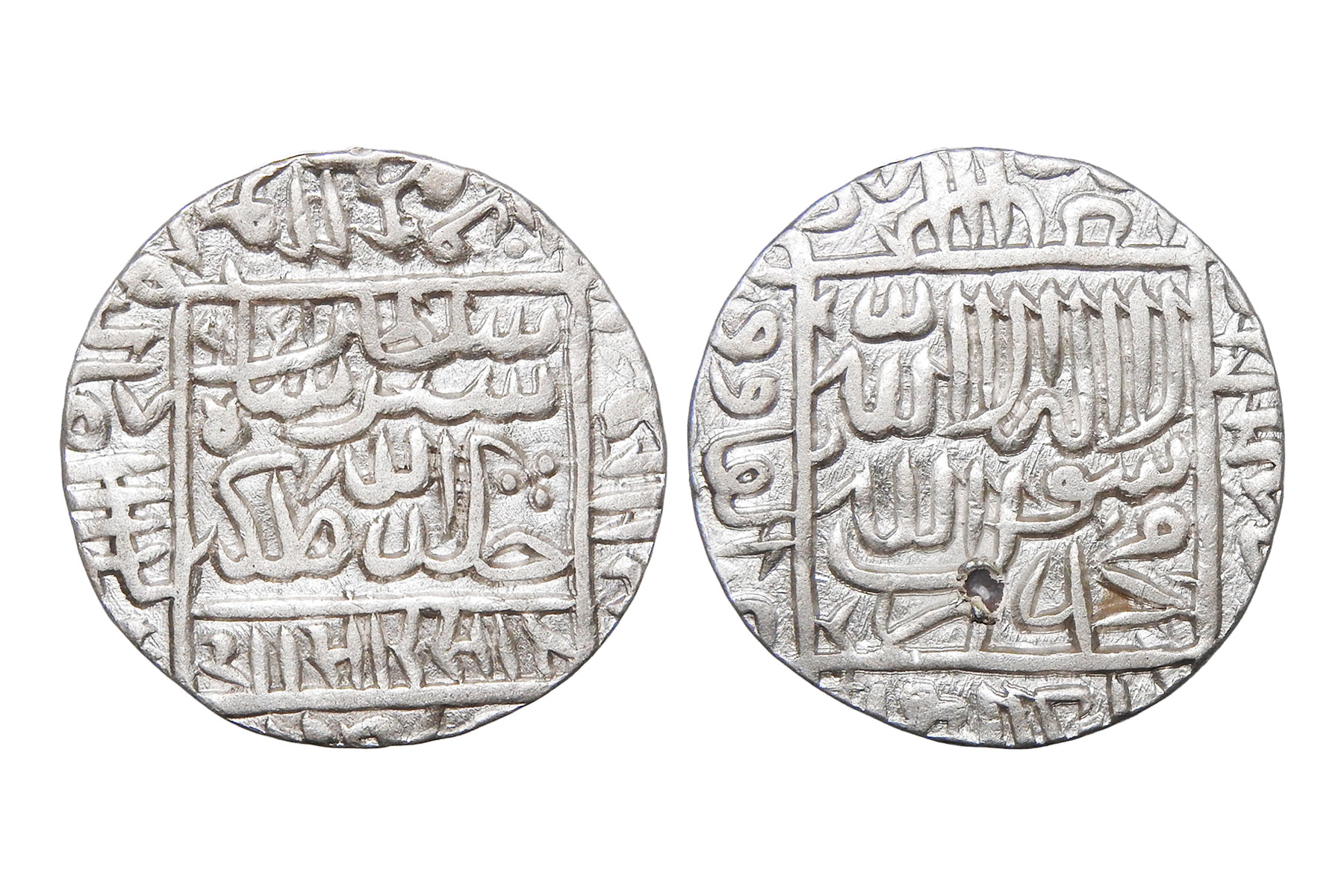
Lot No : 100
Auction No : 8
Delhi Sultanate, Suris, Sher Shah Suri(c. 1538-1545CE), Silver Rupee, 11.40grms, Minted in Gwalior, Standard Type, AH951, Names of three caliphs, G&G#D781, Very Fine+, Scarce. He captured Gwalior Fort in 1540, immediately after defeating Humayun at Kannauj. The fort was used to neutralise Mughal resistance in central India and to secure the route between Agra–Malwa–Rajasthan. Gwalior later became a state prison for political rivals, reinforcing Sur control over north and central India.
 WhatsApp