
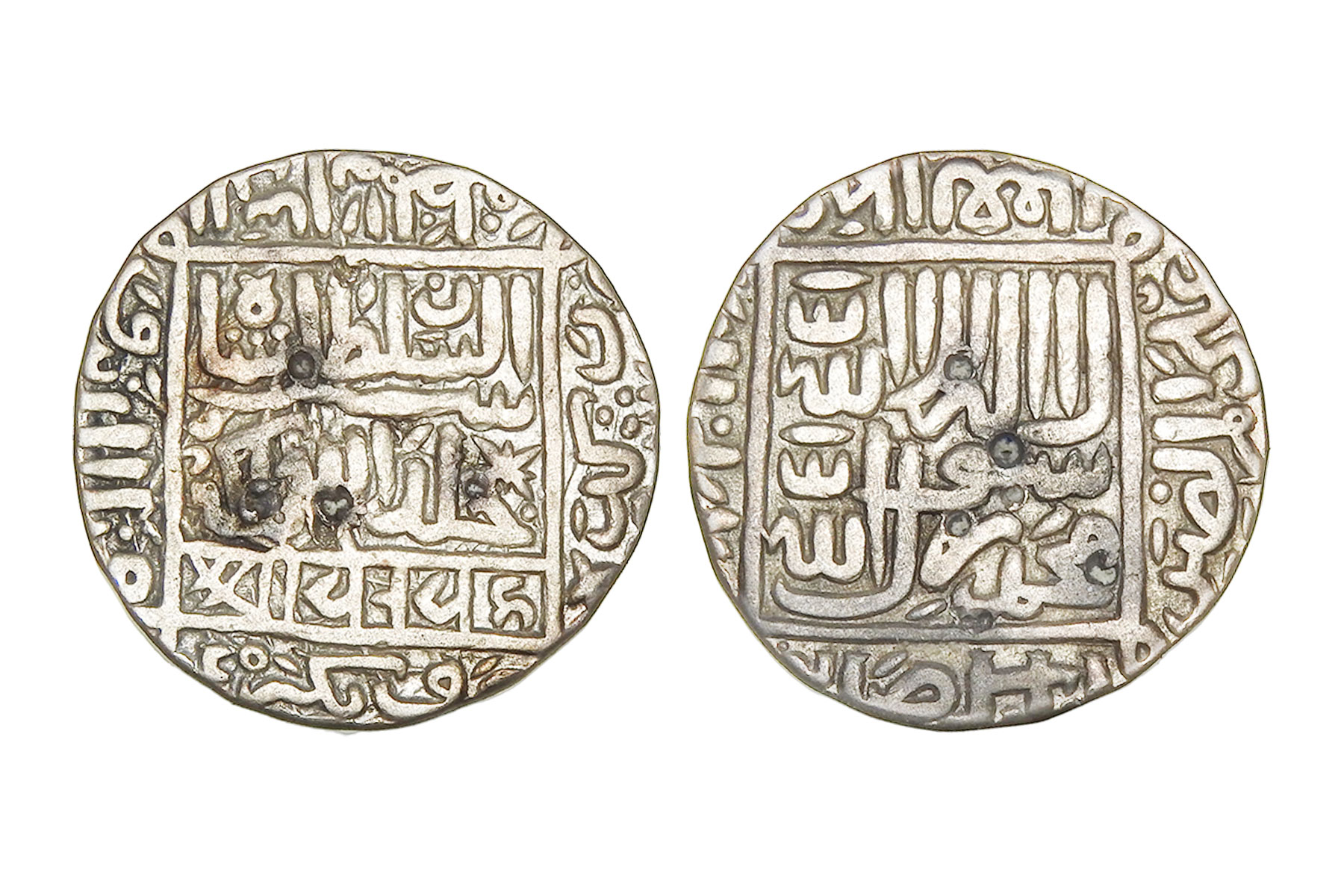
Lot No : 101
Auction No : 8
Delhi Sultanate, Suris, Sher Shah Suri(c. 1538-1545CE), Silver Rupee, 11.20grms, Minted in Shergarh Bakkar, Standard legends within square on both sides. The mint-name is written shergadh 'urf shiqq bakkar, The word shigg is an administrative area, AH950, G&G#D804, Very Fine+, Rare Sher Shah Suri captured Bukkur (Bakkar) Fort on the Indus around 1541, renaming it Shergarh. The conquest was aimed at blocking Humayun’s escape route toward Sindh and Persia and cutting Mughal-aligned Afghan chiefs in the region. From Shergarh, Sur forces controlled river traffic on the Indus and pressured Humayun and his ally Shah Hasan Arghun, forcing the Mughals further west.
3900
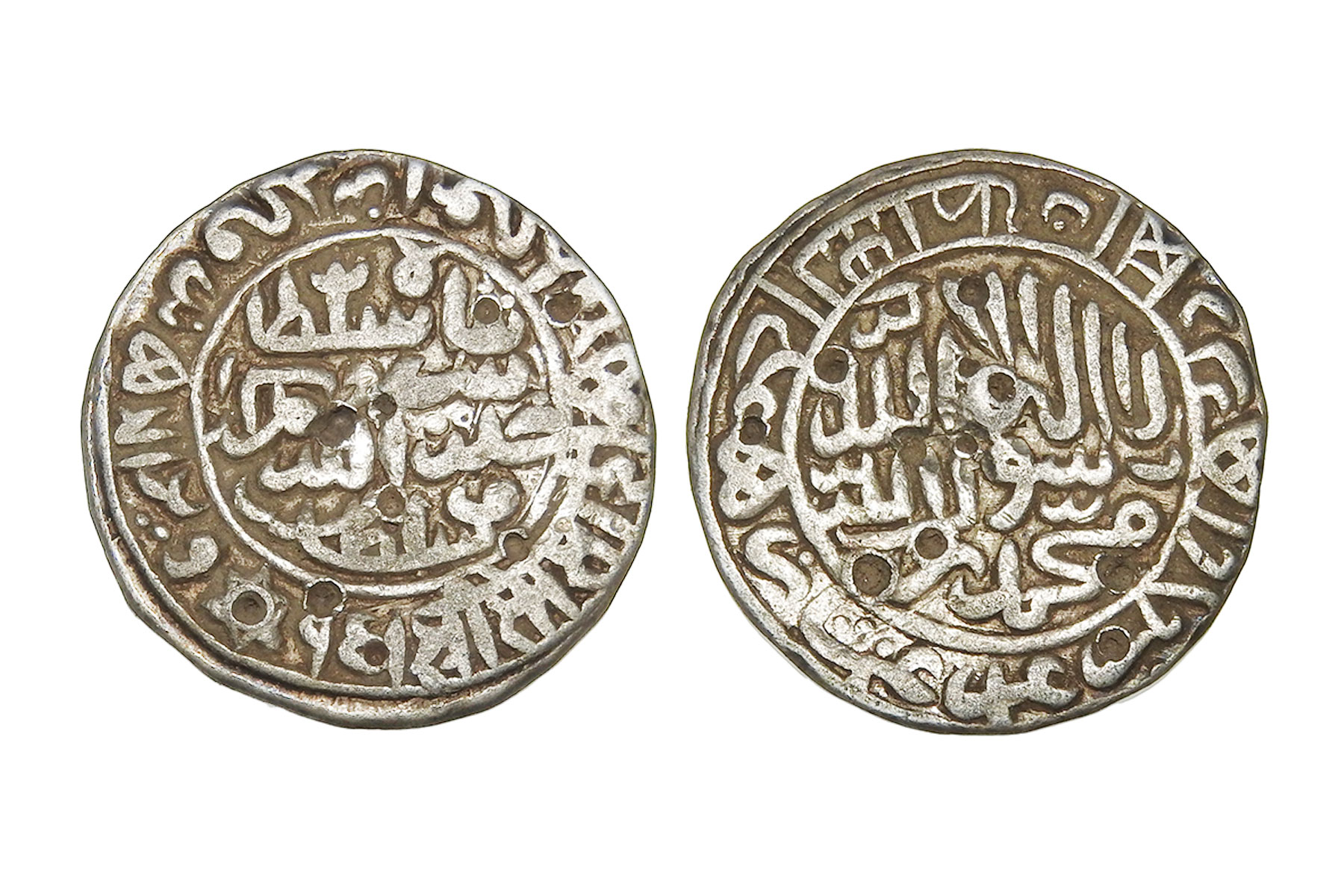
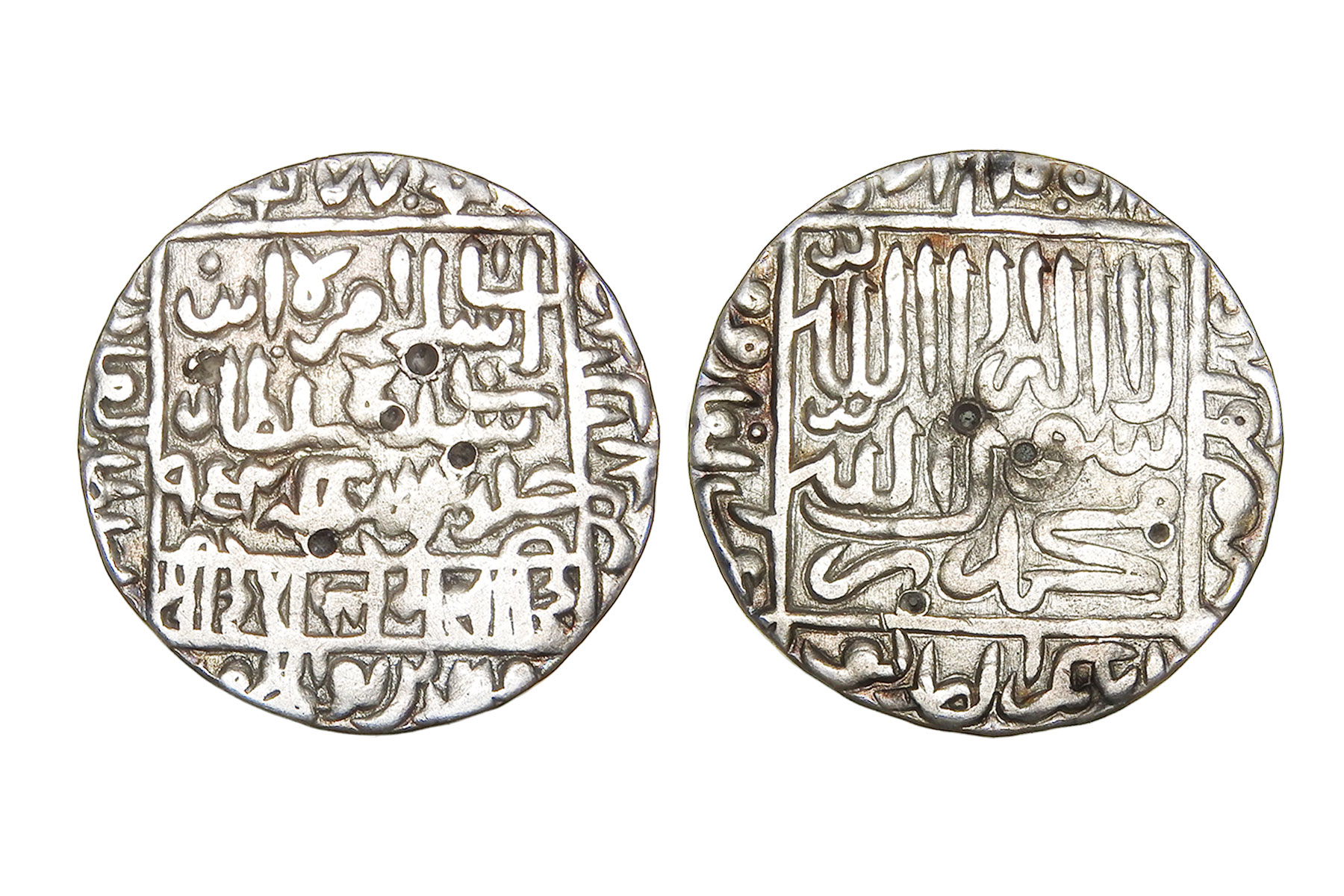
Lot No : 103
Auction No : 8
Delhi Sultanate, Suris, Islam Shah Suri(c. 1545-1552CE), Silver Rupee, 11.10grms, Mintless type, AH954, G&G#D980, Usual legends, caliphs type 3, Both sides within square, 1477 in obverse top margin. A Bengal type, probably struck at the provincial capital, Large Flan Size, Very Fine+, Scarce He crushed Afghan rebellions led by Adil Shah Suri, Ibrahim Khan, and eastern Afghan chiefs in Bihar and Bengal. He fought Rajput rulers in Malwa and Bundelkhand, besieged Gwalior, and kept constant pressure on Humayun, preventing any Mughal comeback until his death. No lasting alliances—rule sustained by force.
3300
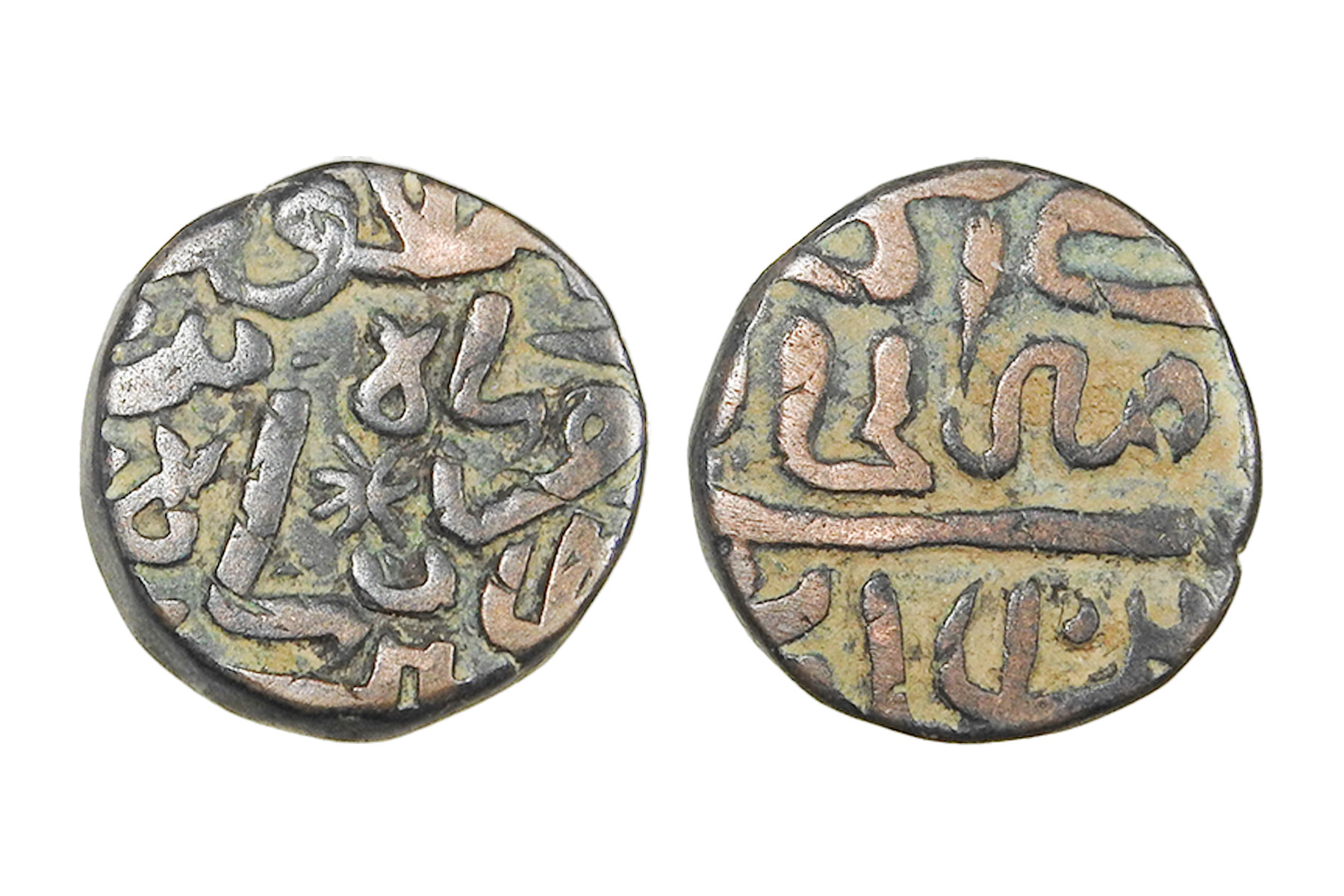
Lot No : 104
Auction No : 8
Delhi Sultanate, Suris, Islam Shah Suri(c. 1545-1552CE), Copper Paisa, 20.60grms Minted in Shahgarh, AH959, Mintmark as Lion, G&G#D1014, Very Rare Mint, only a few seems to have surfaced till date. Shahgarh(present-day Bukkur (Bakhar) Fort near Sukkur, Sindh, Pakistan) was a short-lived regional mint, active mainly during Islam Shah’s consolidation after crushing Afghan rebellions, resulting in limited output compared to Delhi or Agra. Its importance lies in reflecting Sur military control over frontier territories and Islam Shah’s effort to enforce central authority through coinage. Shahgarh issues are therefore historically significant and less frequently encountered
4300
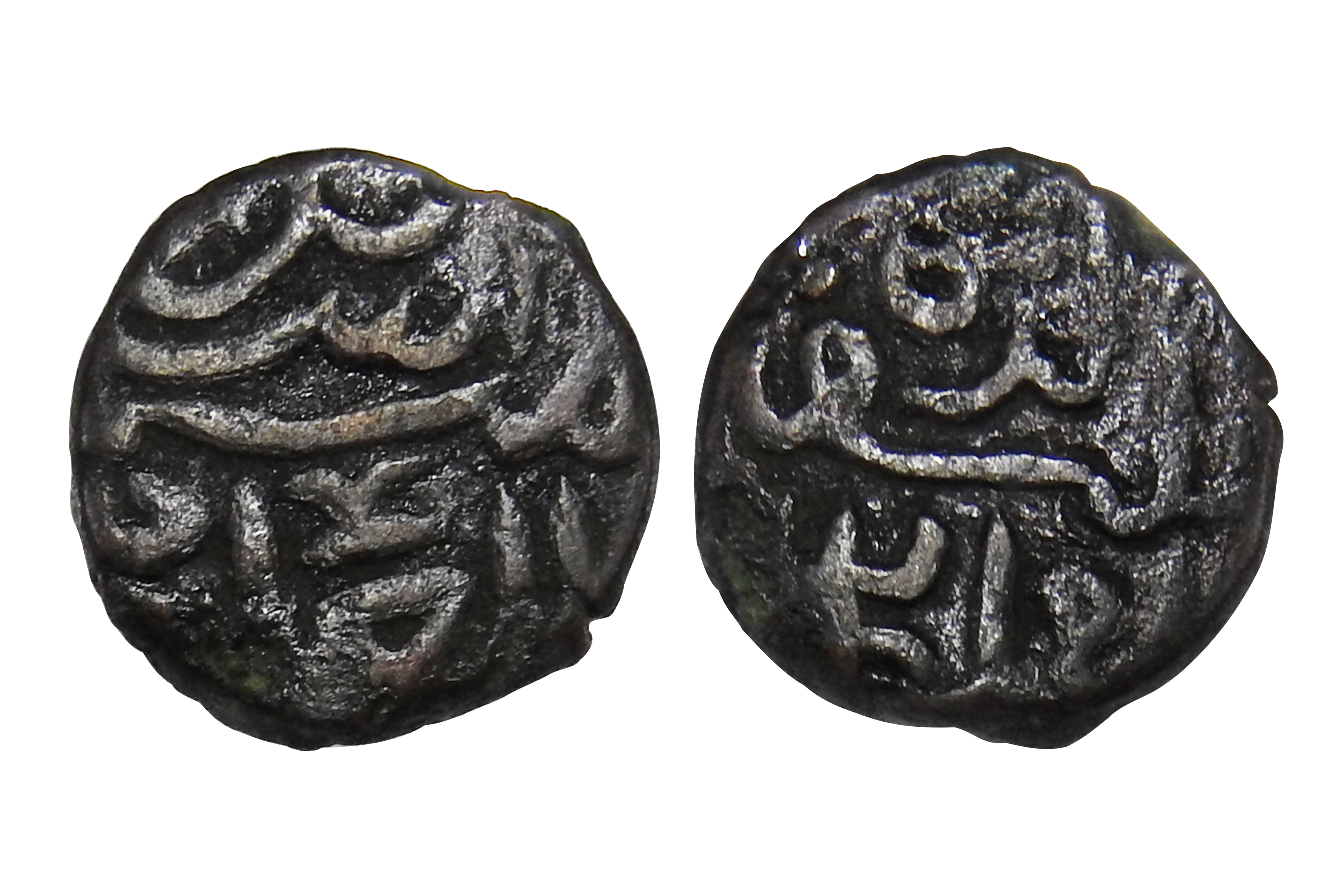
Lot No : 105
Auction No : 8
Delhi Sultanate, Suris, Islam Shah Suri(c. 1545-1552CE), Copper 1/2 Paisa, 9.20grms, Mintless Type, G&G#D1068, NW TYPE H, Very Fine+, Very Rare. ½ paisas are rarer than paisas because Islam Shah prioritised full paisas for army payments and tax circulation, while ½ paisas were struck sporadically and in limited numbers for local markets. Their heavier circulation, low intrinsic value, and poor preservation led to high attrition. Several mints issued them briefly, making surviving examples far scarcer than standard paisas
8000
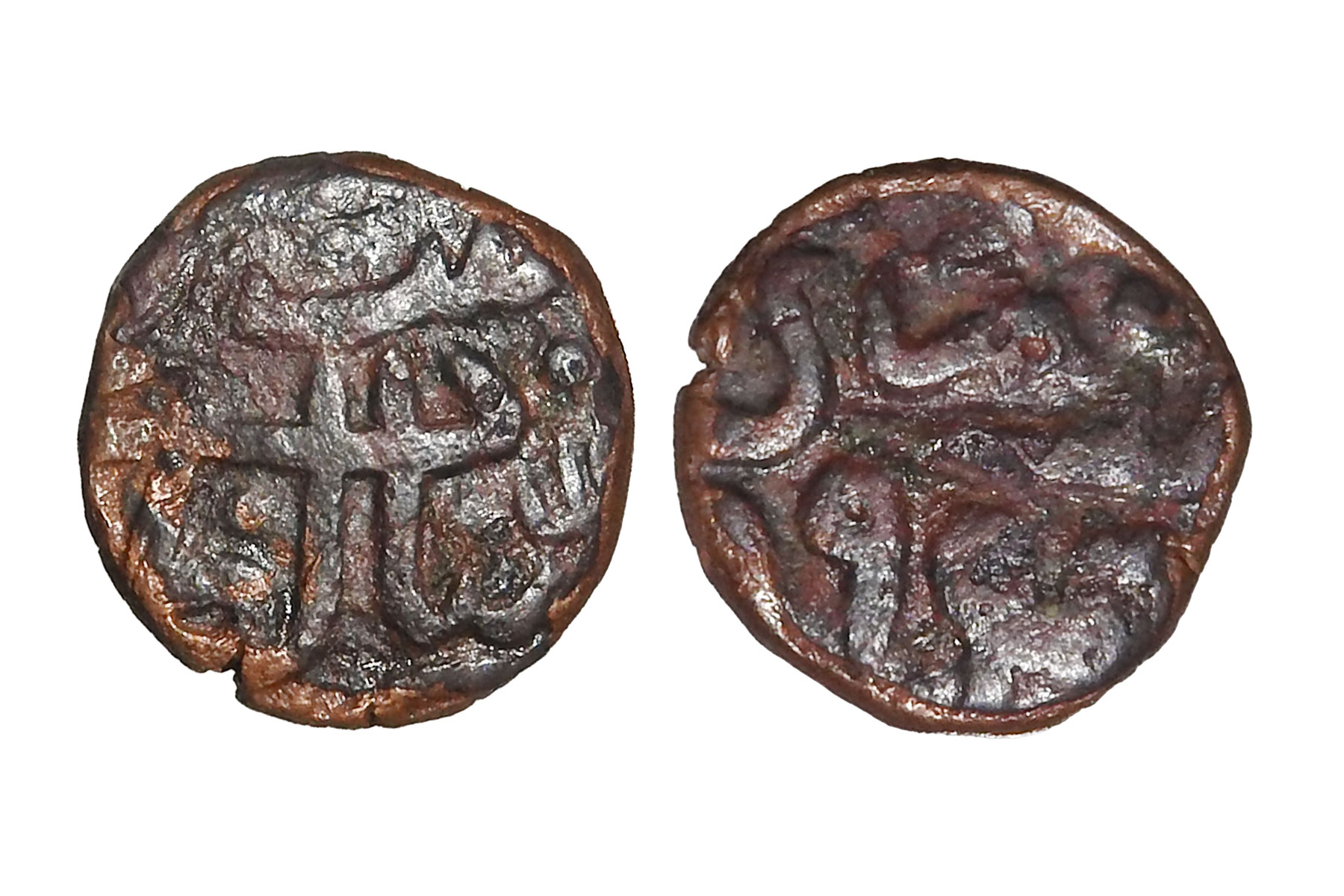
Lot No : 106
Auction No : 8
Delhi Sultanate, Suris, Islam Shah Suri(c. 1545-1552CE), Copper 1/8 Paisa, 2.50grms, Mintless Type, Obv. shāh/ islām / sher shāh / sulļān, Rev. khalifat al-zamān al-'ādil, G&G#D1085, Very Fine+, Very Scarce. 1/8 paisa coins are extremely rare. They were emergency, fractional issues, struck in very small quantities for micro-transactions in local markets. Islam Shah’s administration focused on full paisas, not tiny fractions. Their tiny size, rapid wear, melting, and neglect by hoarders caused very low survival. Many mints issued them briefly or not at all.
8000
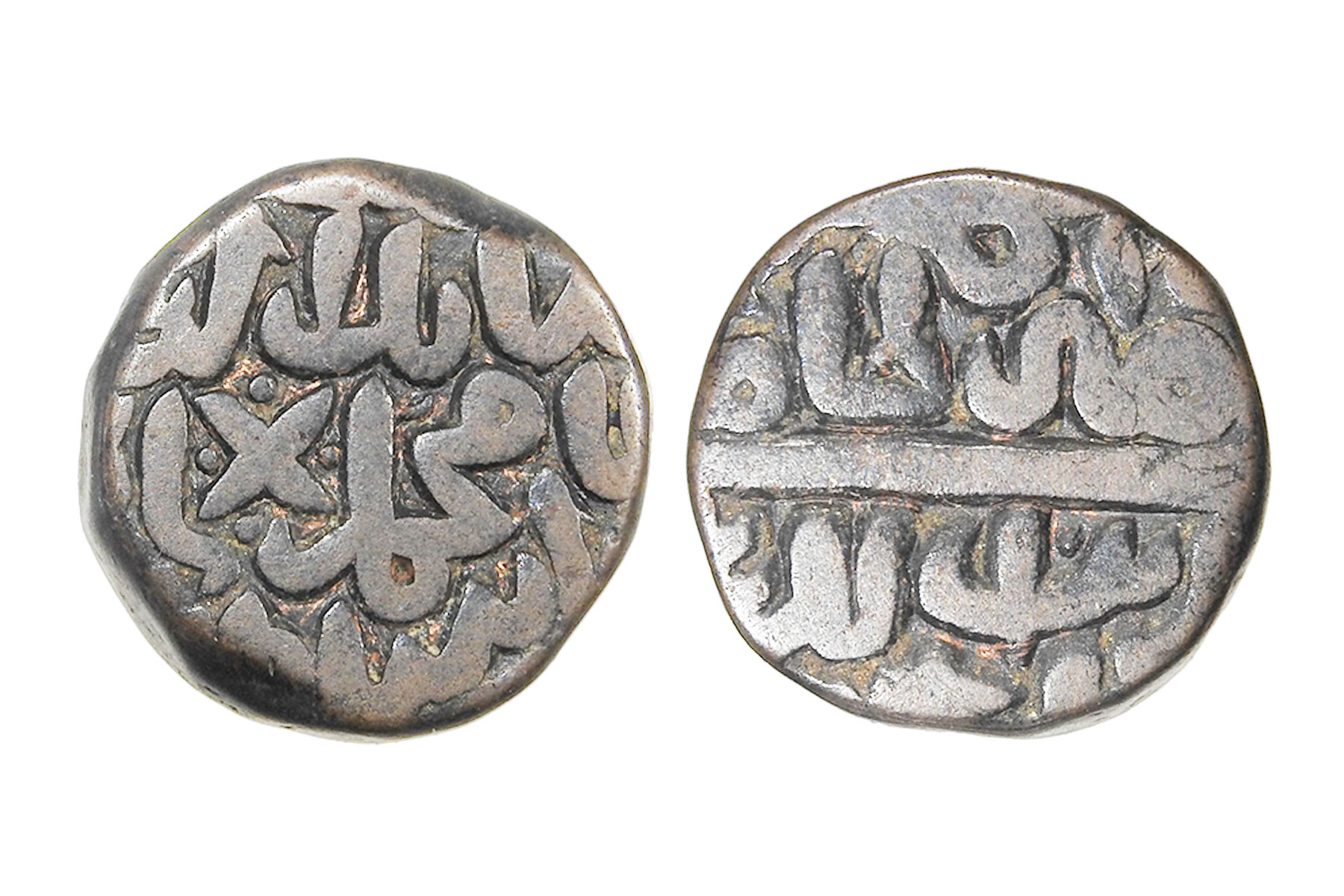
Lot No : 107
Auction No : 8
Delhi Sultanate, Suris, Muhammad Adil Suri(c. 1552-1556CE), Copper Paisa, 20.00grms, Minted at Jaunpur, Obv. abü'l muzaffar/bi-ta'yid al-rahman / muhammad shāh /'adil sultan. Large dotted cross mint-mark to the left of muhammad. Mint-name at bottom of reverse, G&G#D1114, Extra Fine, Very Rare Muhammad Adil Shah Suri rose to power after the death of Islam Shah Suri, eliminating his minor son Firuz Shah and ruling as a usurper. He never firmly controlled Delhi and was driven east by rival Sur claimants and advancing Mughal forces. Jaunpur, a strategic provincial capital controlling the eastern Gangetic routes, became his main power base. Coins struck at Jaunpur are rare because they were issued briefly during intense civil war, limited territorial control, disrupted administration, and the rapid collapse of Suri authority before Mughal reconquest
1200
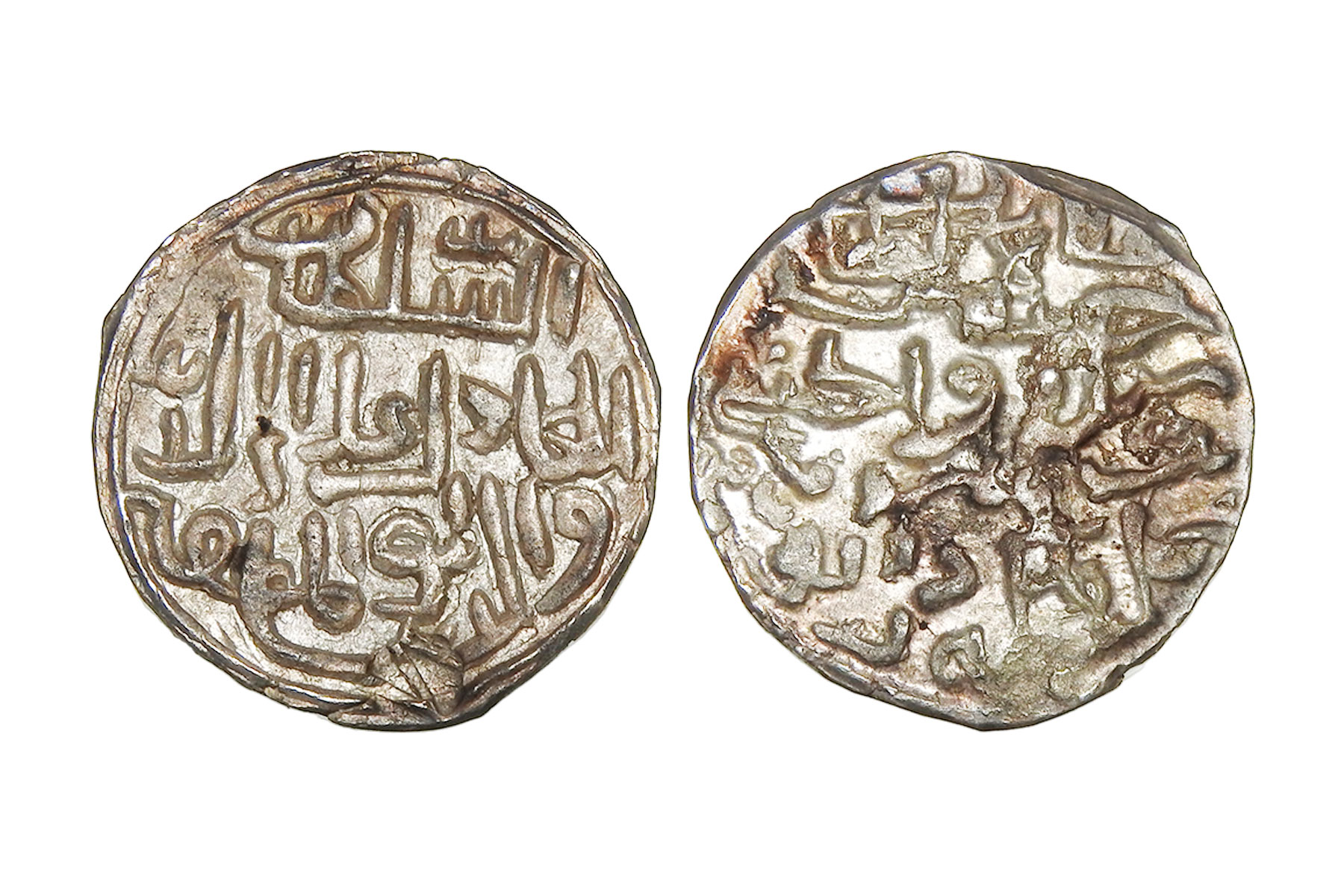
Lot No : 108
Auction No : 8
Bengal Sultanate, Ala Al-din Husain Shah (c. 1397-1422CE), Silver Tanka, 10.60grms, Minted at Dar Al-Darb(Husainabad), AH 910, G&G#B761, Very Fine+, Very Scarce Ala al-Din Husain Shah, founder of the Husain Shahi dynasty of Bengal, rose to power after overthrowing the Abyssinian ruler Shams-ud-Din Muzaffar Shah, whom he had served as wazir. His reign is considered the most stable and prosperous of the Bengal Sultanate
3300
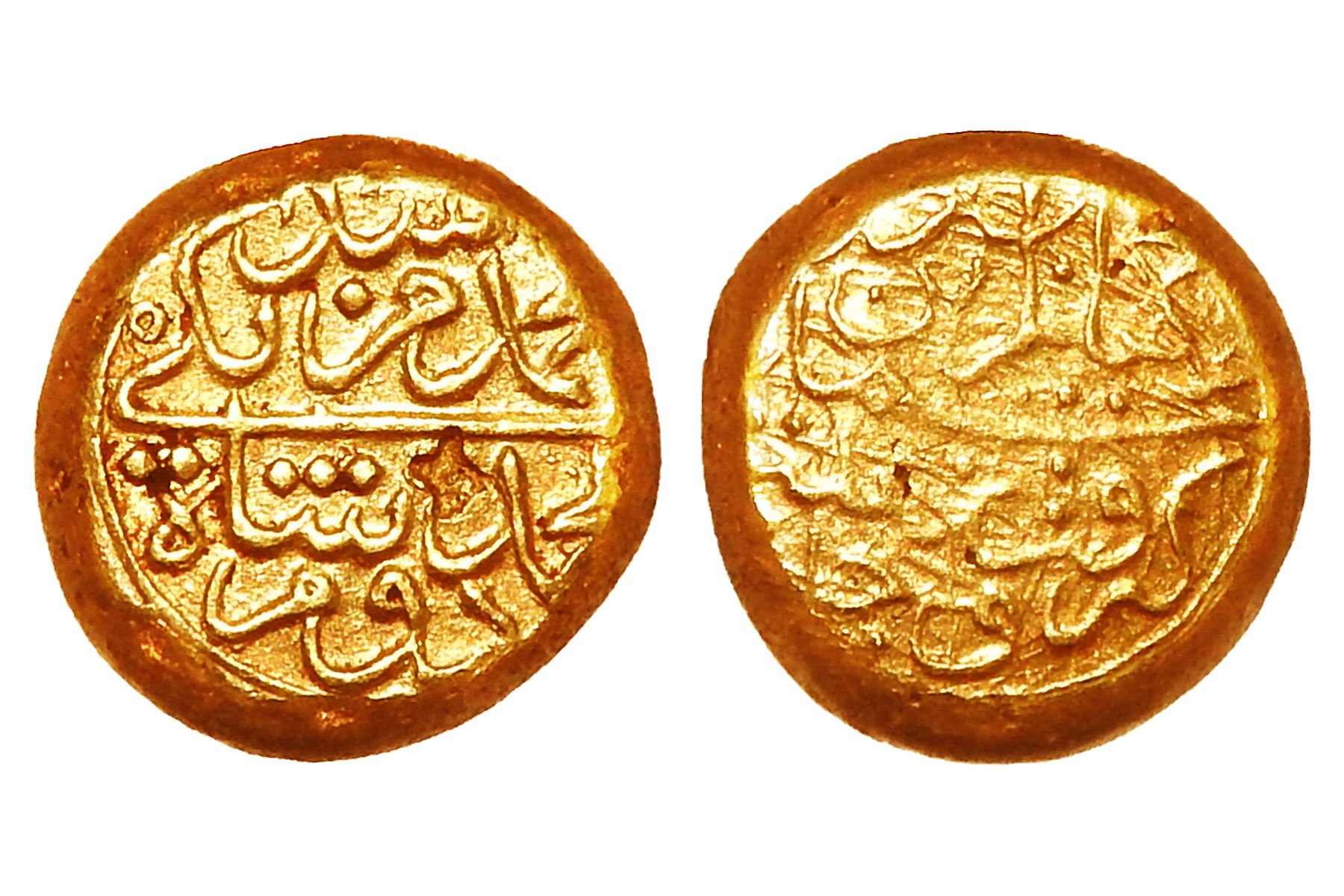
Lot No : 109
Auction No : 8
Bijapur Sulatan, Muhammad Adil Shah(c. 1627-1657CE), Gold Pagoda, 3.40grms, G&G#BJ20, Poetic couplet- Jahān Zin Do Muhammad Girift Zīnat-O Jāh Yake Muhammad-I-Mursal Duwam Muhammad Shah, which means - The world received beauty and dignity from two Muhammads, the one is Muhammad the apostle and the other Muhammad Shah, Extra Fine+ and extraordinarily rare, this magnificent specimen is appearing in an auction after several years, offering a once-in-a-decade opportunity for discerning collectors. Every detail is stunningly preserved, with the complete couplet fully legible, showcasing the artistry and historical significance of the issue. A truly breathtaking and must-have coin, it represents the pinnacle of numismatic beauty and rarity, destined to be the centerpiece of any serious collection. Muhammad Adil Shah of the strengthened his kingdom’s architectural legacy with iconic structures like the Gol Gumbaz, patronized arts and literature, and maintained political stability amidst regional conflicts. His reign saw defensive consolidation, strategic alliances, and promotion of culture, leaving a lasting imprint on Deccan history.
170000
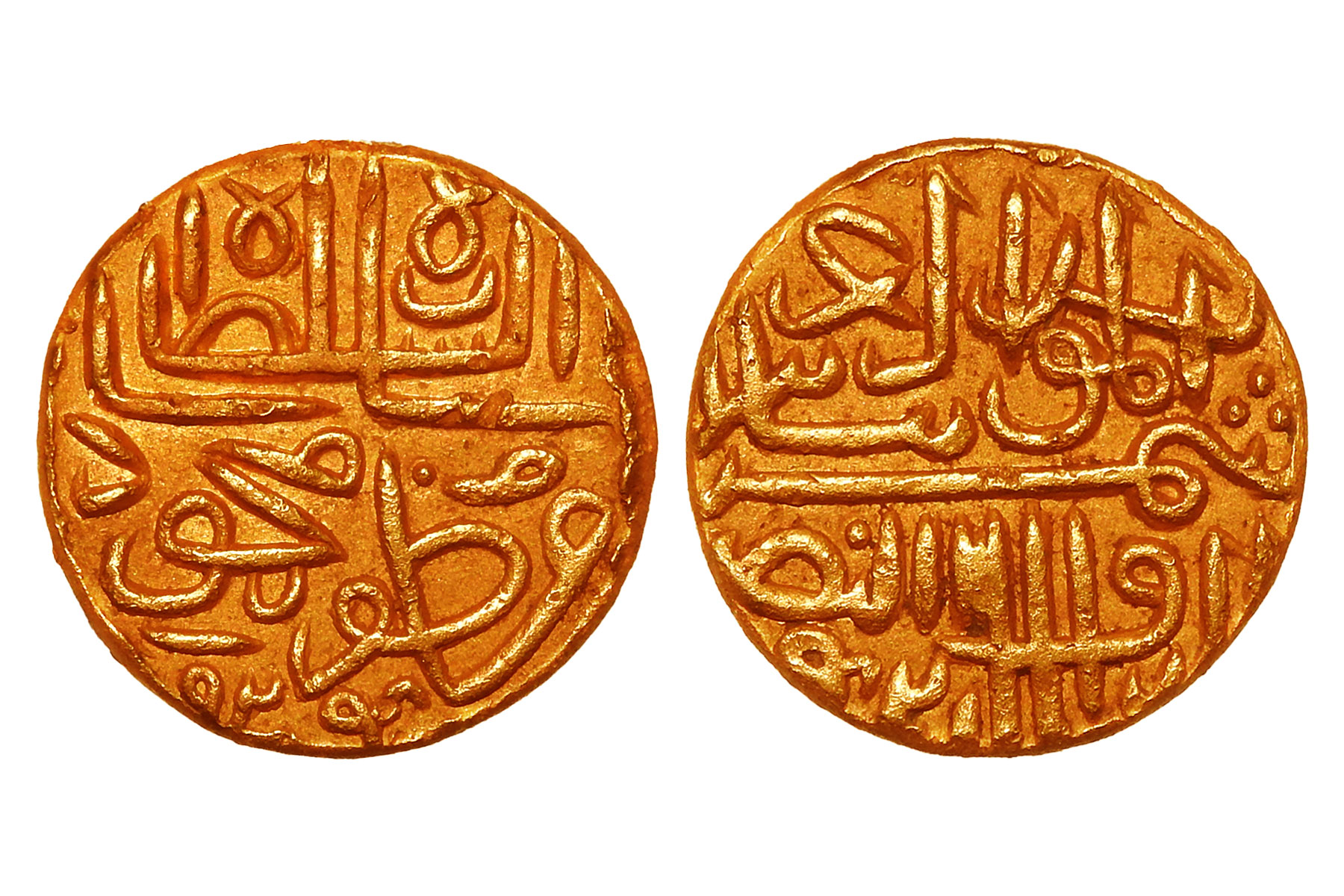
Lot No : 110
Auction No : 8
Gujrat Sultanate, Shams al-din Muzaffar Shah II(c. 1511-1525CE), Gold Tanka, 11.40grms, obv. al-mu'ayyad bi-ta'yiīd al-rahmān shams al-dunya wa'l din abu'l naşr muzaffar shāh bin mahmud shah al-sulțān, Rev. muzaffar shāh bin mahmūd shāh al-sulțān within single scalloped circle. mahmûd to the left of Muzaffar, AH 924, Minted at Muhammadabad, G&G#G231, Almost Uncirculated, Rare. Shams-ud-Dīn Muzaffar Shah II, born Khalil Khan, was the eighth Sultan of the Gujarat Sultanate, was the eldest son of Sultan Mahmud Begada and succeeded him on the throne. Early in his reign he subdued the princely state of Idar, but he later suffered continuous defeats against Rana Sanga of Mewar, losing northern Gujarat and Idar to the Rajput ruler. During this period, Gujarat’s influence waned in the north as Rana Sanga asserted dominance. Muzaffar Shah II died in Ahmedabad in 1526 and was succeeded by his son Sikandar Shah. His reign was marked by military challenges and setbacks, particularly against Rajput forces, weakening the sultanate’s territorial hold before the rise of his more powerful successors.
 WhatsApp