
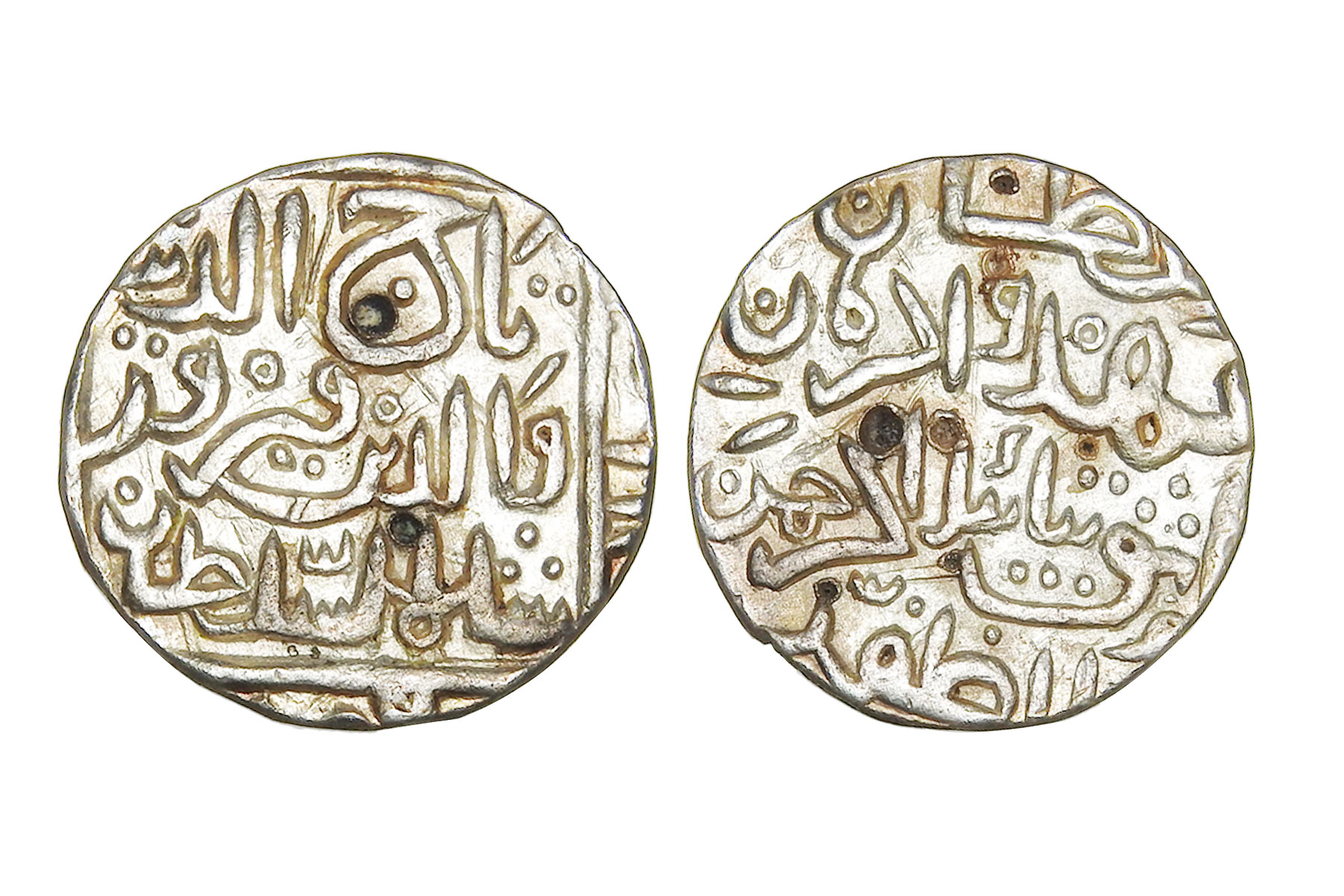
Lot No : 111
Auction No : 8
Bahamani Sultanate, Taj Al-din Firuz Shah (c. 1397-1422CE), Silver Tanka, 10.70grms, Minted at Ahsanabad, G&G#BH63, Very Fine+ Taj al-Din Firuz Shah Bahmani (c. 1397–1422 AD / 800–825 AH) ruled during constant warfare, fighting repeated campaigns against the Vijayanagara Empire over the Raichur Doab and southern frontiers. He also faced internal noble revolts and factional conflicts within the Bahmani court. Strategic marriage alliances with Deccan Hindu elites were used to stabilize rule. Coinage from Ahsanabad (Gulbarga) reflects authority maintained through war and negotiated power
3600
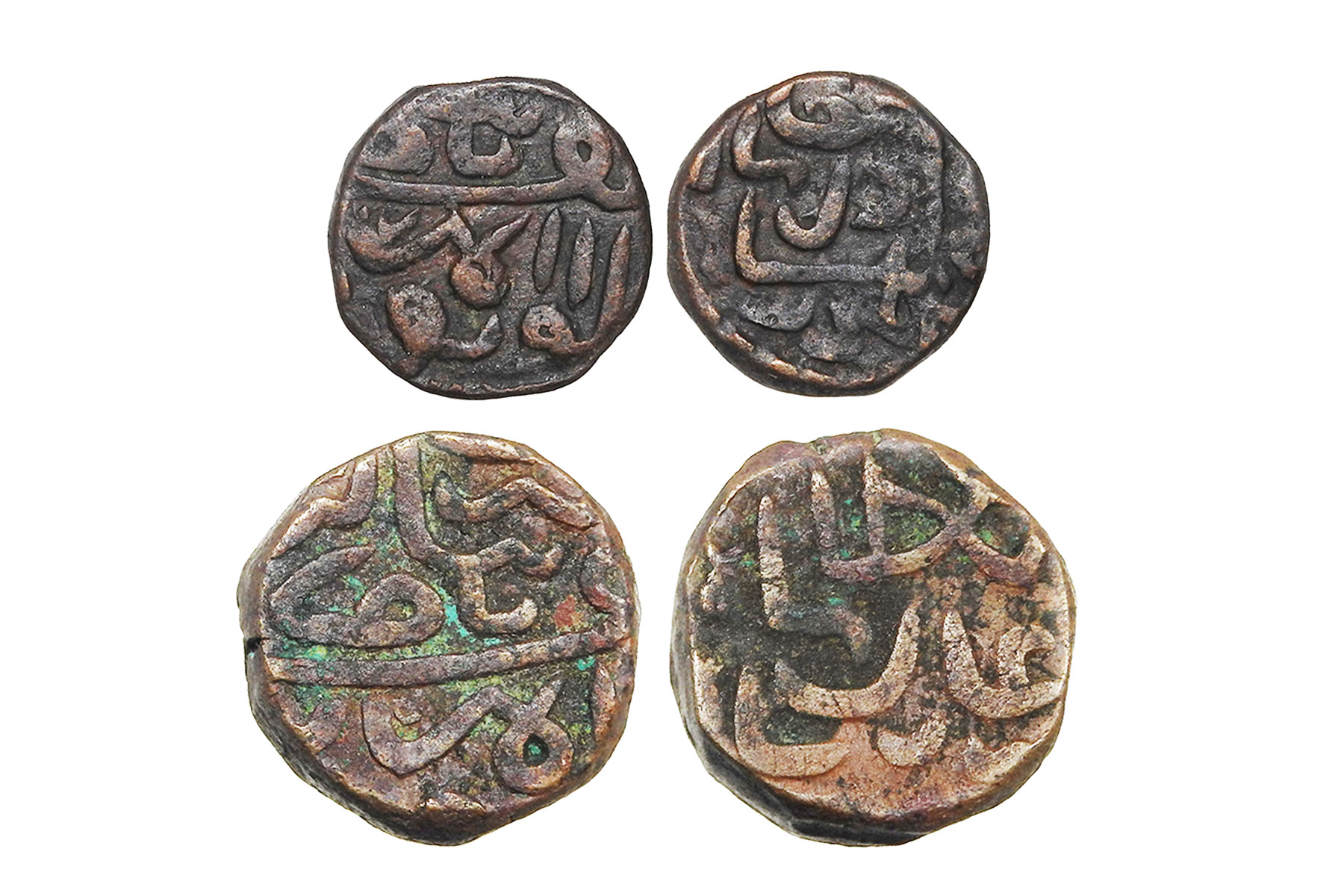
Lot No : 112
Auction No : 8
Khandesh Sultanate, Bahadur Shah (c. 1597-1601CE), 2 coins, (a) Heavy Falus, 17.30grms, G&G#KH4, (B) Half Falus, 8.50grms, G&G#KH3, Common legend al-wathiq billah al-mannān abü'l fath nāşir al-dunya wa'l dīn bahadur shah bin 'adil shah al-sulțān, Extra Fine, Very Rare.Khandesh Sultanate was located in northern Deccan, covering present-day north Maharashtra along the Tapti River valley, with Burhanpur as its capital and Asirgarh Fort as its key stronghold. Its position between Malwa (north), Gujarat (west), Ahmadnagar (south), and the Mughal frontier made it a critical buffer state. Control of Tapti trade routes gave Khandesh economic importance but also constant military pressure.Bahadur Shah Farooqi of Khandesh ruled amid constant regional conflict, fighting the Nizam Shahis of Ahmadnagar and resisting pressure from Gujarat and later the Mughals. Khandesh’s strategic position on the Tapti corridor made it a buffer state. Bahadur Shah alternated between resistance and diplomacy, eventually submitting to Emperor Akbar to preserve autonomy, marking the beginning of Mughal influence in the Deccan.
1700
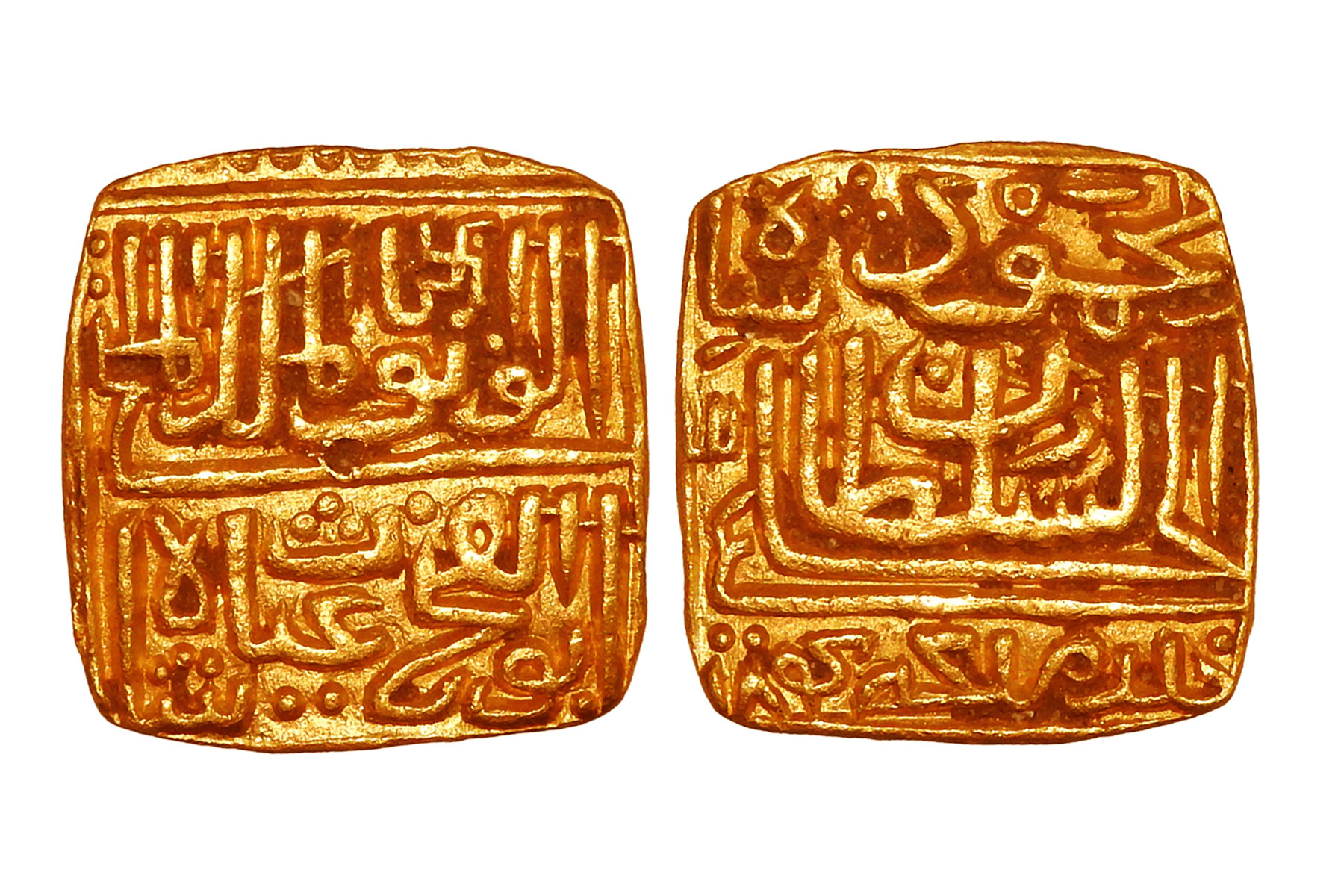
Lot No : 113
Auction No : 8
Malwa Sultan, Ghiyath Shah(c. 1469-1500CE), Gold Square Mohur, 10.70grms, AH884, G&G#M66, Swastika as mintmark, Obv. al-wathiq bi'l malik al-multajī abü'l fath ghiyāth shah bin mahmûd shah al-khaljī al-sultan khallada mulkahu, Rev. Abu`l Fath to the right of Ghiyath, Extra Fine+, Rare Ghiyath Shah ruled the Malwa Sultanate (central India), succeeding his father Mahmud Shah. His reign is noted for political stability, architectural patronage, and cultural flourishing, especially in Mandav (Mandavgad), the Malwa capital. He promoted literature, arts, and Sufi culture, built mosques, palaces, and gardens, and maintained alliances with neighboring kingdoms while repelling invasions. Ghiyath Shah’s rule strengthened Malwa’s administrative and cultural institutions, leaving a lasting legacy in architecture, urban planning, and regional governance.
160000
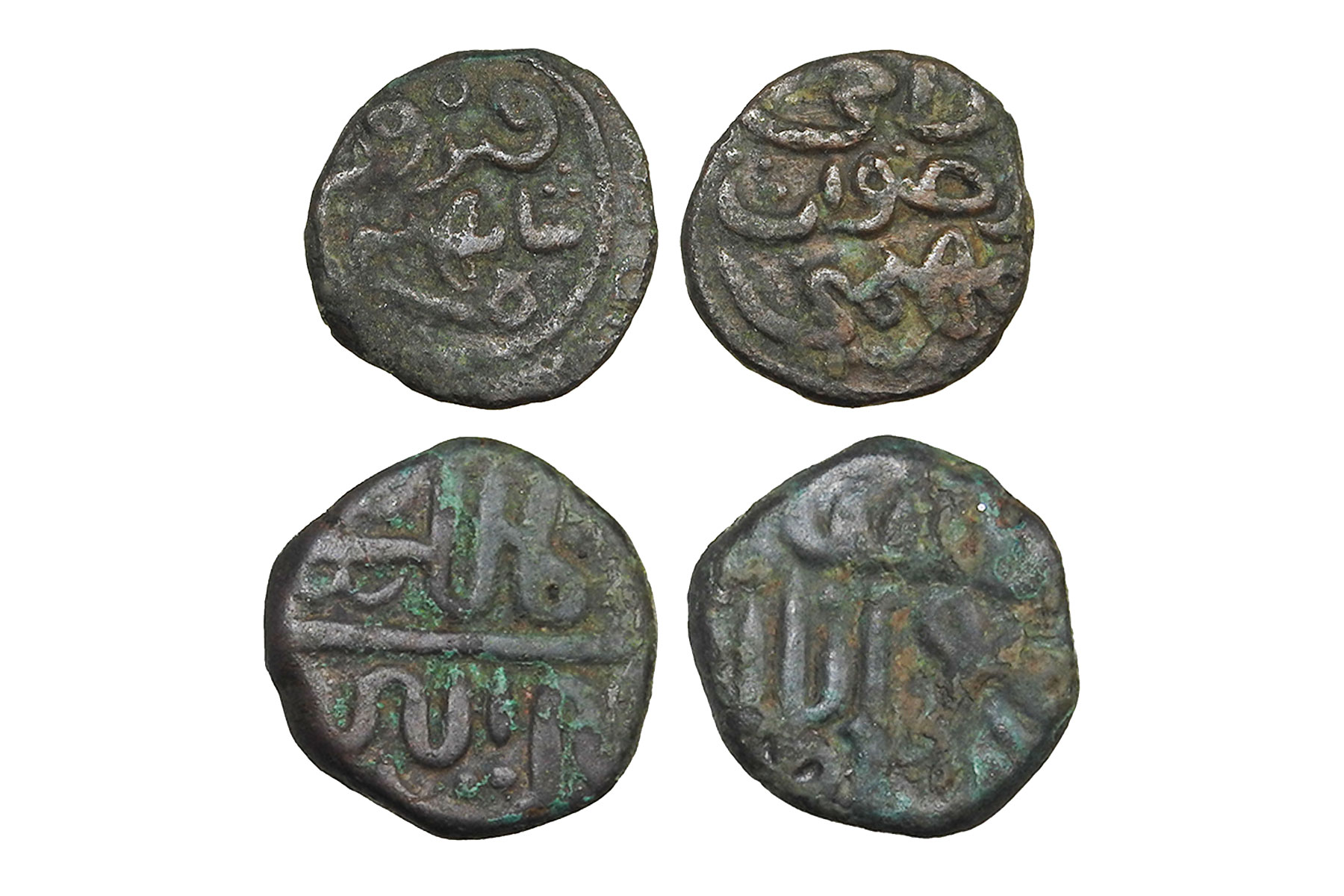
Lot No : 114
Auction No : 8
Indian Sultanate 2 coins, (a) Bahamani Sultanate, Taj al-din Firuz Shah, (c. 1397-1422CE), Copper Falus, 5.00grms, Minted at Ahsanabad, G&G#BH66, Very Fine+, (b) Malwa Sultanate, Hisam al-din Hushang Shah, (c. 1405-1435CE), Copper Falus, 3.90grms, G&G#M6, Minted at Dar al-Mulk Shadiabad, G&G#M6, Very Fine+
1300
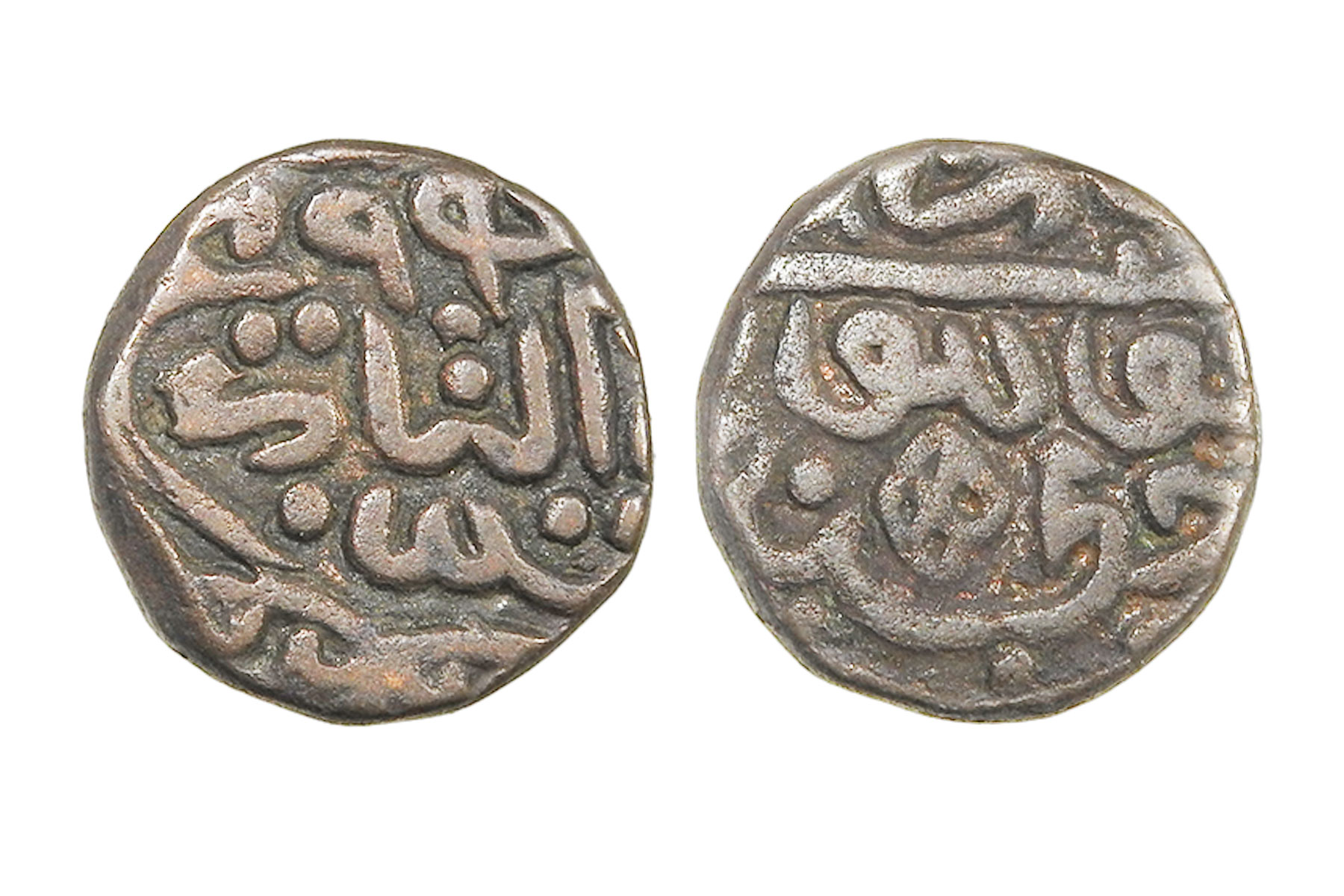
Lot No : 115
Auction No : 8
Mughal Empire, Humayun(c. 1530-1540CE), First Reign, Copper Bahloli, 8.80grms, AH94X, Minted at Jaunpur, Extra Fine+, Very Scarce Issued during Humayun’s troubled first reign, this copper Bahloli follows the weight standard of Bahlul Lodi, reflecting continuity from the Delhi Sultanate. The period was dominated by conflict with Sher Shah Suri, culminating in Humayun’s defeats at Chausa (1539) and Kannauj/Bilgram (1540), which cost him the empire. These coins belong to a short, unstable phase just before Mughal collapse and exile
1300
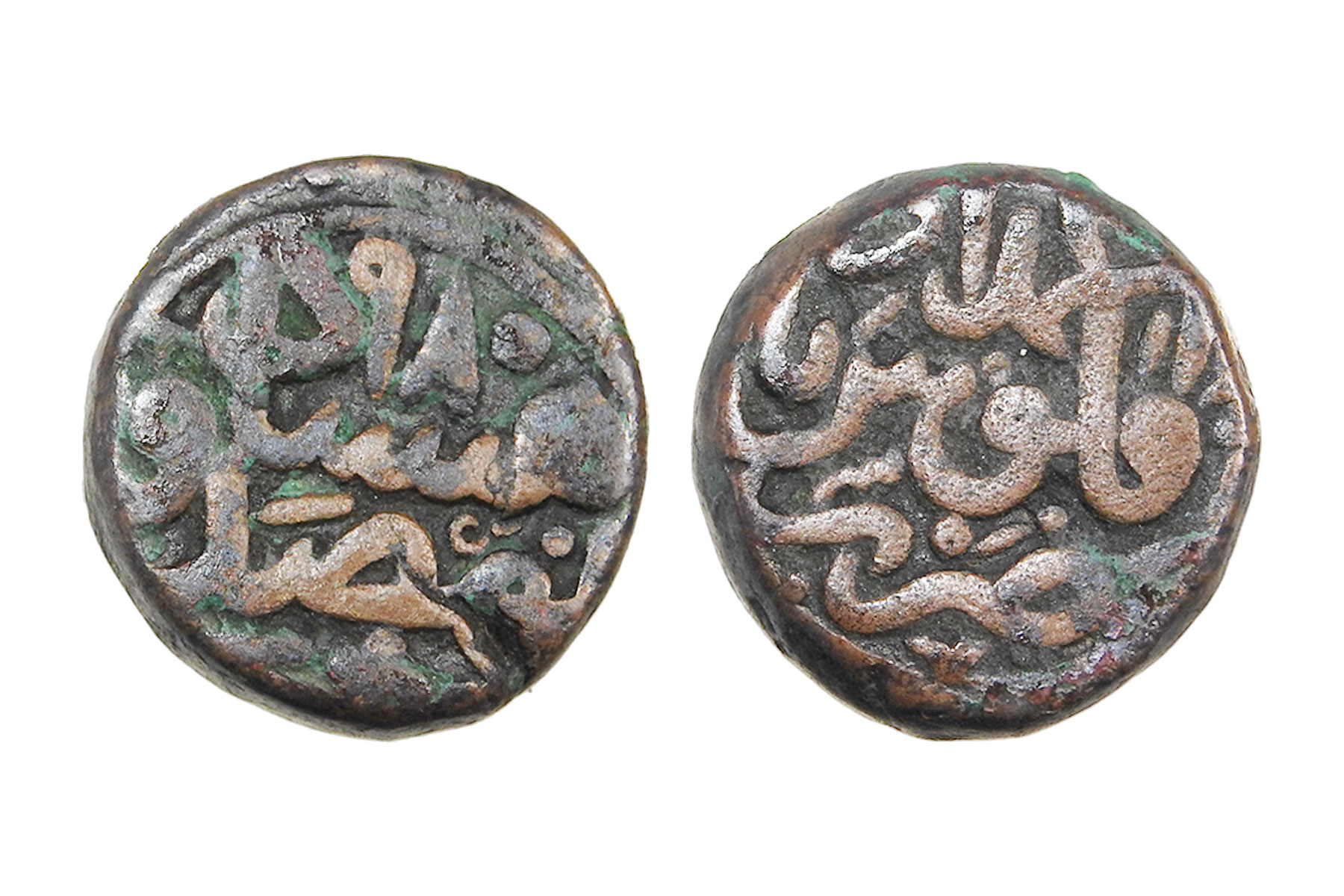
Lot No : 116
Auction No : 8
Mughal Empire, Akbar(c. 1556-1605CE), Copper Dam, 20.40grms, AH980, Minted at Ahmedabad, Very Fine+, Rare Ahmedabad was a major Mughal mint under Akbar after the conquest of Gujarat (1572–73 CE). The mint symbolises Akbar’s victory over the Muzaffarid Sultans of Gujarat and the firm integration of Gujarat into the Mughal Empire. Coins from Ahmedabad reflect Akbar’s consolidation of western India and control over key trade routes and ports.
3300
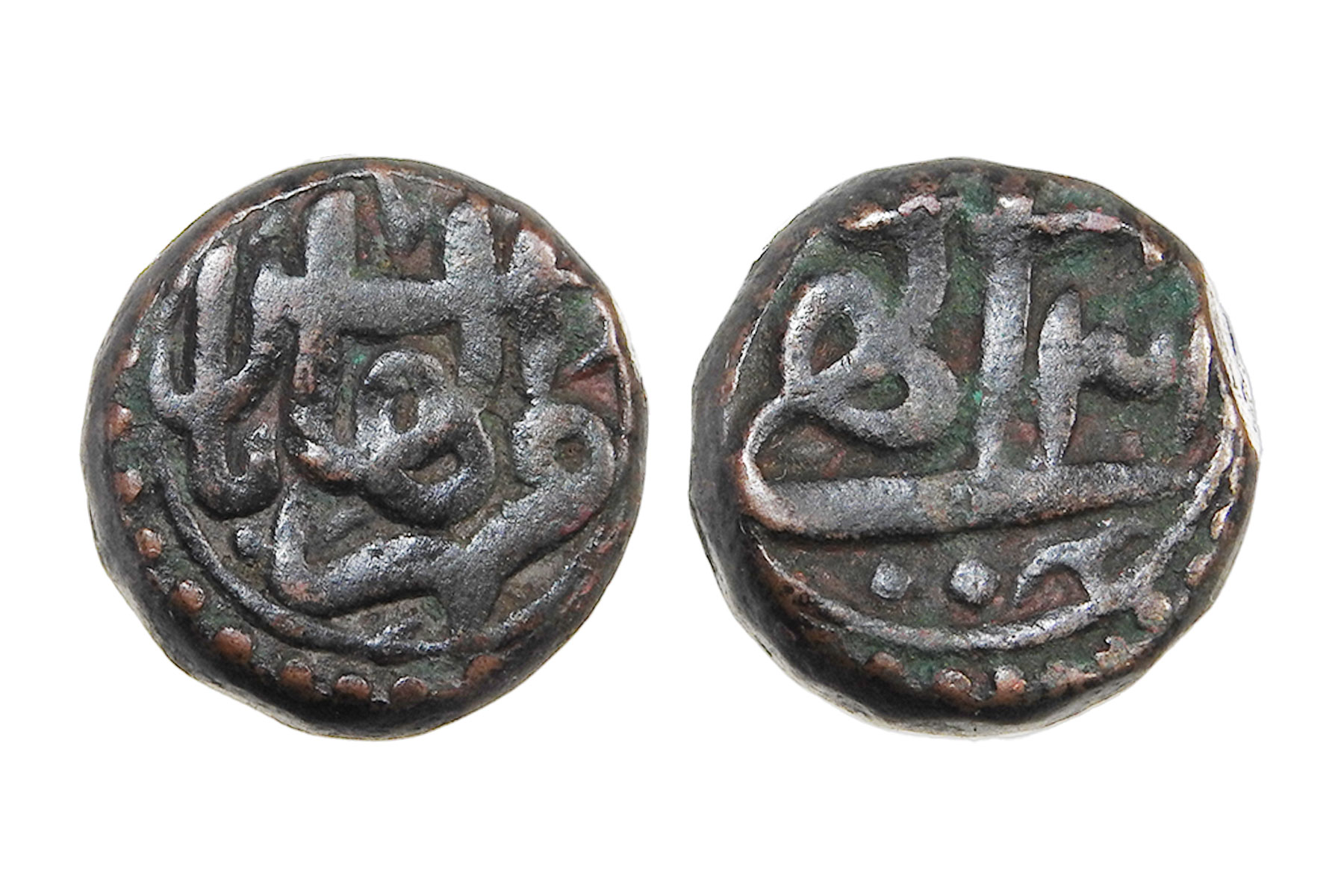
Lot No : 117
Auction No : 8
Mughal Empire, Akbar(c. 1556-1605CE), Copper Dam, 20.60grms, Illahi 31, Minted at Allahabad, Very Fine Allahabad became a Mughal mint after Akbar’s strategic takeover of the region, crucial for controlling the Gangetic heartland. The city later gained immense military importance during Prince Salim’s rebellion (1600–1604 CE), when he declared himself emperor from Allahabad, directly challenging Akbar. Coins from this mint are tied to internal Mughal conflict and succession tensions
1600
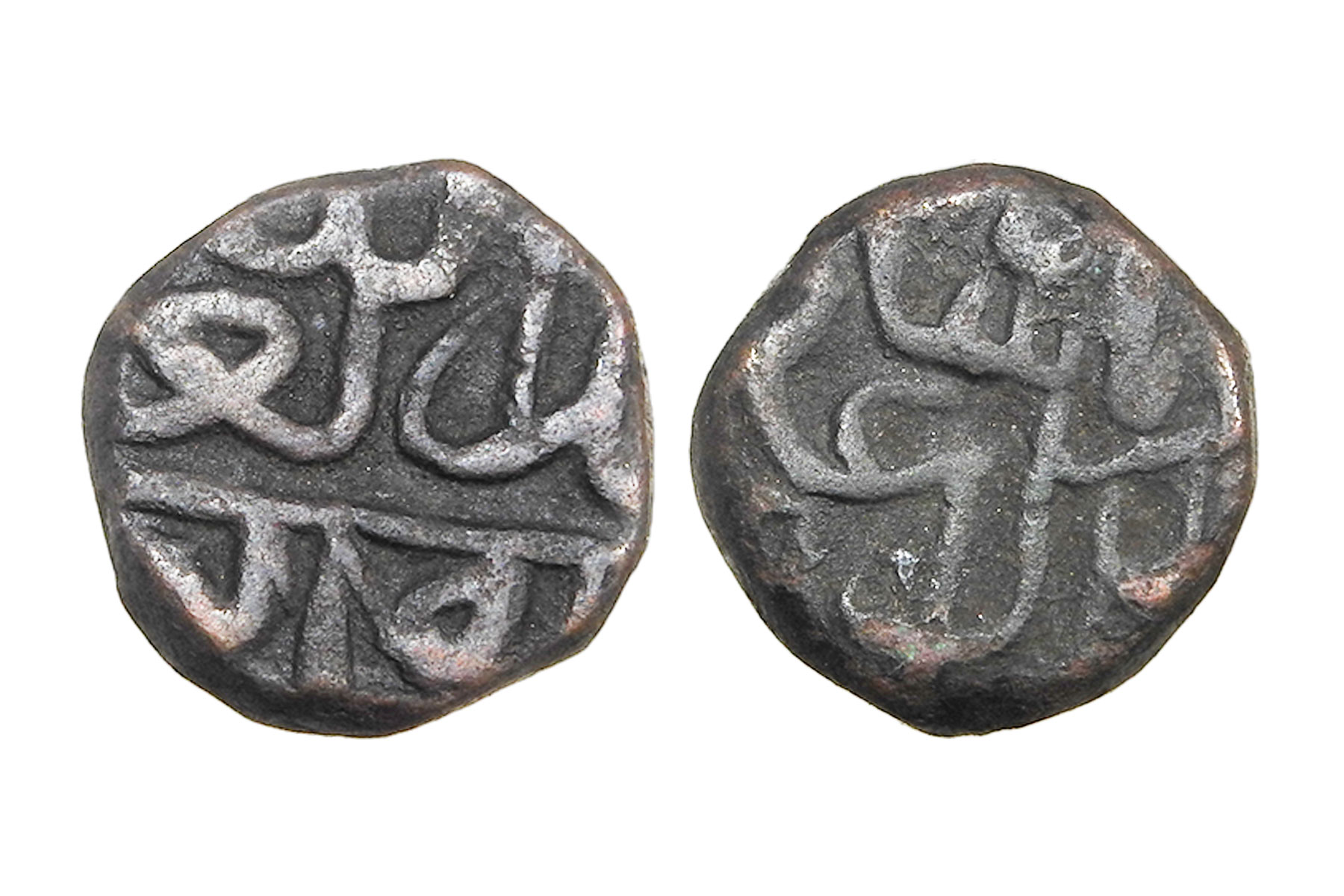
Lot No : 118
Auction No : 8
Mughal Empire, Akbar(c. 1556-1605CE), Copper 1/2 Dam, Mulkahu Type, 10.00grms, Minted at Alwar, Very Fine, Scarce. Coins attributed to Alwar under Akbar are extremely rare and debated, suggesting a short-lived or limited mint after Mughal campaigns in Mewat/Rajputana. The region was brought under Mughal control during Akbar’s expansion against local Rajput chiefs, securing the Delhi–Ajmer route
3300
Lot No : 119
Auction No : 8
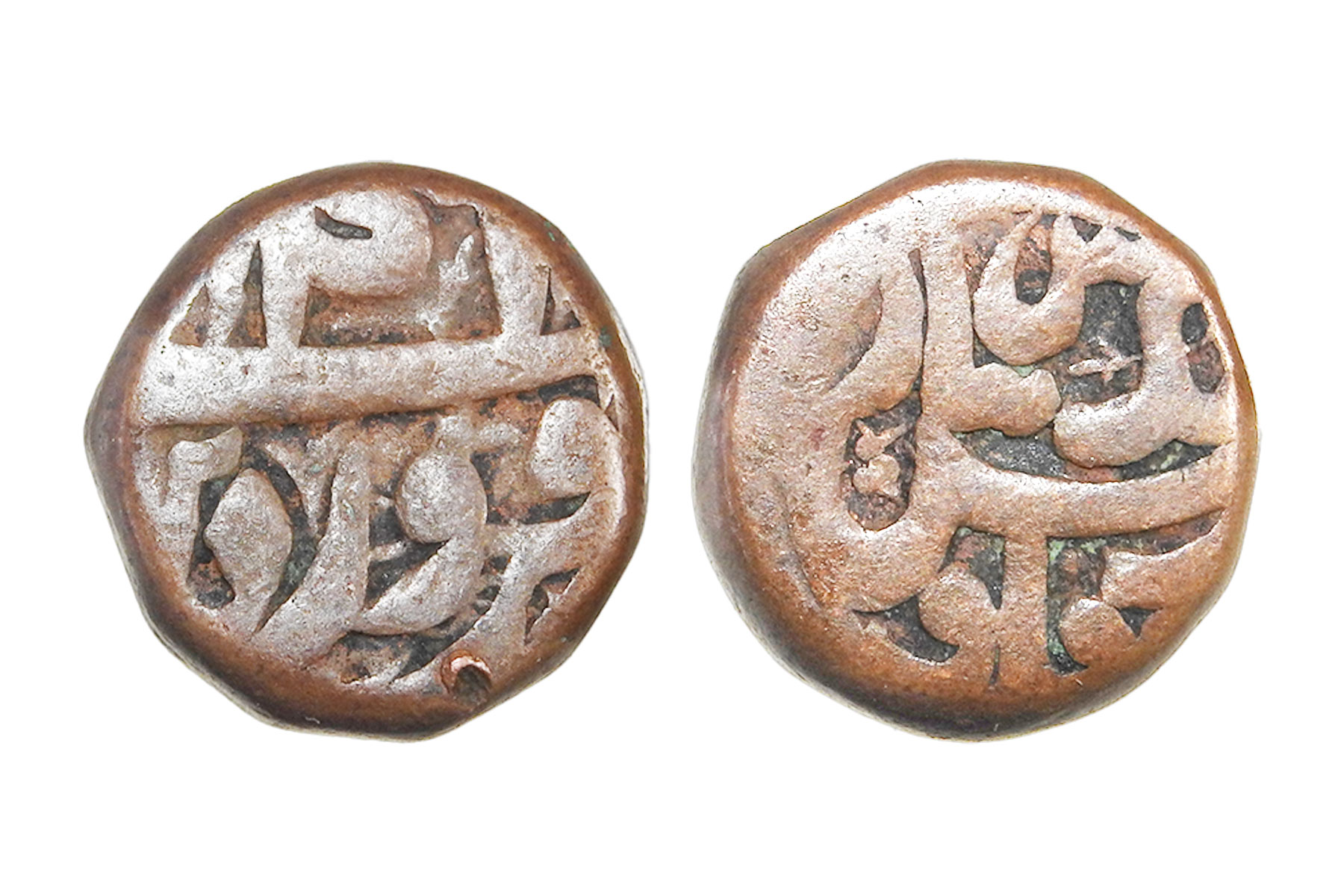
Mughal Empire, Akbar(c. 1556-1605CE), Copper Dam, 20.00grms, Illahi 41, Month Farwardin, Minted at Attakh Banaras, Very Fine+ Banaras functioned as a regional mint after Mughal consolidation of the eastern Gangetic belt, following conflicts with Afghan chiefs and the Karrani rulers of Bengal. Control of Banaras ensured stability along the Ganga and secured Mughal authority in eastern North India
1200
Lot No : 120
Auction No : 8
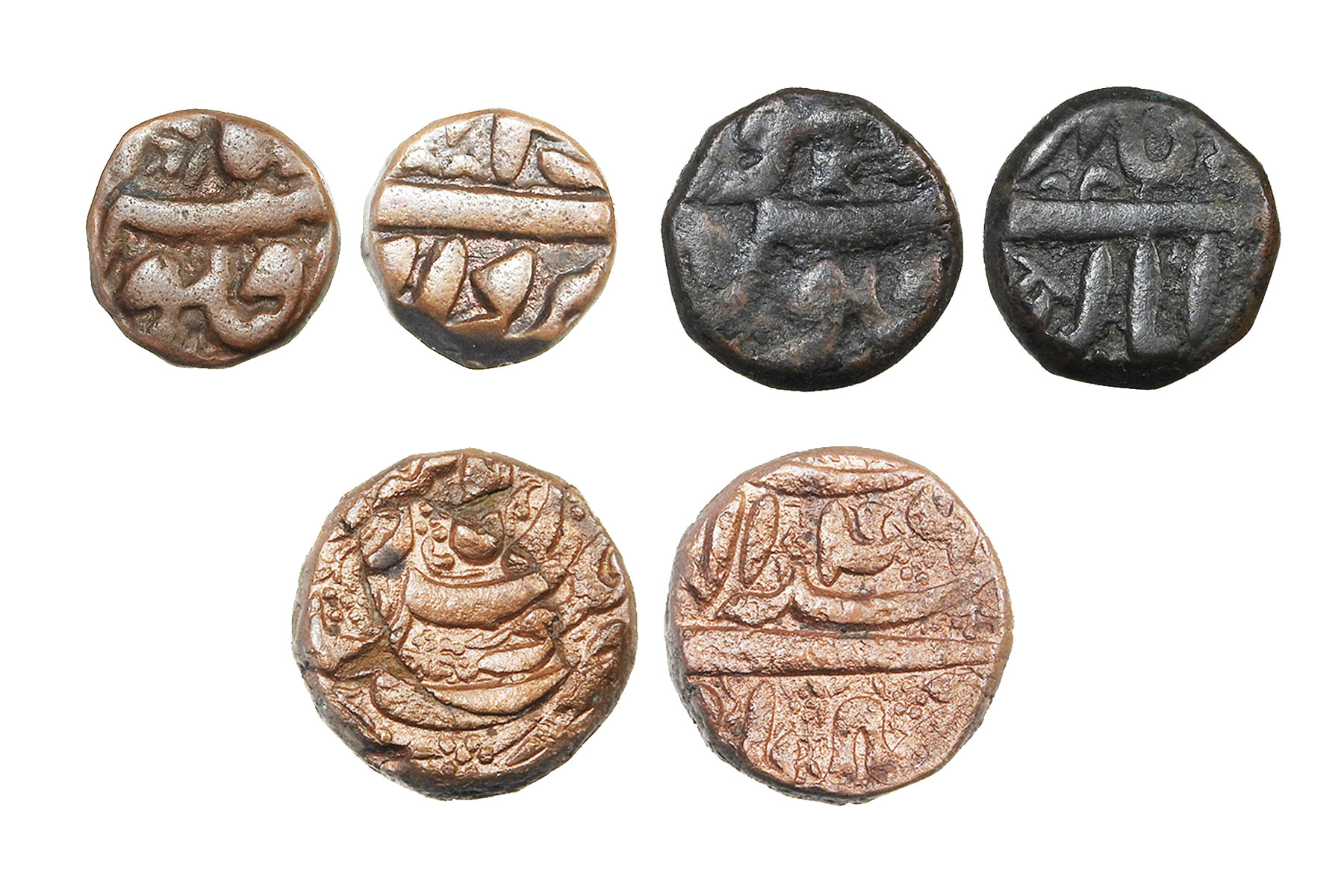
Mughal Empire, Akbar(c. 1556-1605CE), 3 Coins, Copper Dam, 1/2 Dam, 1/4 Dam, 20grms,10grms & 4.90grms, all 3 of Illahi 46, Minted at Burhanpur, Very Fine to Extra Fine, Very Rare. Burhanpur became a key Mughal mint after Akbar’s campaigns in Khandesh and the Deccan, aimed at breaking the power of the Farooqi rulers of Khandesh and countering Ahmadnagar (Nizam Shahi) influence. Control of Burhanpur secured the Tapti corridor and served as a forward base for Mughal military pressure in the Deccan.
 WhatsApp