
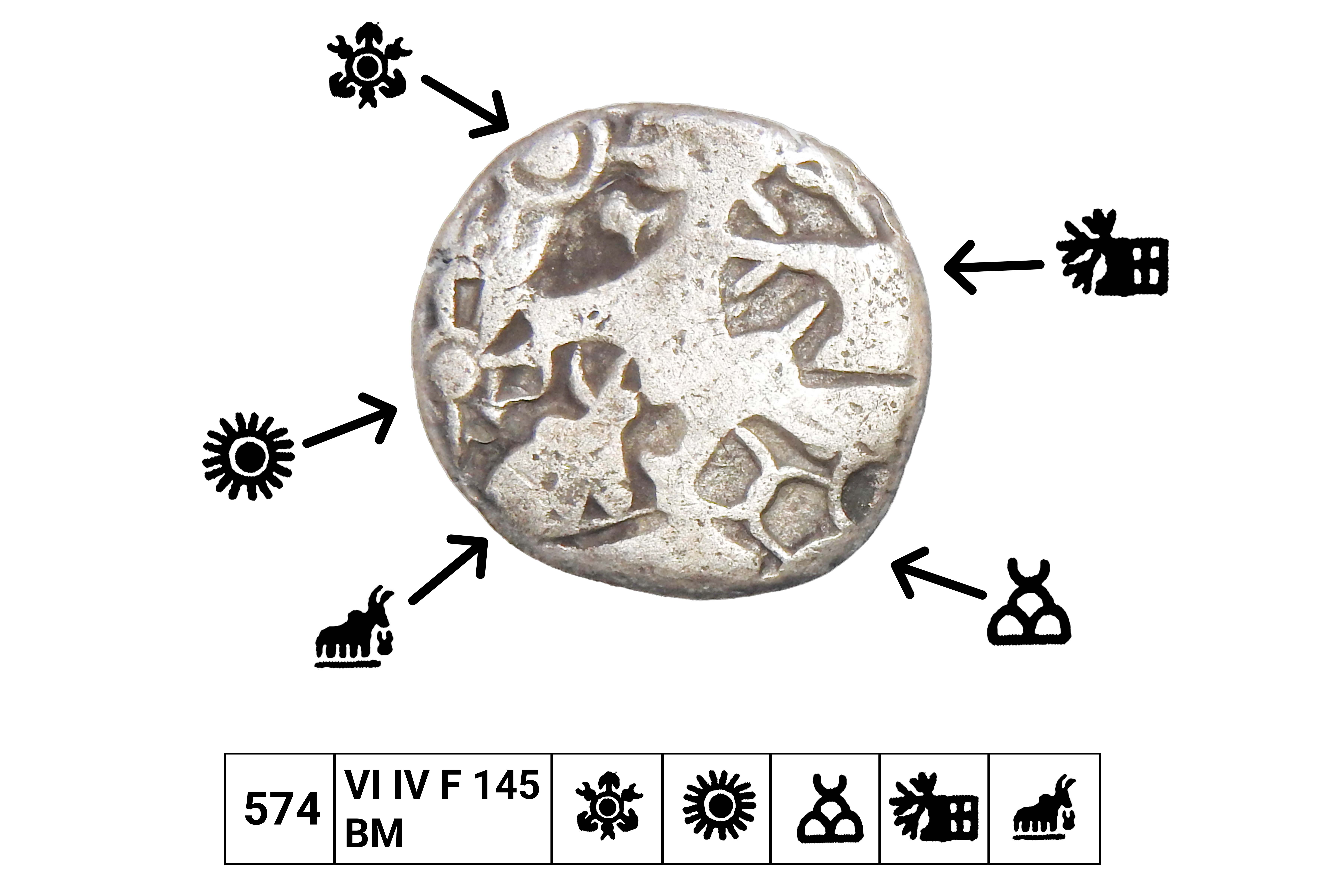
Lot No : 11
Auction No : 8
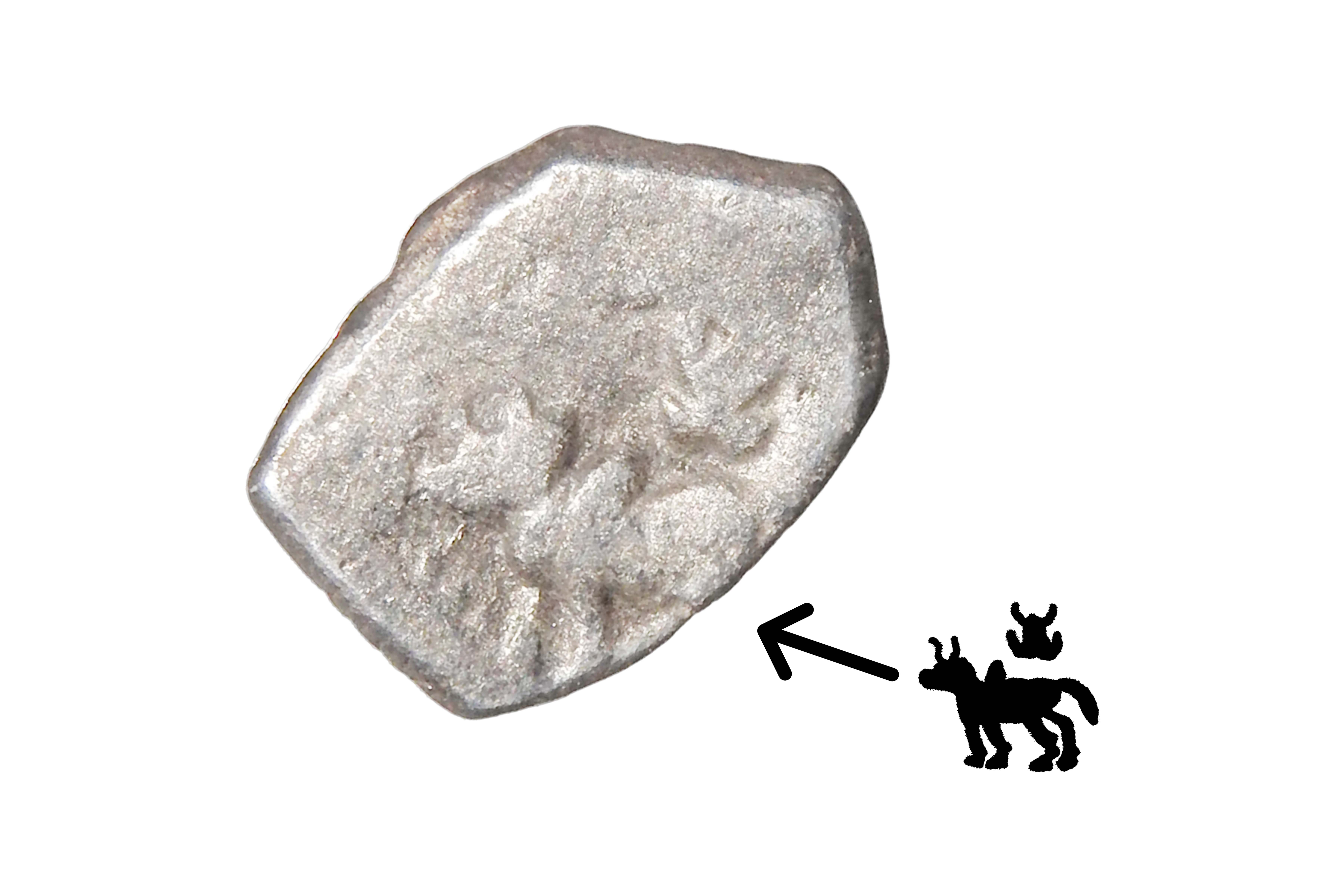
Magadha Janapadha, Ashoka the Great (c.268-232 BC), Silver Karshapana, 3.10 grms, 5 main symbols- 1x 6 Armed Symbol, 1x Sun, 1x 3 arched hill with crescent above, 1x Quartered square with left side thicker, from top left corner springs a plant with 3 branches, each branch has 3 simple twigs, 1x Bull right with inverted taurine right and ground line below, Gupta and Hardaker Series 'VIB' Type #574, Extra Fine+, Scrace, Bold symbols. Ashoka the Great was the third Maurya emperor and one of India’s most remarkable rulers. After the brutal Kalinga War, he embraced Buddhism and renounced violence, promoting dhamma based on moral governance, tolerance, and welfare. Ashoka ruled a vast empire, issued edicts on pillars and rocks across India, encouraged religious harmony, built stupas, and sent Buddhist missions abroad, shaping India’s political and spiritual history
1700

Lot No : 12
Auction No : 8
Magadha Janapadha, Eastern Ganga plains (c.200 BC), Silver Karshapana, 3.30 grms, 2 main symbols- 1x Elephant facing right with taurines and Ujjain symbol on top of elephants head, 1x 3 ovals in a row bisected by a central line, symbols from previous type faintly seen on the reverse, Gupta and Hardaker Series 'VIII' Type #610, Extra Fine+, Very Rare. Very uncommon type which is seen on sale privately of in a public auction after several years. These types of coins were first recorded by Chopra (1973) and later by Nanda & Lalman (1985–86). Specimens have been reported from Sugh in Haryana and from Kaushambi. Based on their find spots and typology, it may be reasonably assumed that these coins were issued in the post-Ashokan period and minted in the lost territory of Magadha–Mauryan Empire
4400
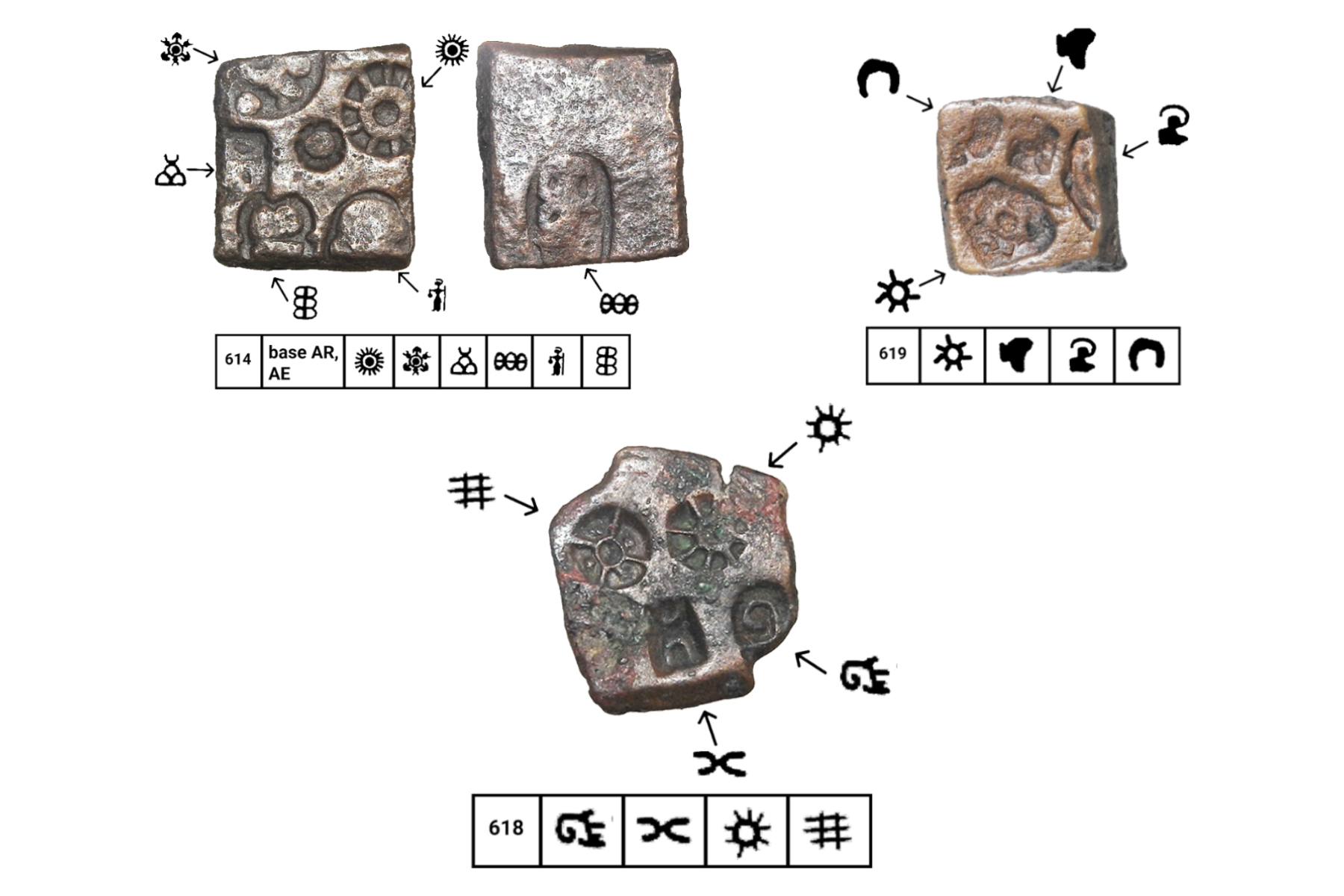
Lot No : 13
Auction No : 8
Magadha Janapadha, Brihadrata (c.187-185 BC), Copper Karshapana (3 coins), 2.90 grms, 1.80 grms & 1.20 grms, Symbols on coins: 6 Armed Symbol, Sun, 3 arched hill with a crescent above, Standing figure, Star, Crescent and many unknown symbols,Gupta and Hardaker Series 'VIII' Type #614, #618, #619, Extra Fine+, Rare with clear symbols This type is generally found in Ujjain, Vidisha and Malwa and many seem to appear with the coinage of Indo Greek king- Apollodotus II and Shunga coins, we can say that these coins where issued during the end of Mayuran rule and during the rule of Sunga empire.
1700
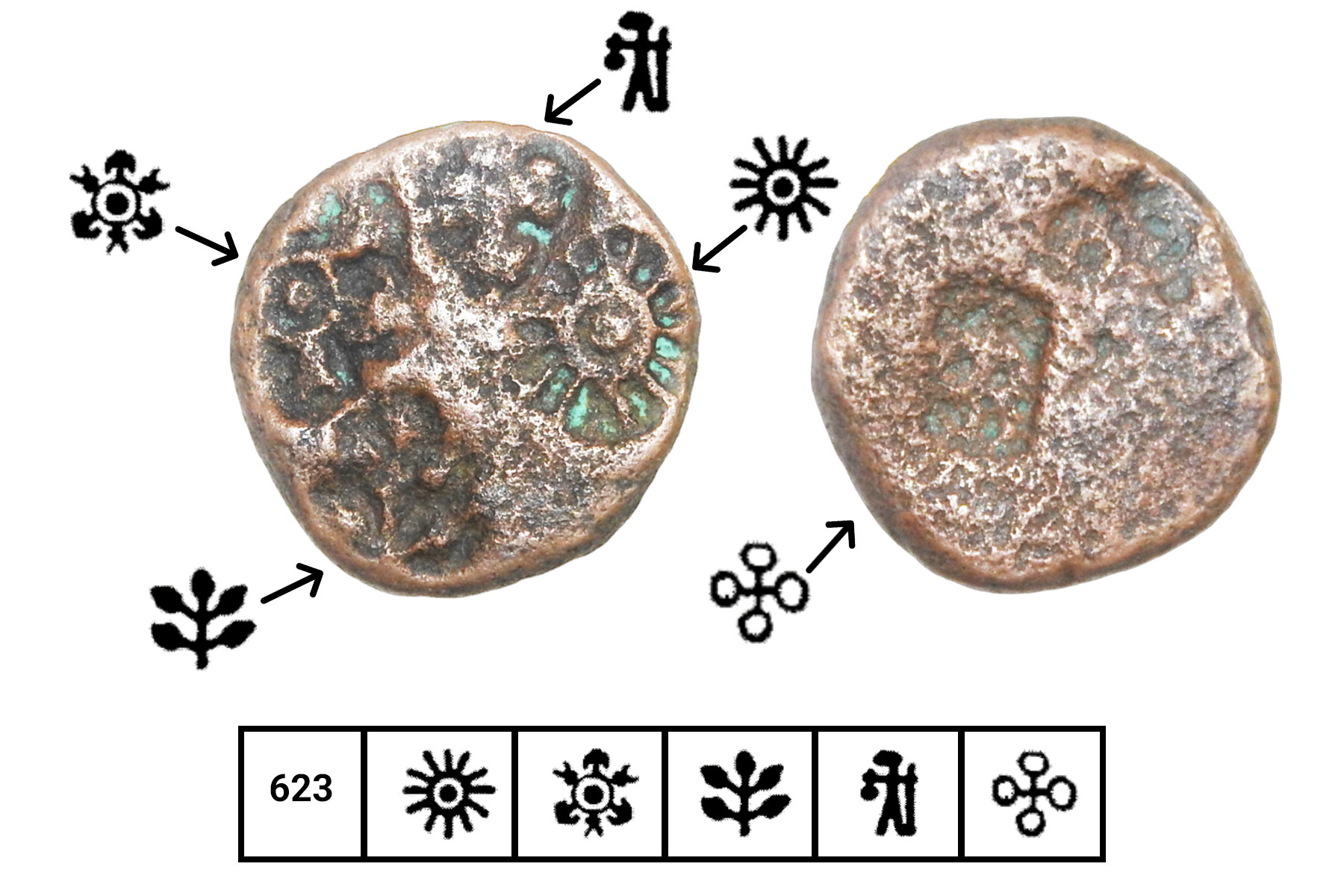
Lot No : 14
Auction No : 8
Post Magadha Janapadha, Ujjain Region (c.100 BC), Copper Heavy Karshapana, 4.90 grms, 5 main symbols on obverse, 1x 6 Armed symbol, 1x Sun, 1x Human holding pole in one hand and pot in another, 1x Tree, Reverse has Ujjain symbol and 3 ovals in a row bisected by a central line, Mitchiner 2004 #4702, Very Rare with all symbols visible and excellent quality
1700
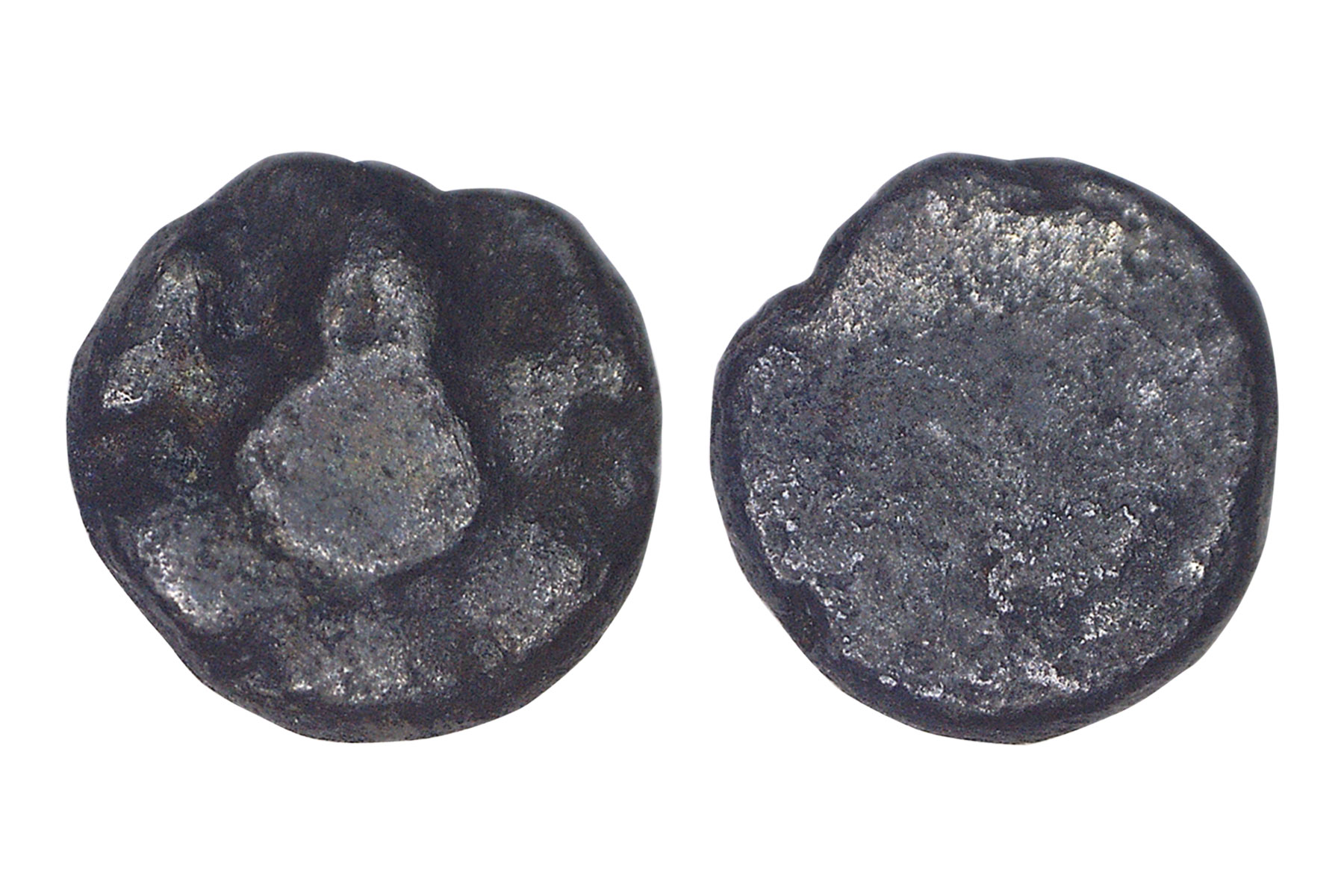
Lot No : 15
Auction No : 8
Magadha Janapadha, Nanda Dynasty (c.345-321 BC), Silver Ardha Masakas, One Ratti weight standard or 1/32 Karshapana, 0.10 grms, 1x 6 armed symbol on obverse, Fishman & Todd #A22, Uniface, Extra Fine, Extermeely Rare. The origin and purpose of ardha māṣikas remain debated and inconclusive. These extremely rare coins are usually found in hoards dominated by Magadha kārṣāpaṇas and are often missed in excavations due to their very small size. Their weight appears to follow the Magadha standard of approximately one ratti, indicating deliberate issue. Some scholars suggest they were trial pieces of the late Nanda or early Mauryan period, while others propose limited use for donations or tax payments. The scarcity of surviving examples points to a very low mintage, leaving their exact function uncertain
1100
Lot No : 16
Auction No : 8
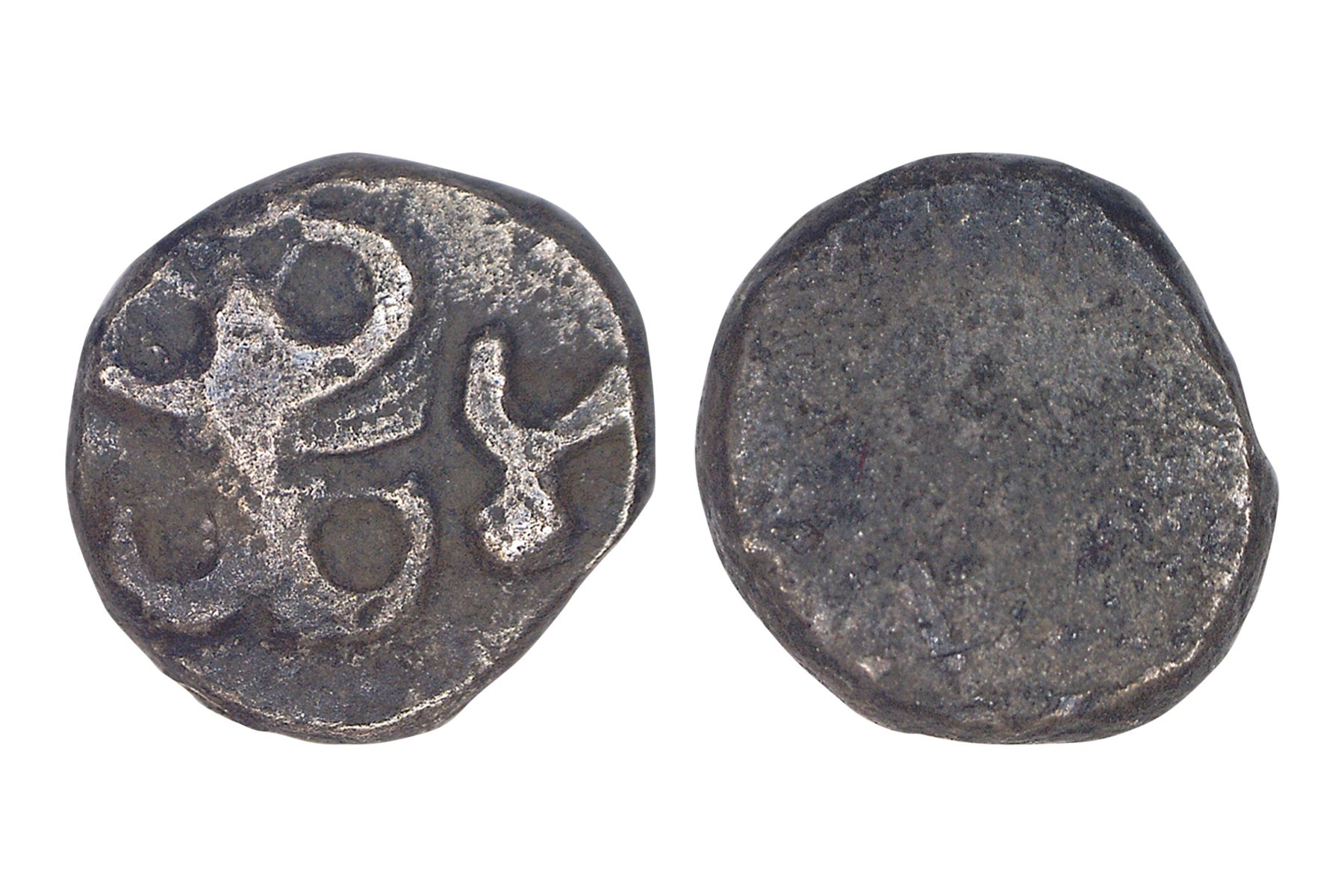
Magadha Janapadha, Nanda Dynasty (c.345-321 BC), Silver Ardha Masakas, One Ratti weight standard or 1/32 Karshapana, 0.11 grms, 1x Srivatsa Symbol with two taurine on either side, Fishman & Todd #F4, Uniface, Extra Fine, Extermeely Rare. The origin and purpose of ardha māṣikas remain debated and inconclusive. These extremely rare coins are usually found in hoards dominated by Magadha kārṣāpaṇas and are often missed in excavations due to their very small size. Their weight appears to follow the Magadha standard of approximately one ratti, indicating deliberate issue. Some scholars suggest they were trial pieces of the late Nanda or early Mauryan period, while others propose limited use for donations or tax payments. The scarcity of surviving examples points to a very low mintage, leaving their exact function uncertain
2500
Lot No : 17
Auction No : 8
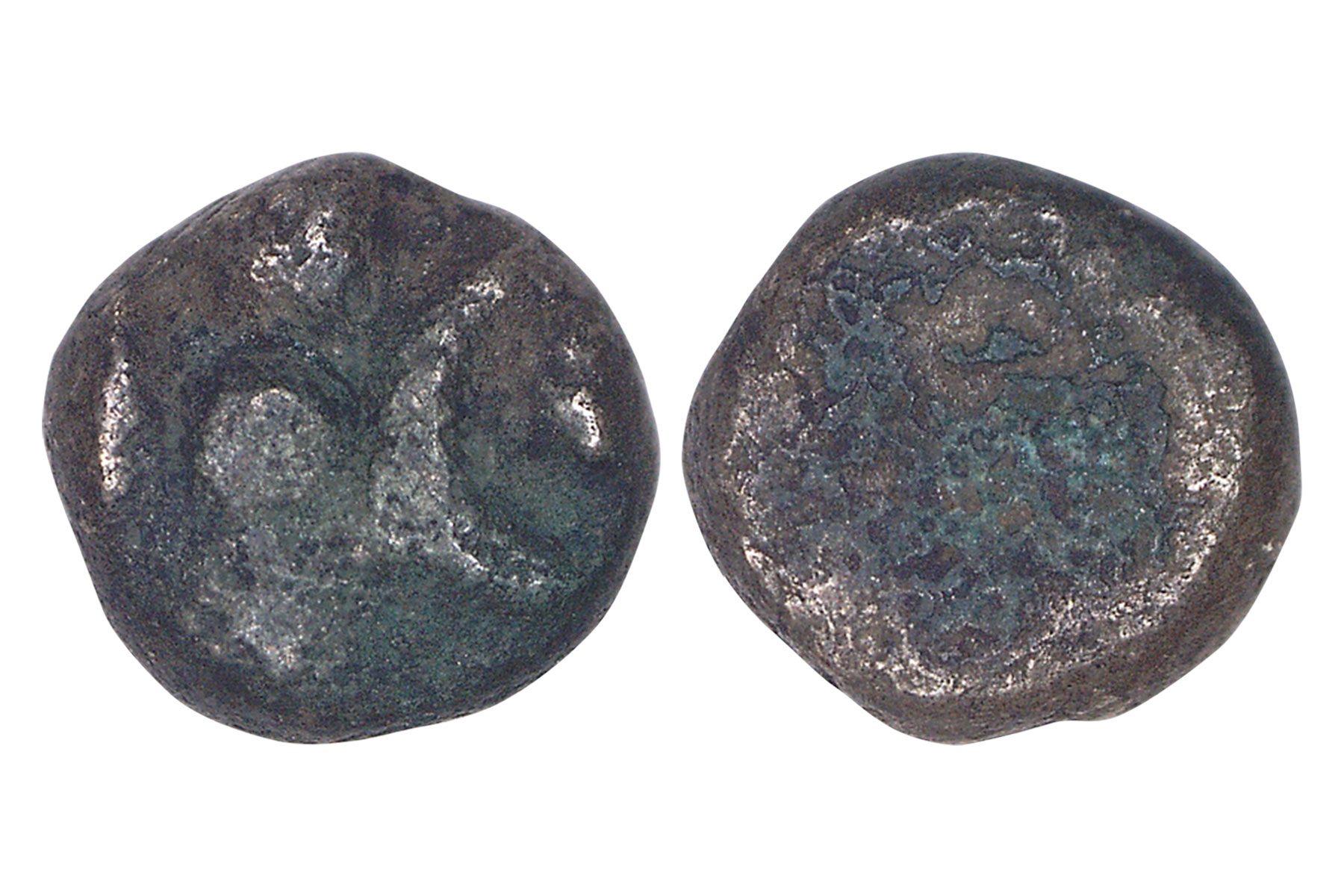
Magadha Janapadha, Nanda Dynasty (c.345-321 BC), Silver Ardha Masakas, One Ratti weight standard or 1/32 Karshapana, 0.13 grms, 1x Large dot as a central device, cresecnt and taurine symbols, Fishman & Todd #A22, Uniface, Extra Fine, Extermeely Rare. The origin and purpose of ardha māṣikas remain debated and inconclusive. These extremely rare coins are usually found in hoards dominated by Magadha kārṣāpaṇas and are often missed in excavations due to their very small size. Their weight appears to follow the Magadha standard of approximately one ratti, indicating deliberate issue. Some scholars suggest they were trial pieces of the late Nanda or early Mauryan period, while others propose limited use for donations or tax payments. The scarcity of surviving examples points to a very low mintage, leaving their exact function uncertain
1100
Lot No : 18
Auction No : 8
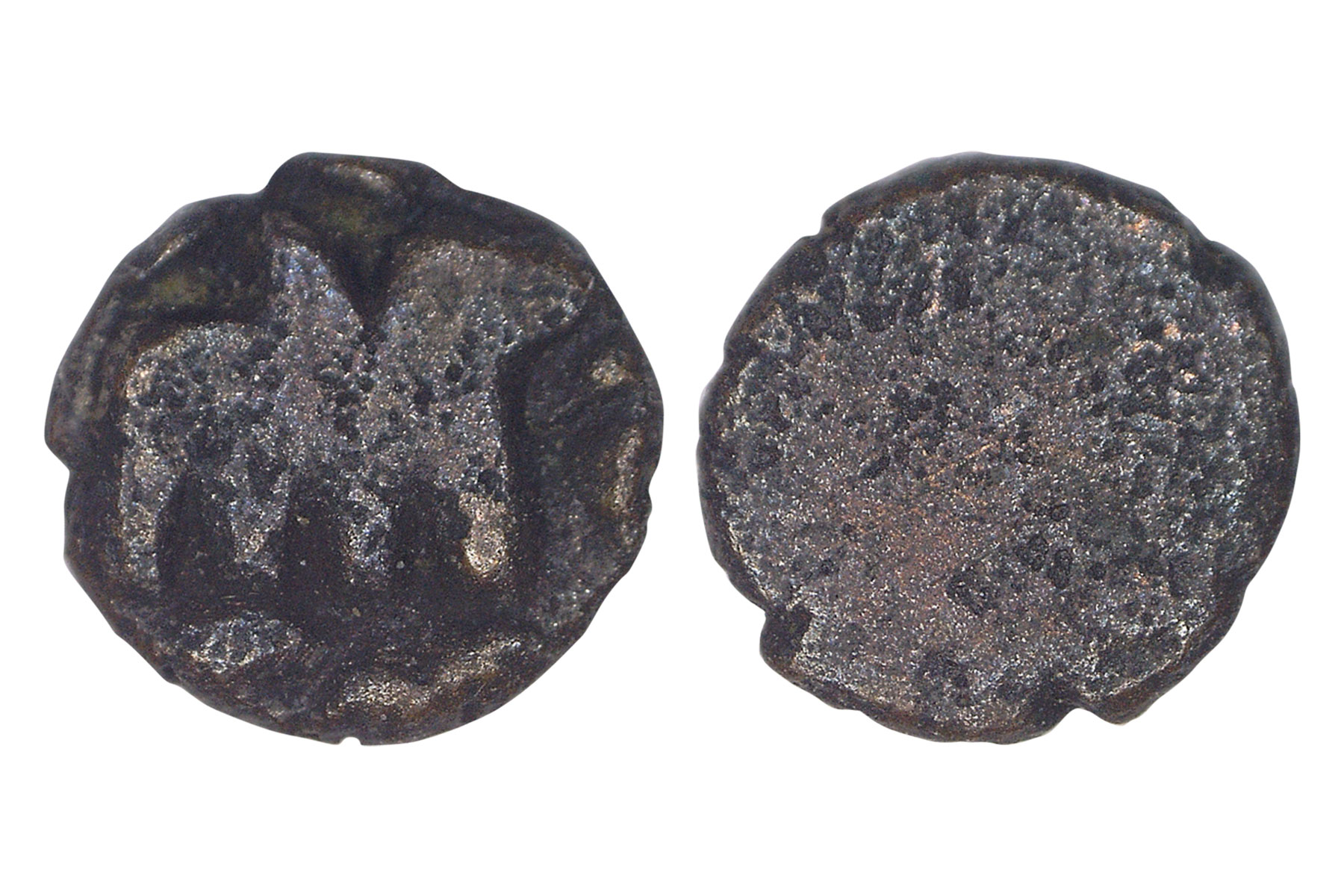
Magadha Janapadha, Nanda Dynasty (c.345-321 BC), Silver Ardha Masakas, One Ratti weight standard or 1/32 Karshapana, 0.09 grms, 1x Bull to the right with taurine symbol around on obverse, Fishman & Todd #I12, Uniface, Extra Fine, Extermeely Rare. The origin and purpose of ardha māṣikas remain debated and inconclusive. These extremely rare coins are usually found in hoards dominated by Magadha kārṣāpaṇas and are often missed in excavations due to their very small size. Their weight appears to follow the Magadha standard of approximately one ratti, indicating deliberate issue. Some scholars suggest they were trial pieces of the late Nanda or early Mauryan period, while others propose limited use for donations or tax payments. The scarcity of surviving examples points to a very low mintage, leaving their exact function uncertain
 WhatsApp