
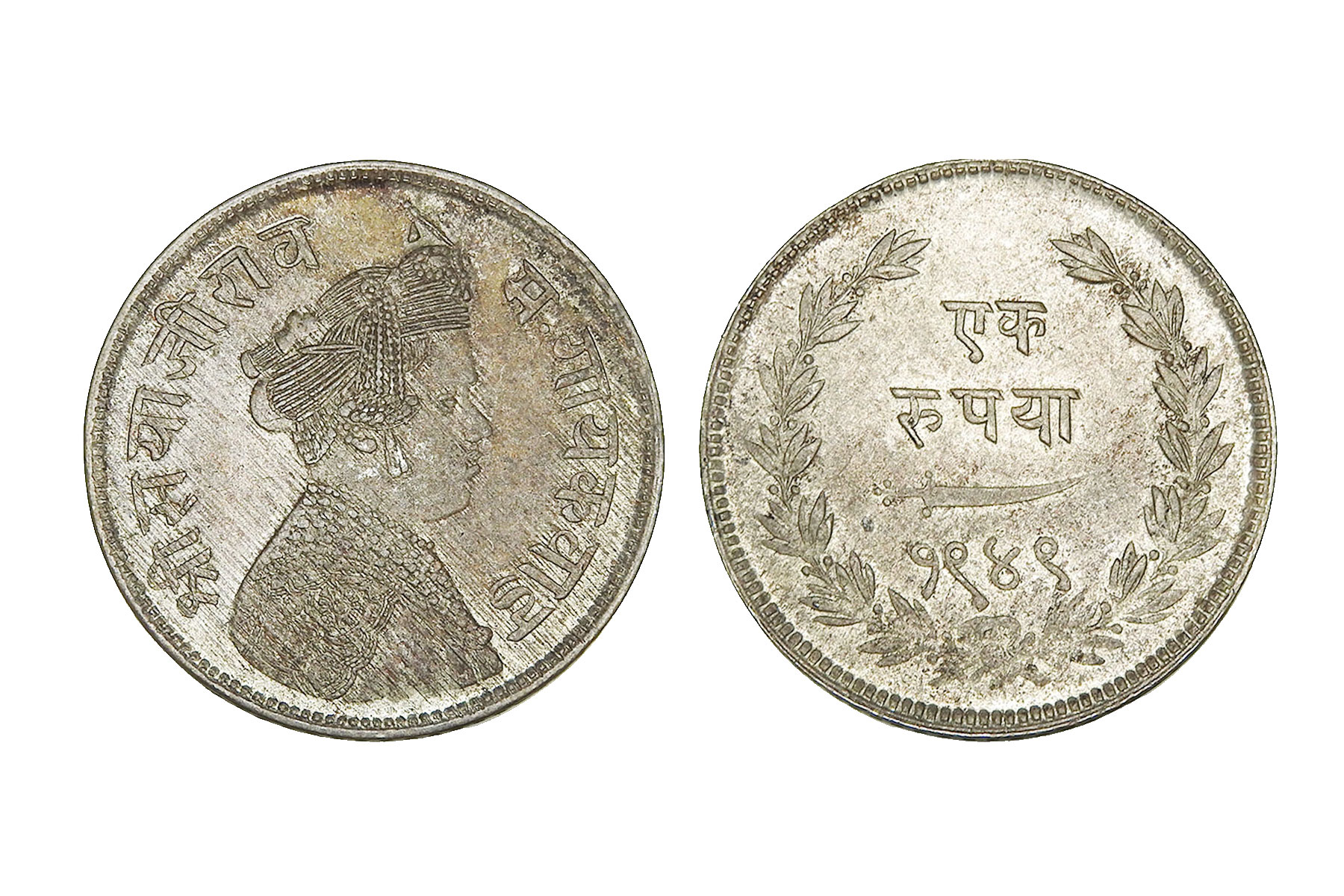
Lot No : 231
Auction No : 8
Baroda State, Sayaji Rao III Gaekwad(c. 1875-1938CE), Silver Rupee, 11.30grms, VS1949, Obv. Nagari legend "ek rupia" with sword which is the mint mark and date, Rev. Bust of the king facing right with name of the king, Gem Uncirculated with Cross lines on the reverse side indicating freshly made dies, beautiful brown platina on both side, Very Rare in this condition. Sayaji Rao III Gaekwad was the most progressive ruler of Baroda State, known for sweeping administrative, social, and educational reforms. He introduced free and compulsory primary education, modernized revenue and judiciary systems, and promoted industrial development. He patronized scholars like B. R. Ambedkar. Though ruling under British suzerainty, he asserted internal autonomy, making Baroda a model princely state in India
7000
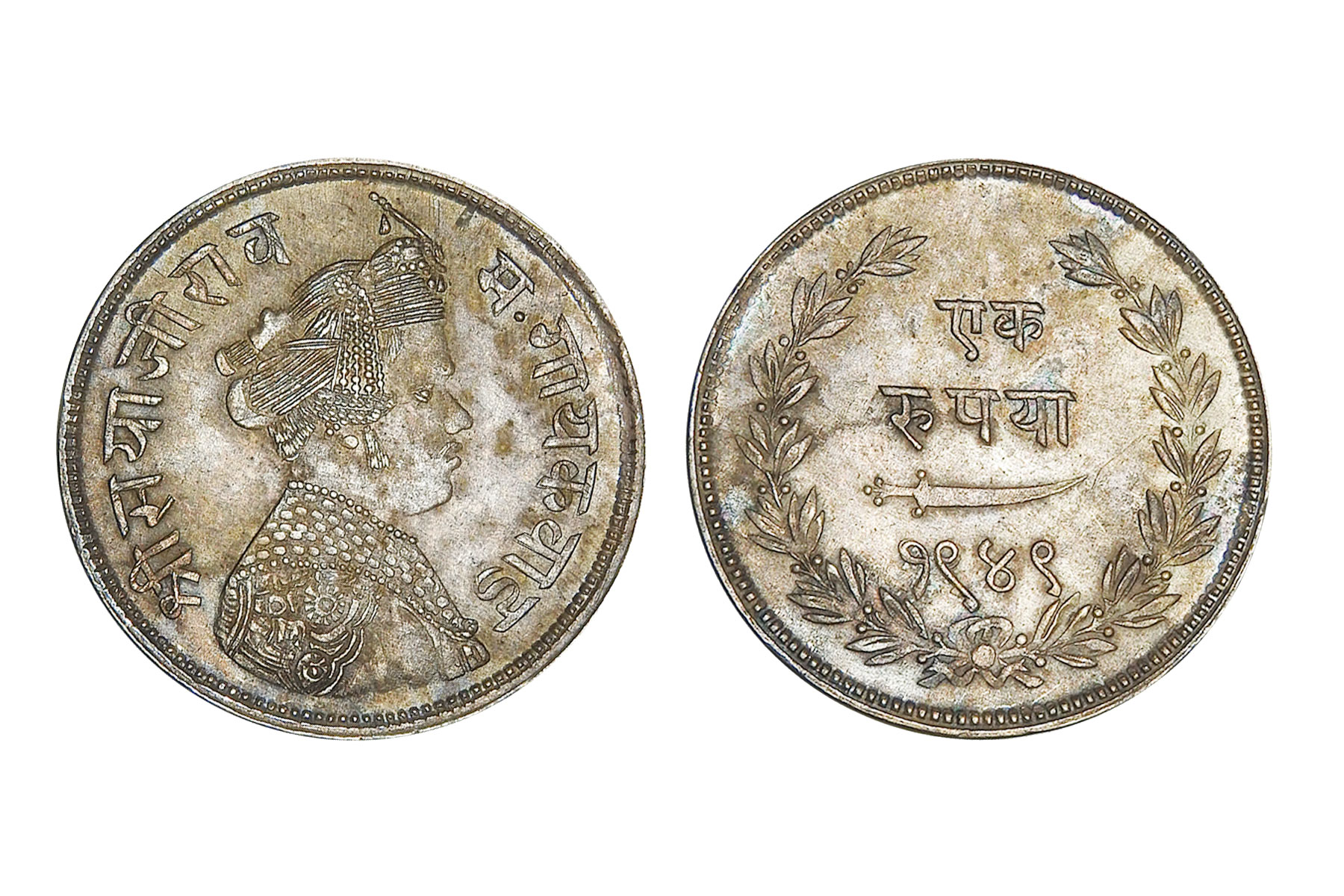
Lot No : 232
Auction No : 8
Baroda State, Sayaji Rao III Gaekwad(c. 1875-1938CE), Silver Rupee, 11.30grms, VS1949, Obv. Nagari legend "ek rupia" with sword which is the mint mark and date, Rev. Bust of the king facing right with name of the king, Gem Uncirculated with rainbow wooden cabinet platina on both sides, Very Rare in this condition. Sayaji Rao III Gaekwad was the most progressive ruler of Baroda State, known for sweeping administrative, social, and educational reforms. He introduced free and compulsory primary education, modernized revenue and judiciary systems, and promoted industrial development. He patronized scholars like B. R. Ambedkar. Though ruling under British suzerainty, he asserted internal autonomy, making Baroda a model princely state in India
7500
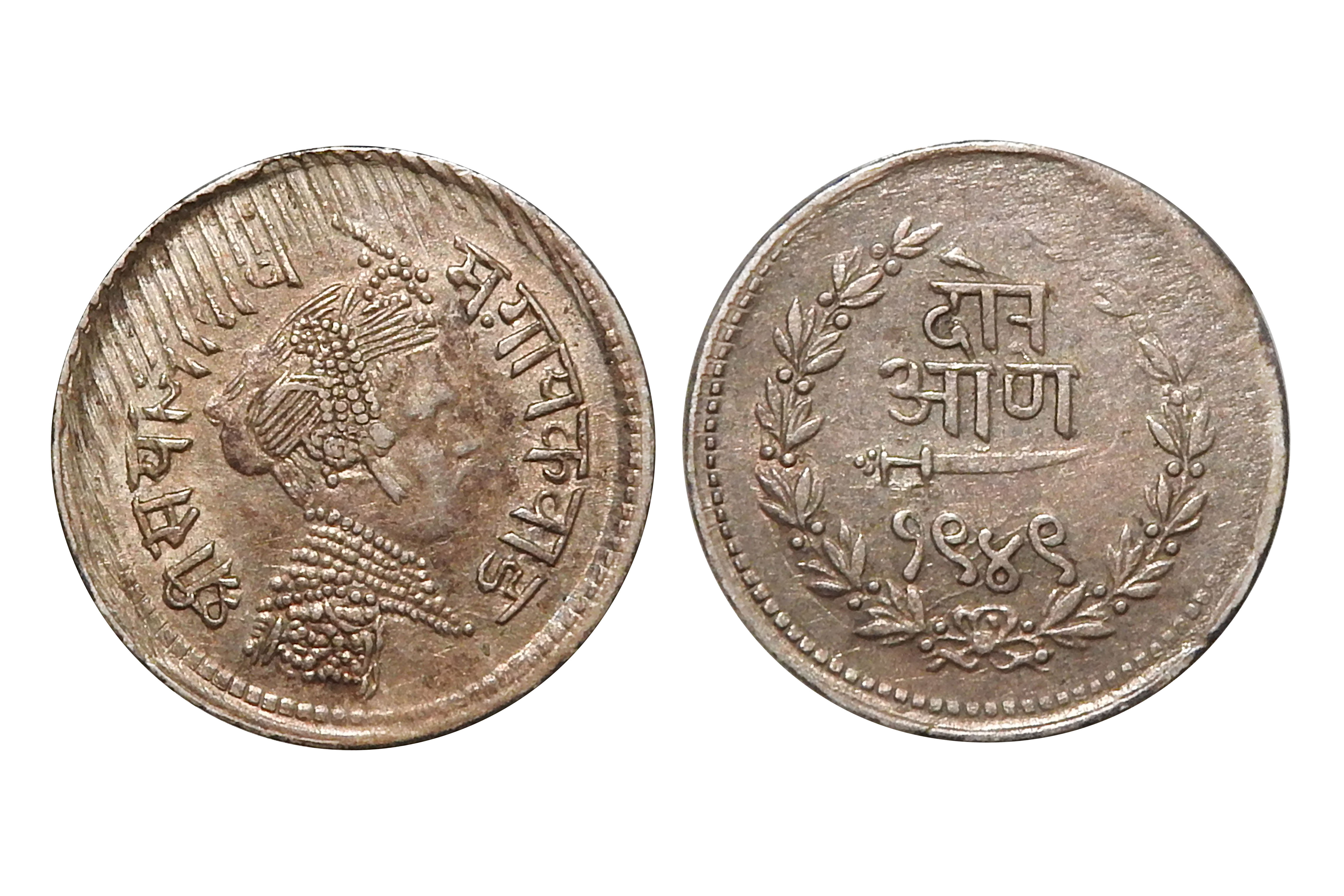
Lot No : 233
Auction No : 8
Baroda State, Sayaji Rao III Gaekwad(c. 1875-1938CE), Silver 2 annas, 1.40grms, VS1949, Obv. Nagari legend "do anna" with sword which is the mint mark and date, Rev. Bust of the king facing right with name of the king, Gem Uncirculated with Cross lines on the reverse side indicating freshly made dies, Very Scarce. Sayaji Rao III Gaekwad was the most progressive ruler of Baroda State, known for sweeping administrative, social, and educational reforms. He introduced free and compulsory primary education, modernized revenue and judiciary systems, and promoted industrial development. He patronized scholars like B. R. Ambedkar. Though ruling under British suzerainty, he asserted internal autonomy, making Baroda a model princely state in India.
4300
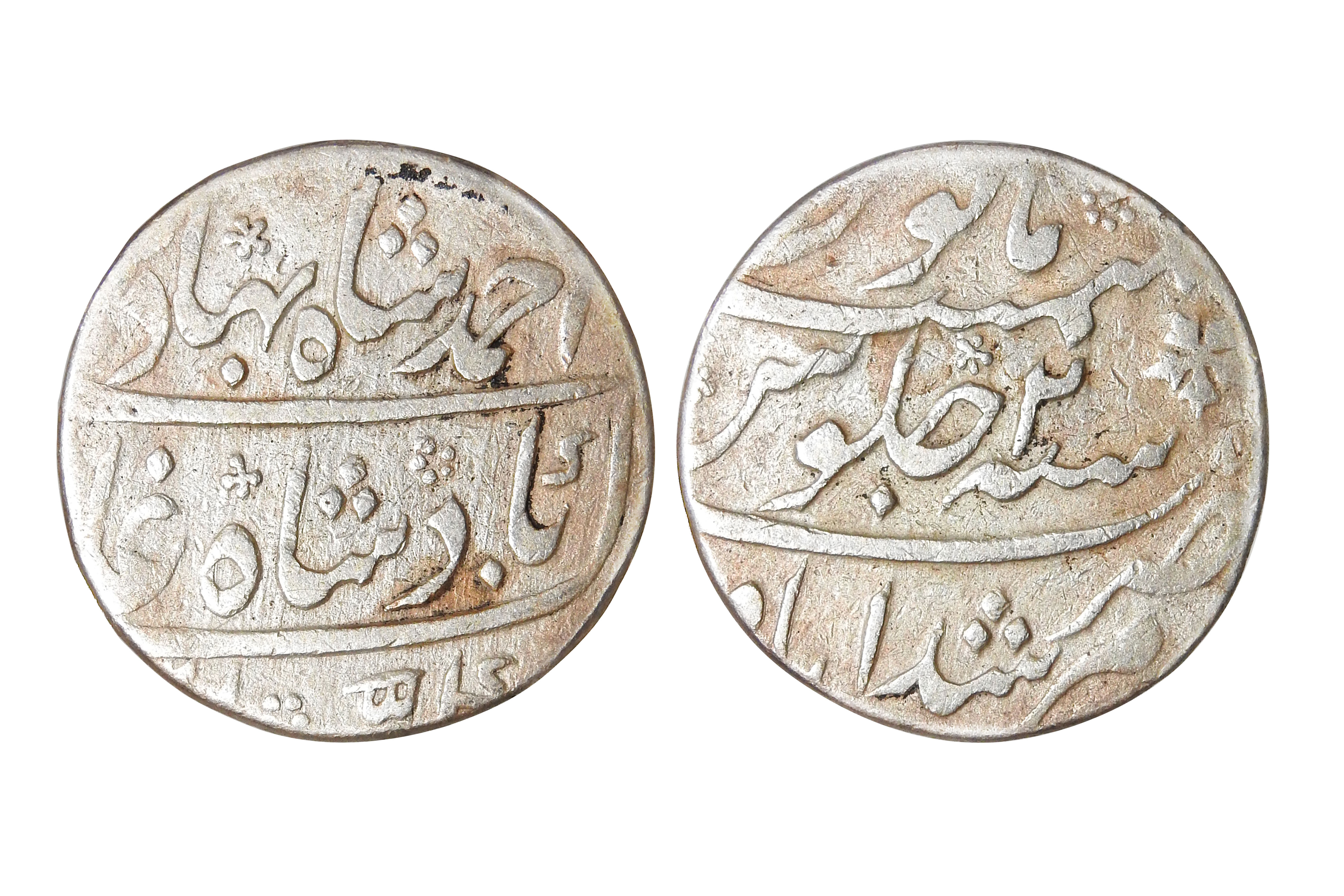
Lot No : 234
Auction No : 8
Bengal Nawabs, Alivardi Khan (c. 1676–1756CE), Silver Nazarana Rupee, 11.10grms, RY02, Issued in the name of Mughal King- Ahmed Shah Bahadur, Minted at Murshidabad, Very Fine+, Exceedingly Rare, Being offered for the first time in any auction. Alivardi Khan was the fourth Nawab of Bengal, Bihar, and Orissa, ruling from 1740 to 1756 after overthrowing Sarfaraz Khan and ending the Nasiri dynasty. His reign was dominated by repeated Maratha invasions under Raghuji Bhonsle, which devastated Bengal and forced the cession of Orissa in 1751. He also suppressed rebellions in Bihar and internal challenges, including tensions with his grandson Siraj-ud-Daulah. Alivardi later focused on rebuilding Bengal, patronized the arts, revived the fiscal policies of Murshid Quli Khan, and maintained strict neutrality toward European powers, preventing their conflicts within his territories. He was succeeded by Siraj-ud-Daulah in 1756.
11000
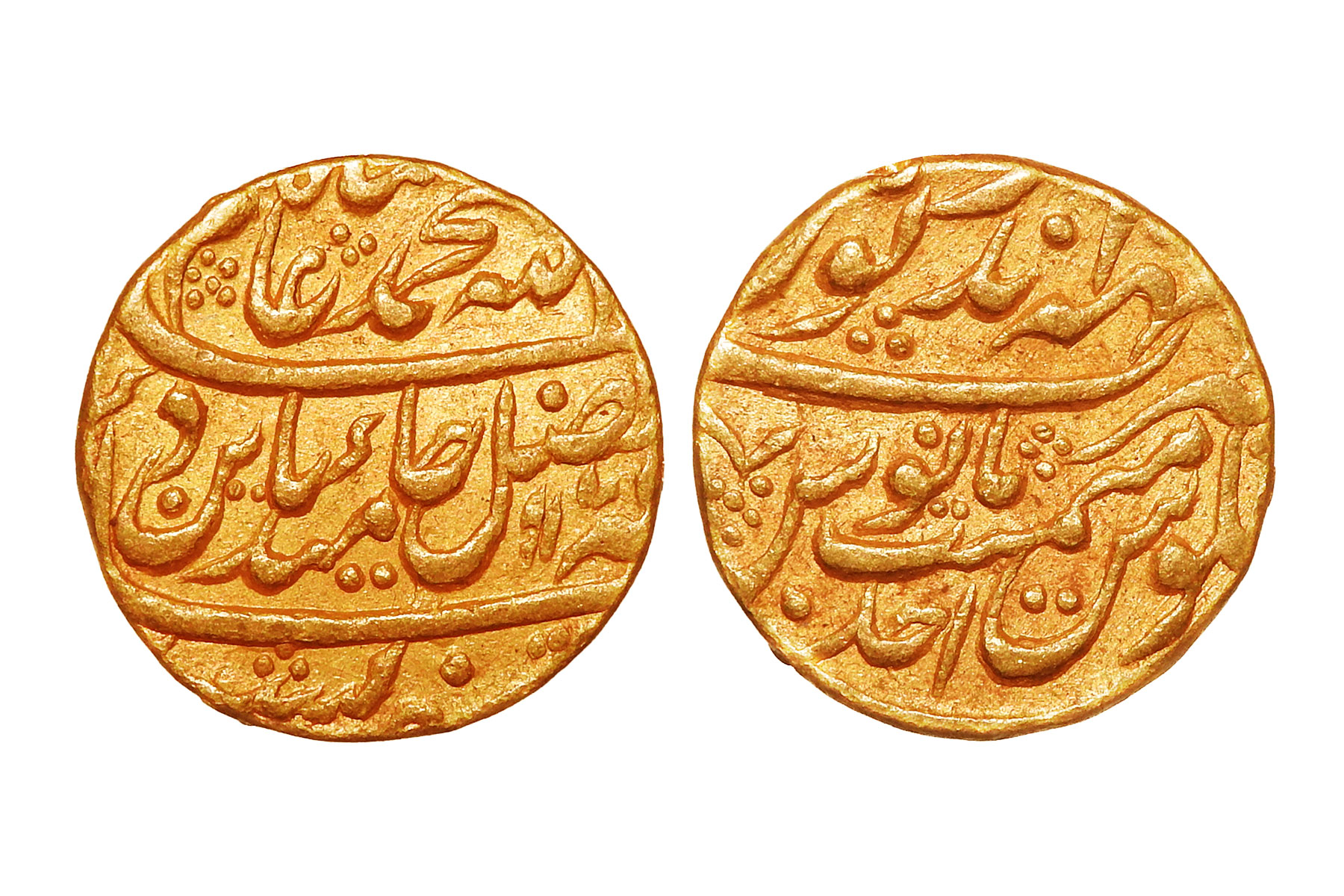
Lot No : 235
Auction No : 8
Bharatpur State, Maharaja Suraj Mal(c. 1755–1763CE), Gold Mohur, 10.90grms, Issued in the name of Mughal King- Shah Alam II, AH1173/RY AHAD, Minted at Mahaindrapur, Uncirculated and pleasing coin, Very Rare. Maharaja Suraj Mal was one of the most capable rulers of the Jat kingdom. He consolidated fragmented territories, fortified Bharatpur with strong defenses, and expanded his influence across northern India. Renowned for his military acumen, Suraj Mal successfully defended his state against both Mughal forces and Maratha incursions, skillfully using alliances and strategic diplomacy. Beyond warfare, he promoted agriculture, civic infrastructure, and temple construction, leaving a lasting mark on the region’s prosperity and culture. His reign is remembered for strength, effective governance, and architectural achievements, making him a towering figure in 18th-century Rajasthan.
200000
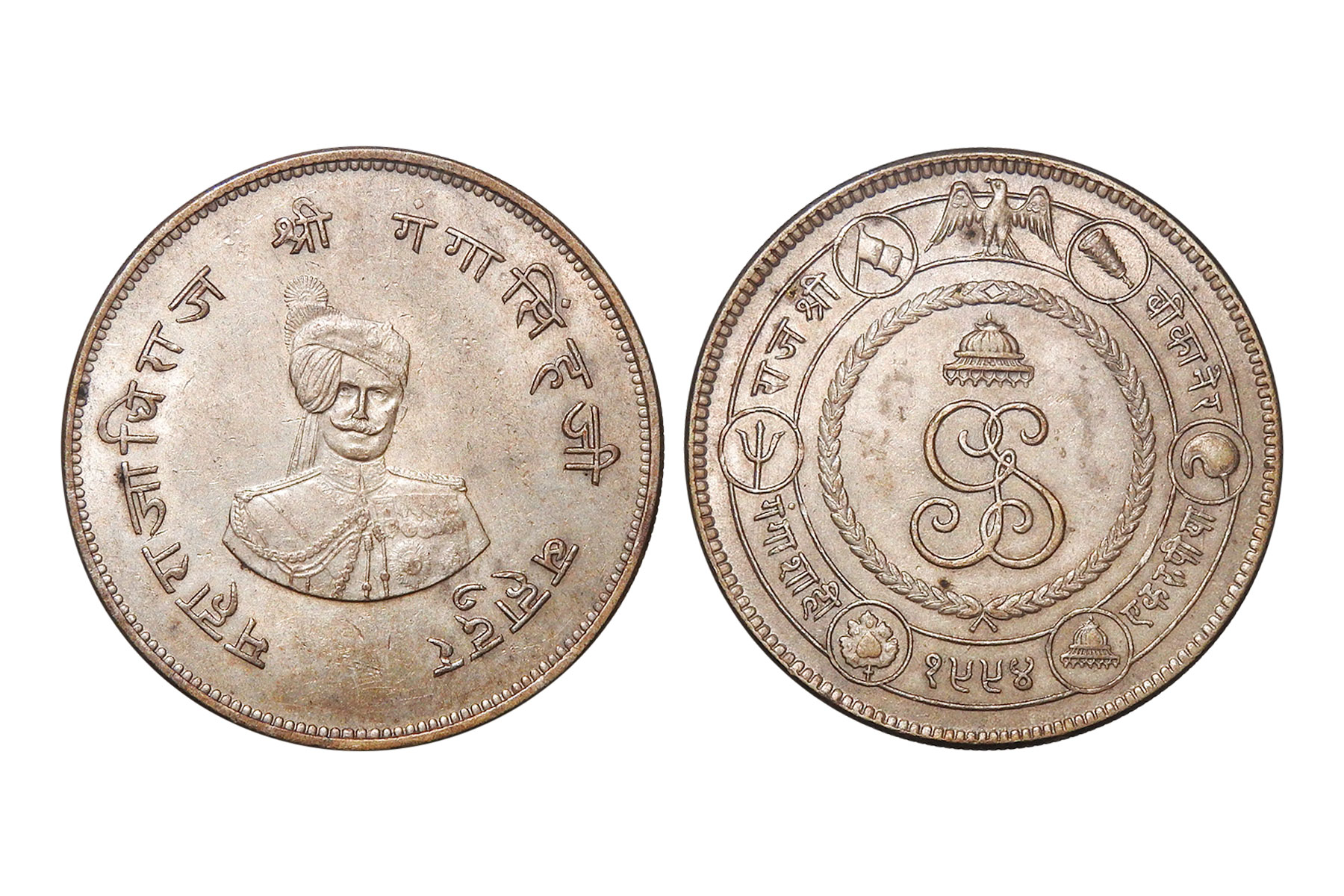
Lot No : 236
Auction No : 8
Bikaner State, Ganga Singh(c. 1887-1942CE), Silver Commemorative Nazarana Rupee, 12.97grms, Bikaner State, Ganga Singh(c. 1887-1942CE), Silver Commemorative Nazarana Rupee, 12.97grms, VS1994, Issued to celebrate 50th Anniversary of Regin, Obv. Crowned monogram with nigari legend around, Rev. Bust of the king front facing with name and date, Uncirculated with wooden cabin platina, Rare. Maharaja Ganga Singh (r. 1887–1943 AD) was the most prominent ruler of Bikaner State, known for major administrative reforms and infrastructure development. He built the Ganga Canal, transforming desert agriculture, and modernized governance, judiciary, and army. Loyal to the British, he served in World War I, represented India at the Imperial War Conference and League of Nations, and enhanced Bikaner’s political stature while maintaining strong internal autonomy.
12000
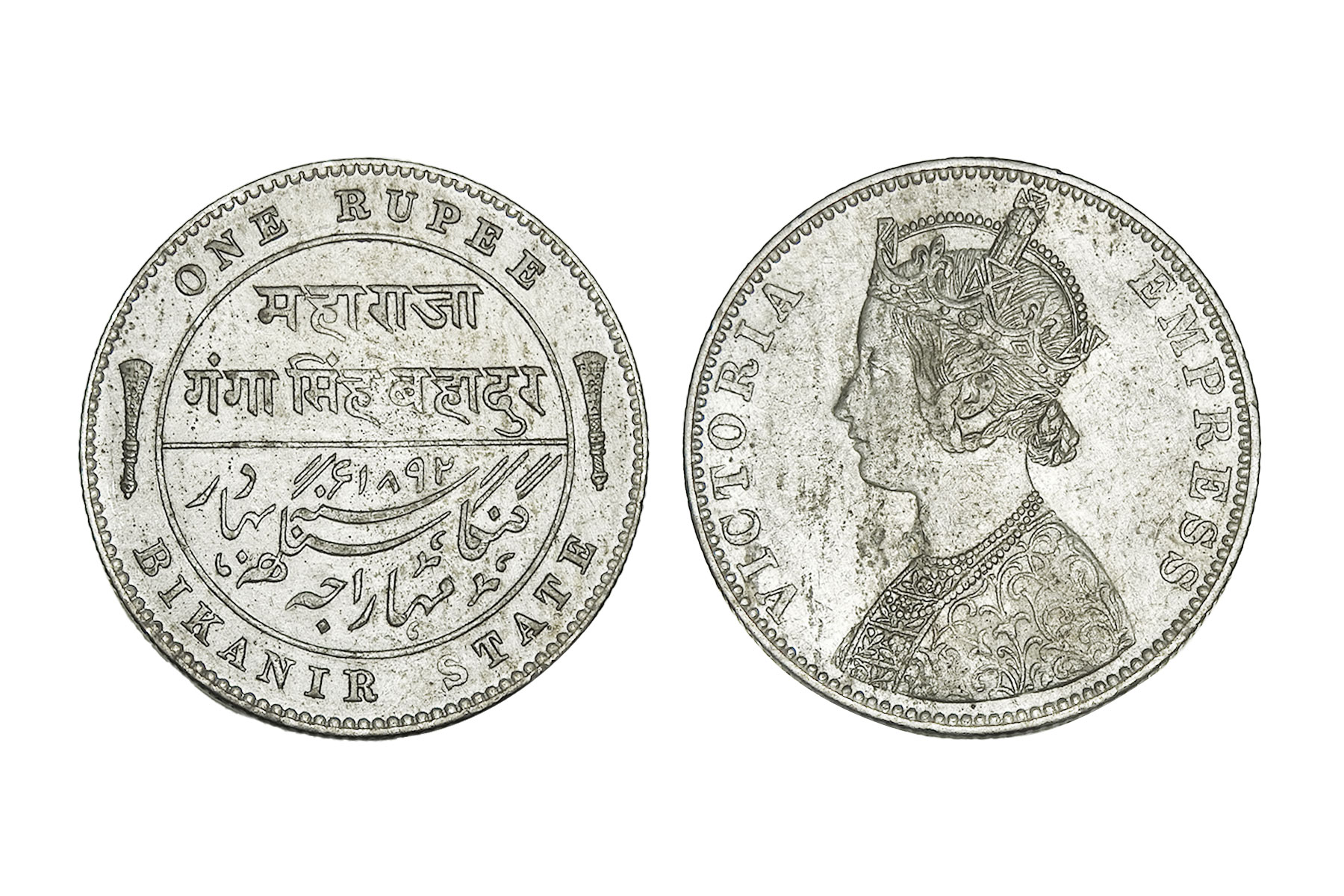
Lot No : 237
Auction No : 8
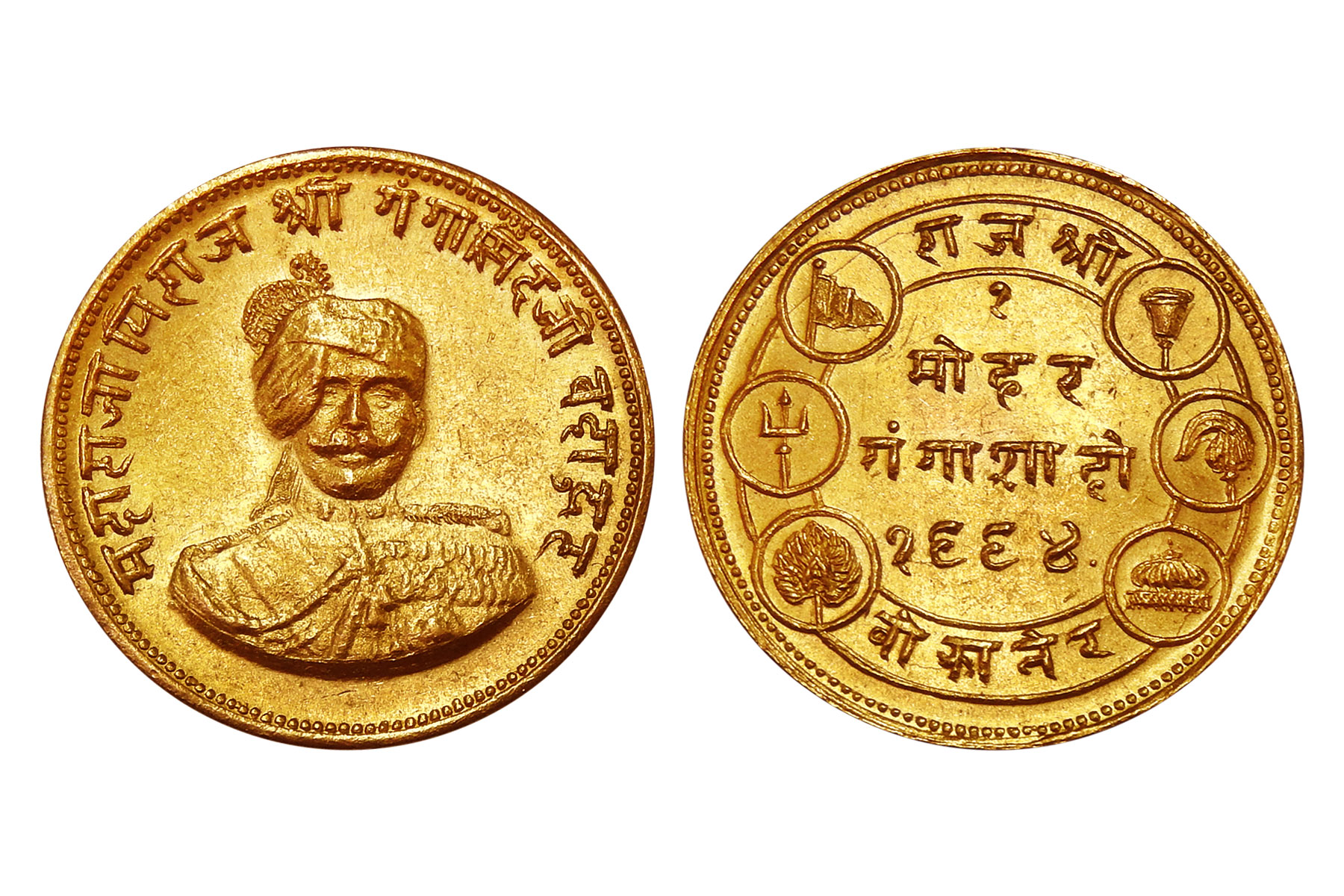
Lot No : 239
Auction No : 8
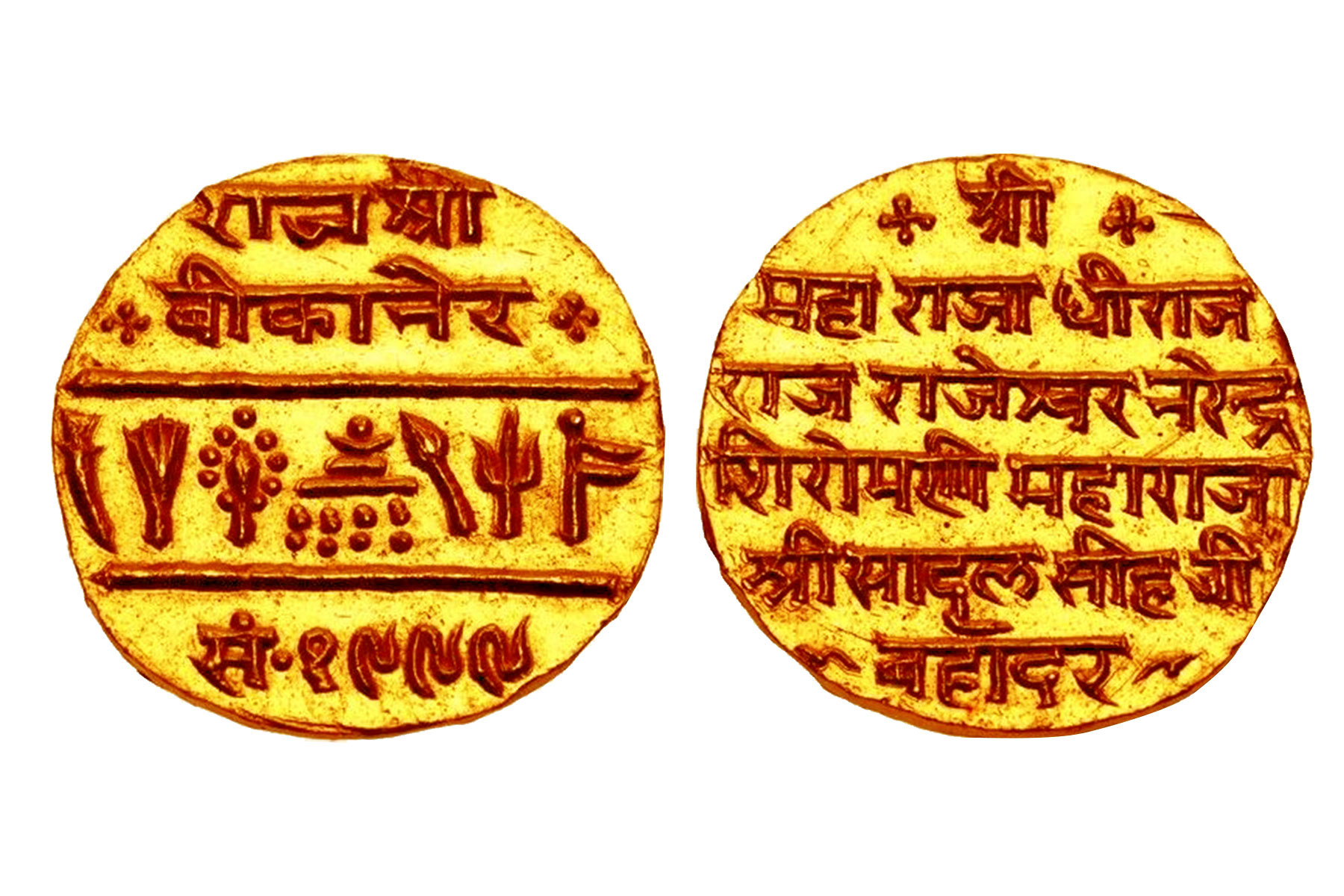
Bikaner State, Sadul Singh(c. 1943-1949CE), Gold Presentation Mohur, 8.70grms, VS1999/AD1942, Obv. Devanagari Script श्री महा राजा धीराज राज राजेश्वर नरेन्द्रे शिरोमणि महाराज श्री सादुल सीह जी बहादुर ( Sri / Maha Raja Dhiraj / Raj Rajeshwar Narendra / Shiromani Maharaj / Sri Sadul Singh Ji / Brave), Rev. Devanagari Script राजाश्री बीकानेर सं·१९९९ (Raja Shri Bikaner 1999) with Seven Auspicious Symbols Signifying Royal Authority such as trishul, parasol, flag, temple top and Sword, Mint State and Exceedingly Rare. Sadul Singh ascended the throne of Bikaner during the closing phase of British paramountcy and the turbulent years surrounding Indian independence. Educated and politically aware, he played a measured and diplomatic role in navigating his state through constitutional transition, ultimately acceding to the Indian Union while safeguarding Bikaner’s dignity and legacy. His reign, though brief, represents the final chapter of sovereign Rajput authority in the region, making issues struck in his name historically poignant as symbols of both continuity and closure. Only four examples of this prestigious gold issue have appeared in the marketplace to date. Of those, two bore signs of prior mounting, and the most recent public offering occurred nearly a decade ago. The present piece stands apart in preservation and visual integrity, representing the finest quality among all recorded specimens. Its superior state elevates it beyond mere rarity into the realm of true condition census significance. Opportunities to acquire a specimen of this calibre are exceptionally infrequent, positioning this offering as a landmark chance for the discerning collector to secure the definitive example of this remarkable late-princely gold issue.
 WhatsApp