
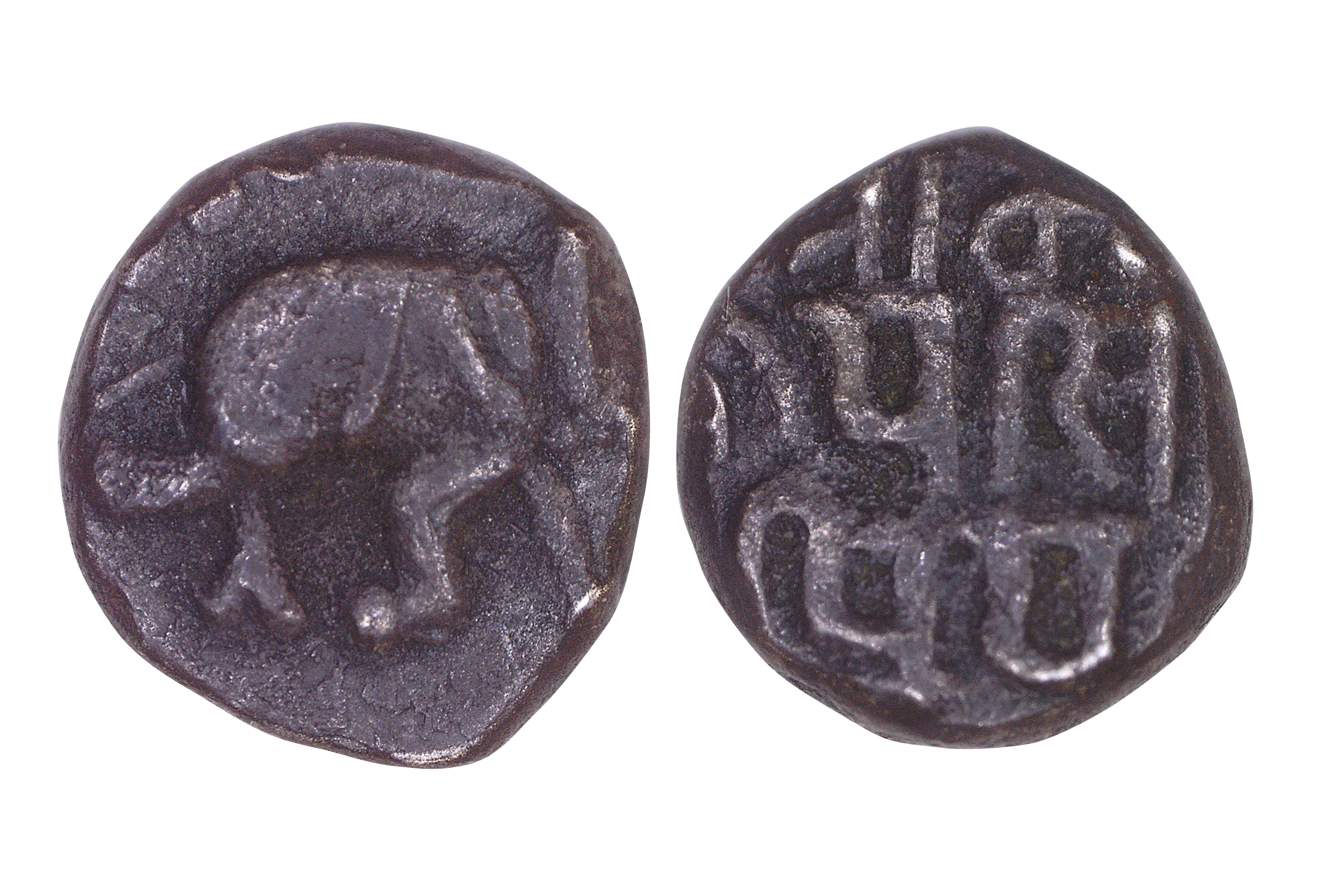
Lot No : 81
Auction No : 8
Solanki’s of Gujarat, Jayasimha Siddharaja (c. 1094-1144 AD), Silver Masha, 0.60grms, Obv. An Elephant walking right, Rev. Devanagari legend in three lines Srimaj Jayasimha Piya (Deyell 164). Very Fine+, Rare. Jayasimha Siddharaja was the most aggressive Solanki ruler, destroying the Paramara power in Malwa after defeating Naravarman and annexing Ujjain. He crushed the Chudasamas of Saurashtra, subjugated Abu and Marwar chiefs, and checked pressure from the Chahamanas (Chauhans). His campaigns briefly made Gujarat the dominant military power of western India before later reversals under successors
3900
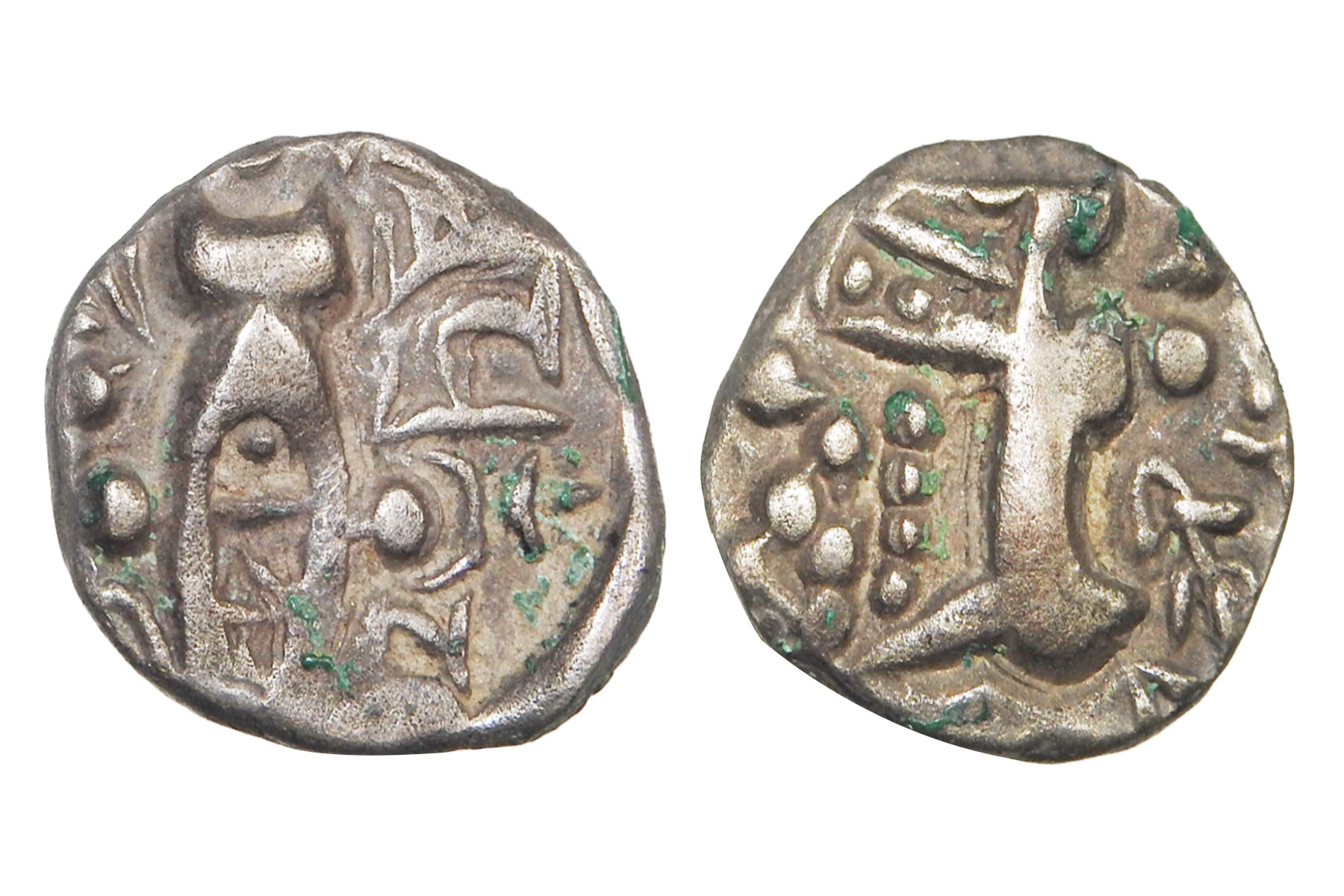
Lot No : 82
Auction No : 8
Karkotakas of Kashmir, Pratapaditya II (c. 500CE), Base Gold Dinar, 7.40grms, Obv. king standing facing left, with Brahmi legend Kidara inscribed under the arm, Rev. A Stylized representation of goddess Ardoksho seated with legend. Very Fine+, Rare Pratapaditya II was a late Karkota ruler of Kashmir, remembered mainly for internal conflict rather than expansion. His reign was marked by court intrigue, factional rivalry, and resistance from local nobles, weakening central authority. There are no recorded major external wars or lasting alliances under him; instead, instability during his rule accelerated the decline of Karkota power, paving the way for political fragmentation in Kashmir.
6000

Lot No : 83
Auction No : 8
Hephthalites, Hunnic Tribes, (c. 650-720CE), Silver Drachm, 3.80grms, Obv. Bust of the Sasanian king Peroz I facing right wearing winged head dress with blindered pahlavi legend to right, Rev. Fire Altar, with attendents on either side with sun and moon above, Very Fine+, Rare The Hephthalites, a dominant Hunnic confederation, clashed repeatedly with the Sasanian Empire under Peroz I. Peroz fought multiple wars against them, suffered two major defeats, and was ultimately killed in battle (484 CE) after being trapped by Hephthalite forces. Following this, the Hephthalites imposed tribute on Persia and extended influence across Bactria and Gandhara, threatening Sasanian frontiers and reshaping power dynamics in the region. the coins were issue with his face because copying Peroz’s portrait gave the Hephthalites instant monetary legitimacy and acceptance in conquered Sasanian territories
3300
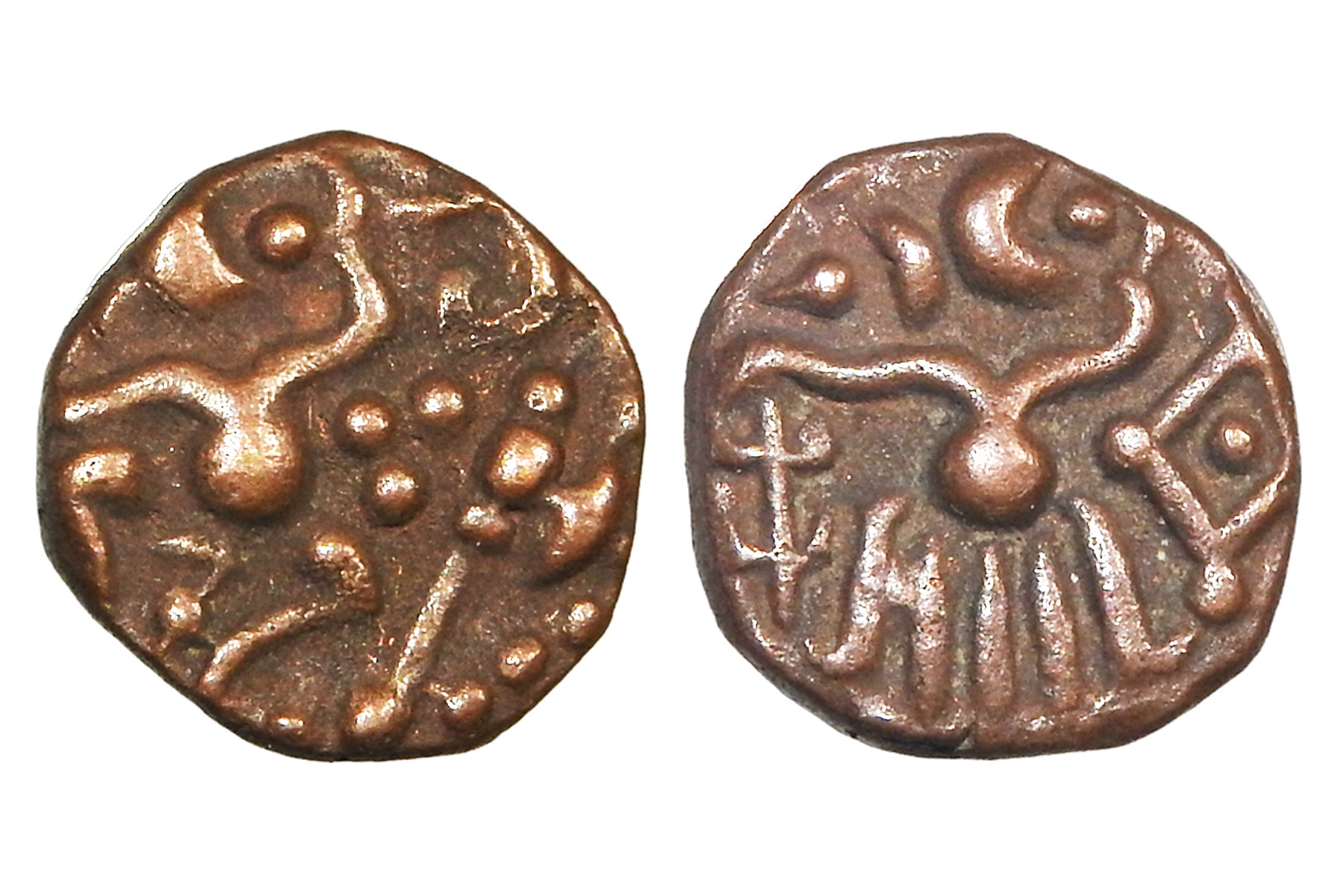
Lot No : 84
Auction No : 8
Venad Cheras, Jayasimhanad,(c. 1266–1267CE) Copper Cash, 1.80grms, Obv. King seated, to his right a Battle-axe and Grantha letter 'Cha', Rev. Chola style standing figure with symbols on either sides, broad flan. Very Fine, Very Scarce. Jayasimhanad of the Venad Cheras is noted for regional power struggles in south Kerala, asserting Venad’s independence against rival Chera branches and neighbouring chiefs.
1200
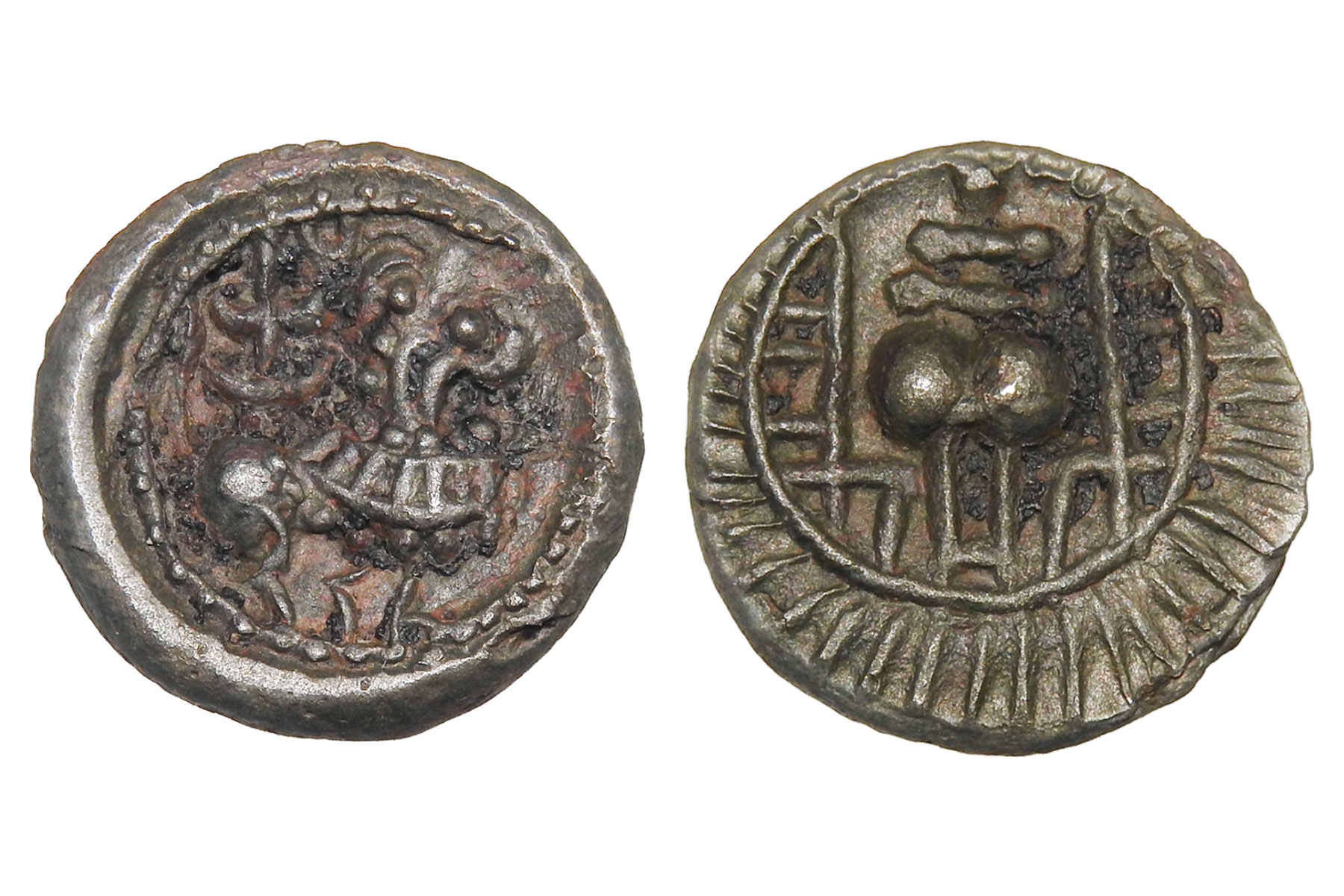
Lot No : 85
Auction No : 8
Vishnukundin Dynasty, Madhavavarman (c. 462–508 CE), Copper base alloy Unit, 5.80grms, obv. lion to right with Srivatsa symbol above, Rev. conch shell between two tridents (Mitch K&A 179-182). Extra Fine+, Rare in this condition. Madhavavarman I rose as a powerful ruler, strengthening the dynasty through continuous wars against the Vakatakas in the Deccan and pressure on Pallava frontiers, temporarily making the Vishnukundins a dominant regional power
3300
Lot No : 86
Auction No : 8
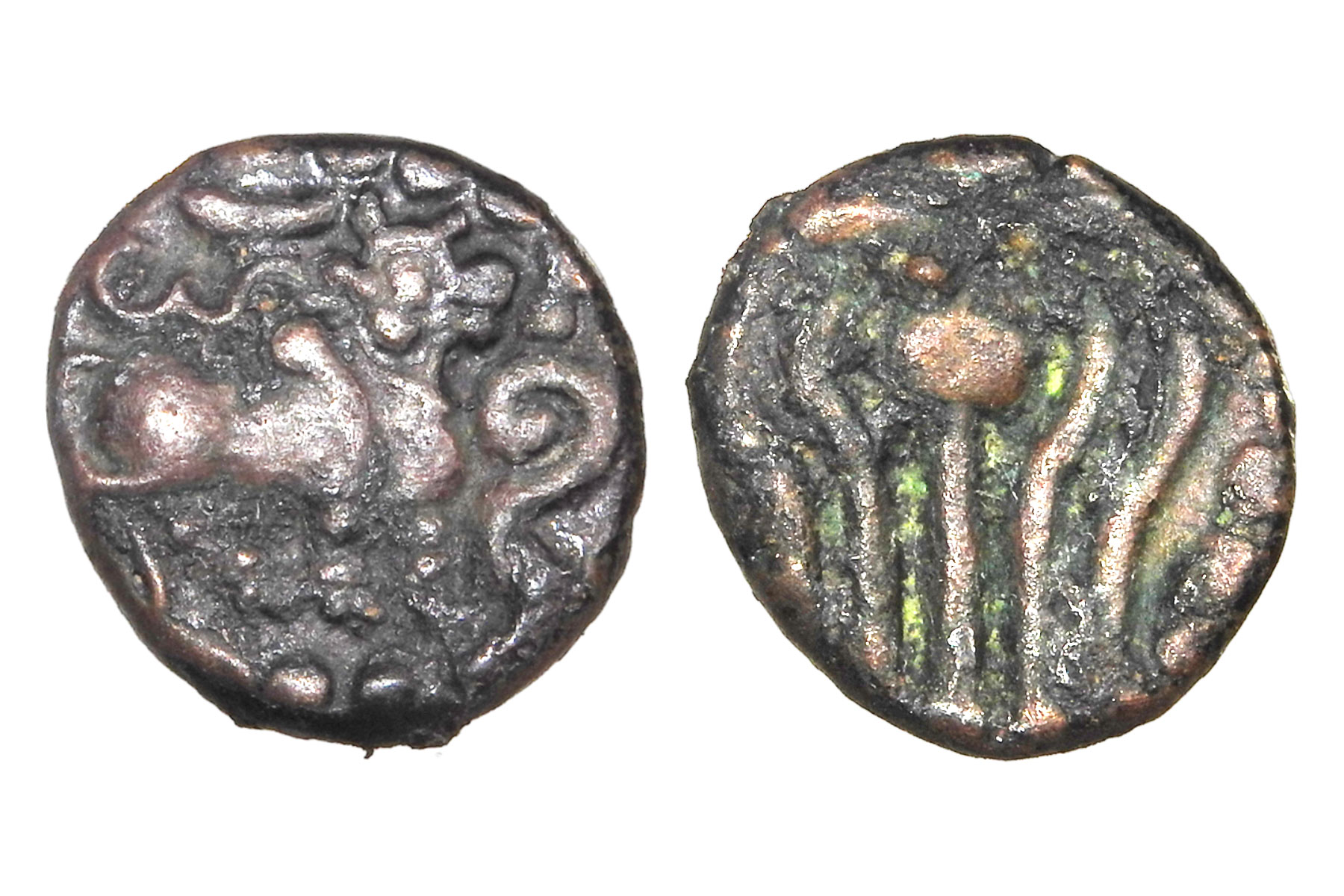
Pallavas of Sendamangalam (1221-1278 AD), Copper Kasu, 3.3g, obv. bull standing facing right, a crescent above and conch in the front, possible kannada legend "BA" above the back, Rev. Chola style king standing (Mitch 355). Very Fine, Rare. Pallavas of Sendamangalam were a late Pallava (Kadava Pallava) branch who ruled parts of northern Tamil Nadu, engaging in repeated conflicts with the Cholas, Hoysalas, and emerging Pandya power, before being finally absorbed as Pandya dominance expanded
1100
Lot No : 87
Auction No : 8
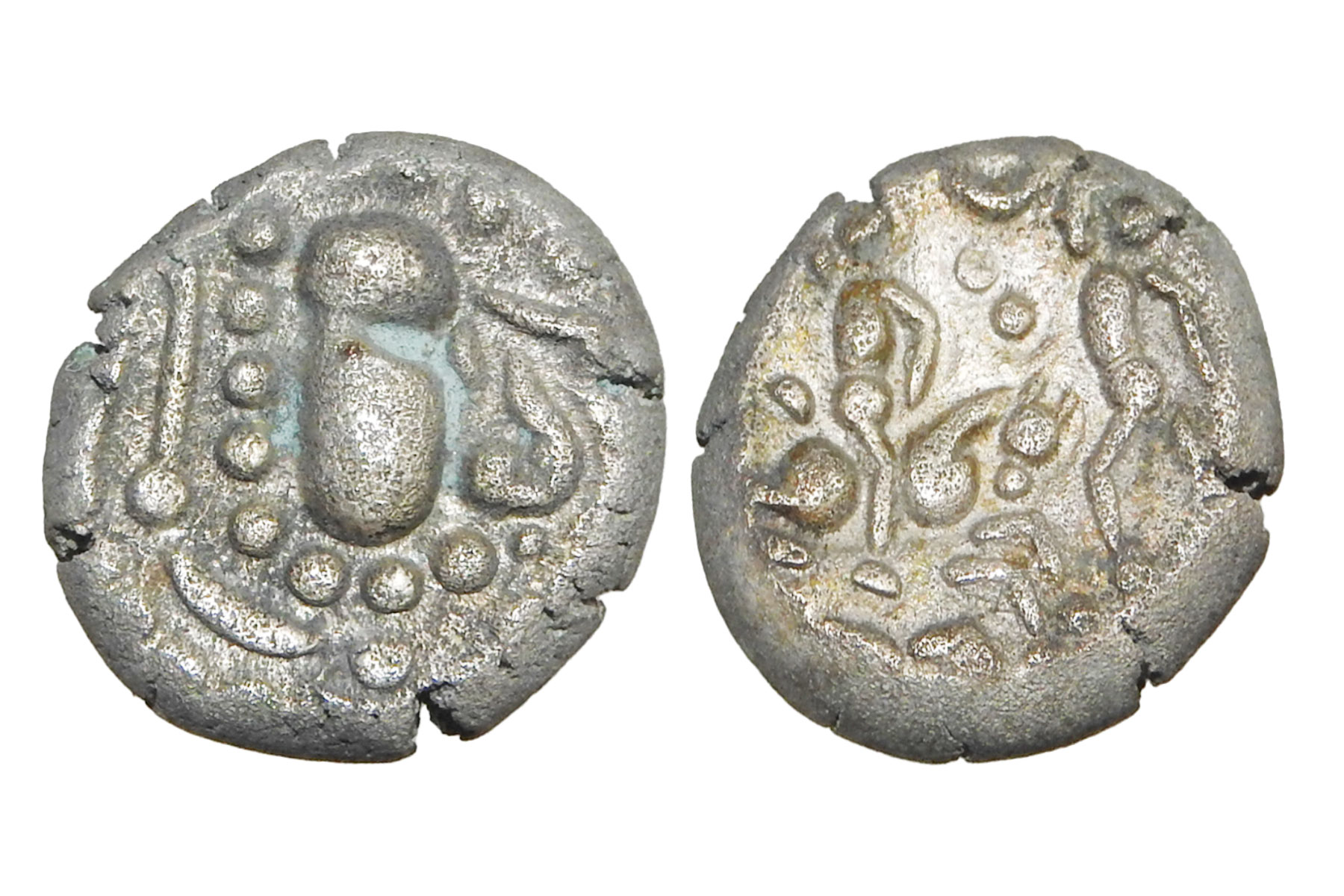
Parmaras of Malwa, Indo Sassanian Type, Billion Drachm, 4.20grms, Obv. Crude bust of the king facing right, Rev. Battle Scene, where one solder is on a horseback, another solder standing in the front and third solder lying on the ground, probably dead, Interesting, Scarce Paramaras of Malwa were a Rajput dynasty (c. 9th–14th century AD) who fought Chalukyas of Kalyani, Chandelas, Kalachuris, and later the Delhi Sultanate, with Bhoja I marking their peak before gradual military decline.
900
Lot No : 88
Auction No : 8
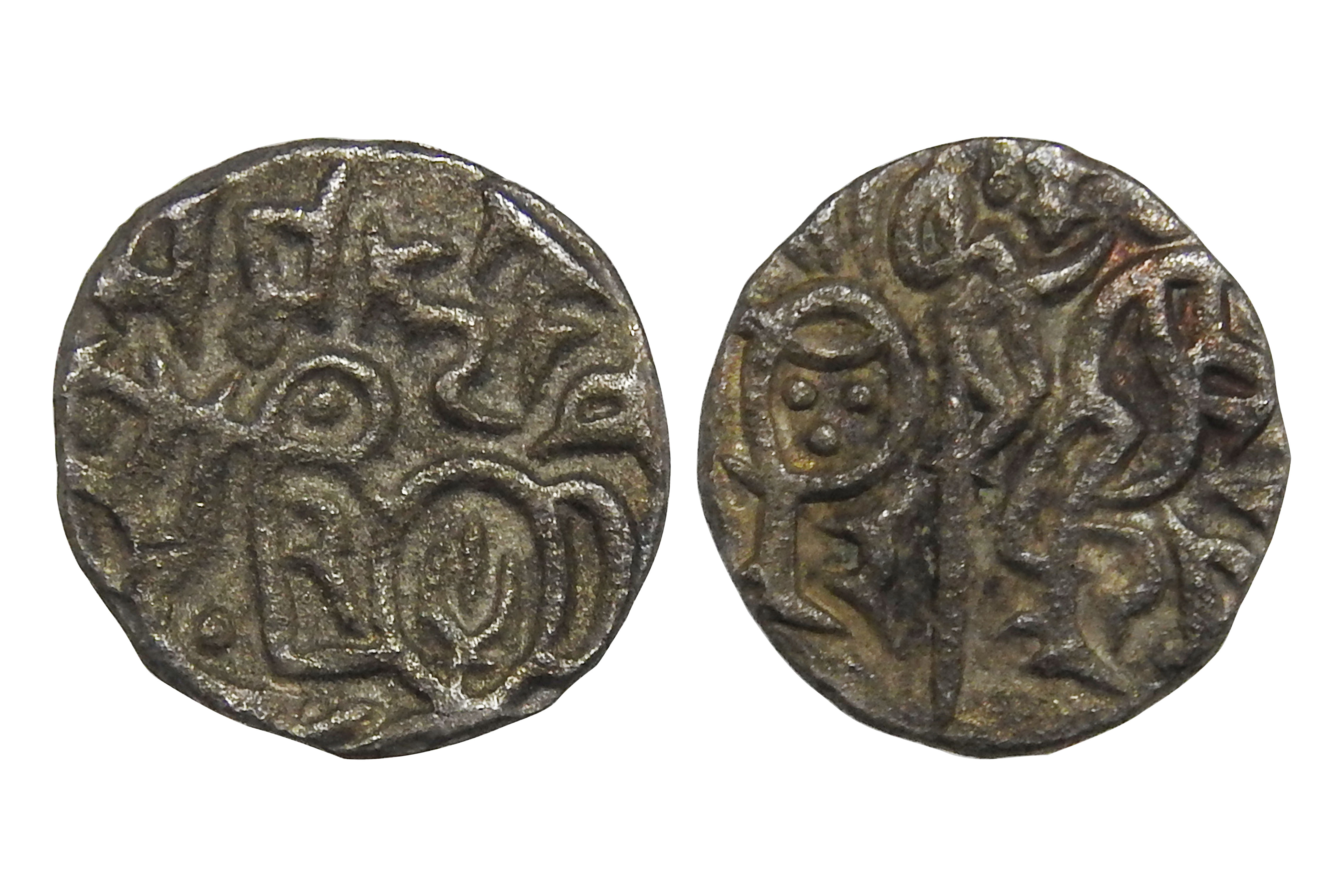
Delhi Sultanate, Turks, Muhammad Bin Sam, (c. 1193-1206CE), Billion Jital, 3.20grms, Dehli Type, Obv. Stylised bull to left with Sri Mahamada Sama above in Sharada Script, Rev. Horseman to right, with Sri Hamirah in Nagari above, G&G#D9, Very Fine+ Muhammad bin Sam (Muhammad of Ghur), a Turkic ruler, conquered northern India, defeating the Chauhans at Tarain (1192 CE), establishing Ghurid rule, which laid the foundation for the Delhi Sultanate.
1200

Lot No : 89
Auction No : 8
Delhi Sultanate, Turks, Nasir Al Din Mahmud, (c. 1246-1266CE), Silver Tanka, 10.70grms, Obv. ruler's titles within double square in circle, annulets in segments, Rev. fi'ahd legends; caliph al-Must'aşim, within double square in circle, Minted in Hadrat Dehli, G&G#D138, Very Fine+ Nasir al-Din Mahmud mostly acted as a figurehead under the influence of the powerful vizier Ghiyasuddin Balban, with real power exercised in administration and frontier defense, especially against Mongol raids
3300
Lot No : 90
Auction No : 8
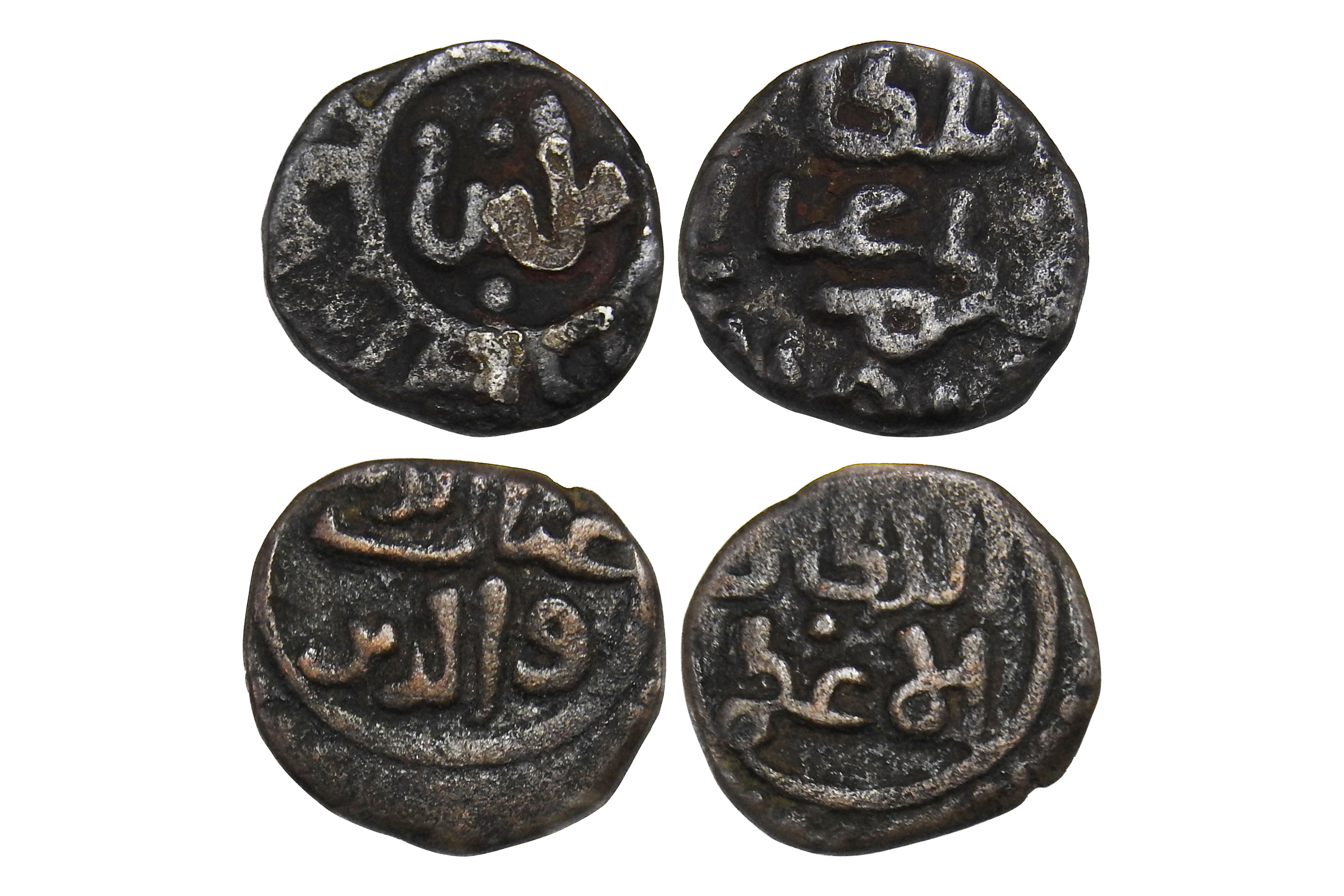
Delhi Sultanate, Turks, Ghiyas Ud Din Balban (c. 1266-1287CE), 2 Coins a) Paika of 40 Rati seeds, 4.00grms, Obv. al-sulțān al-a zam, Rev. ghiyath al-dunya wa'l dīn, G&G#D167 b) Billon Jital, 3.10grms, Obv. al-sulțān al-a'zam ghiyāth al-dunya wa'l din, Rev. balban in centre; srī sultān gayāsadin in Nagari in margin G&G#D165 Ghiyas ud-Din Balban strengthened the Sultanate by enforcing strict central authority, using a network of spies and harsh punishments to control rebellious nobles, and implementing the principles later recorded in the “Siyasatnama.” He personally led campaigns to repel repeated Mongol invasions, fortified frontier defenses, and punished disloyal chiefs with exemplary severity, ensuring the stability and survival of the Delhi Sultanate during a period of external threat and internal factionalism.
 WhatsApp