
Lot No : 306
Auction No : 8
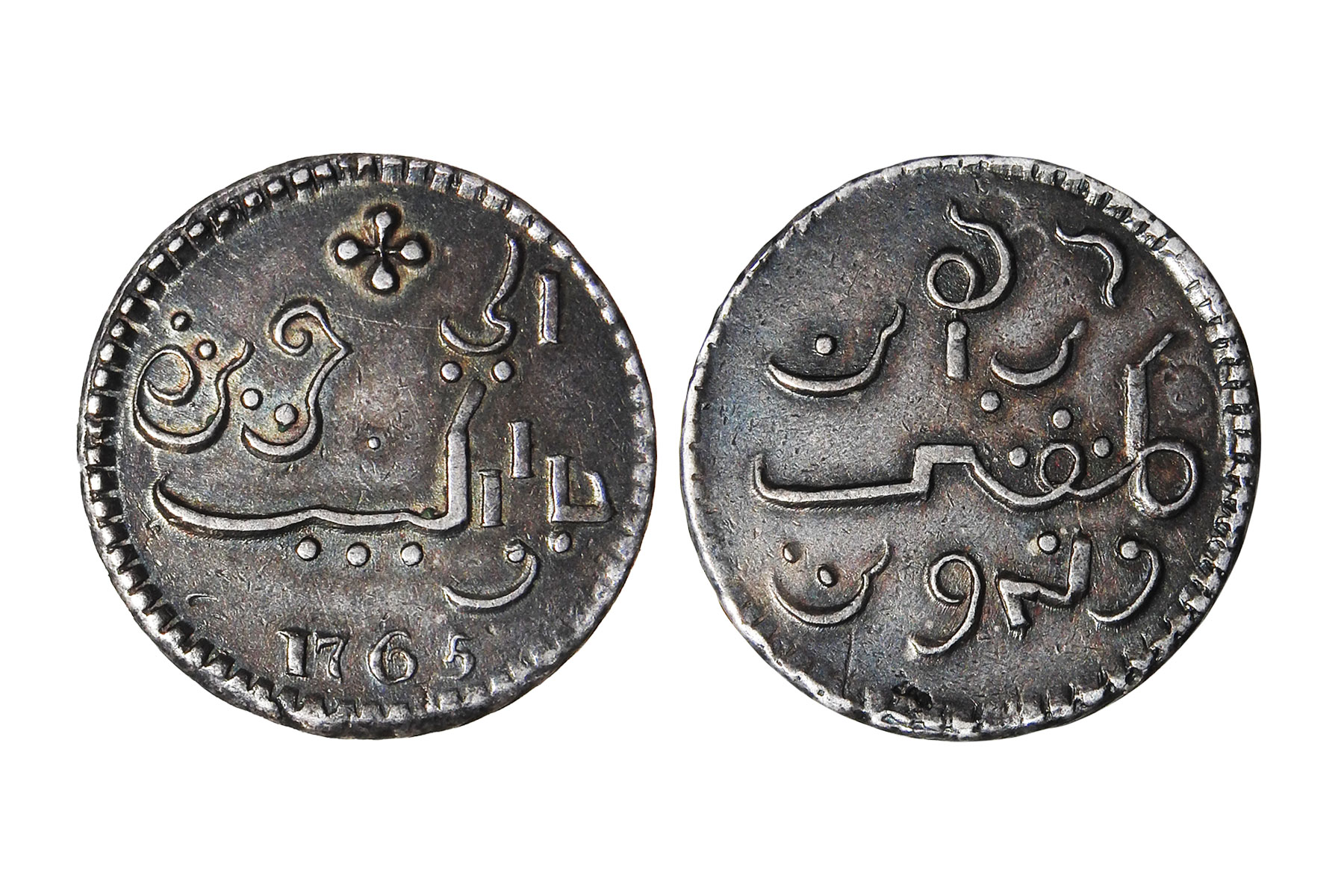
Dutch India (1028–1368 AH/1619–1949 AD), Silver Rupee, 12.60grms, 1765AD, Obverse: Crude Arabic Script In Two Lines And Gregorian Date 1765 (For The Island Grand Java) Reverse: Crude Arabic Script In Three Lines , Translation: Coins Of The Dutch Company, KM#175.10, Oblique Milling, Gem Uncirculated, Very Rare. Struck in 1765 for circulation in Java, this silver rupee reflects the far-reaching commercial network of the Dutch East India Company (VOC), which operated extensively across both Southeast Asia and the Indian subcontinent. During the 18th century, the VOC maintained major trading factories on the Coromandel Coast, in Bengal, Malabar, and Surat, integrating Indian textile and bullion markets with the spice trade of the Indonesian archipelago. Silver rupees such as this facilitated commerce between Java and Indian ports, where Indian merchants, financiers, and shipbuilders played a crucial role in sustaining intra-Asian trade. The adoption of Arabic script mirrored prevailing Indo-Islamic monetary traditions, ensuring acceptability across Muslim trading communities linking the Deccan, Gujarat, Bengal, and Southeast Asia. This coin thus represents not merely Dutch colonial authority, but a wider Indian Ocean commercial system binding Java and the Indian subcontinent into a shared economic sphere.
37000
Lot No : 307
Auction No : 8
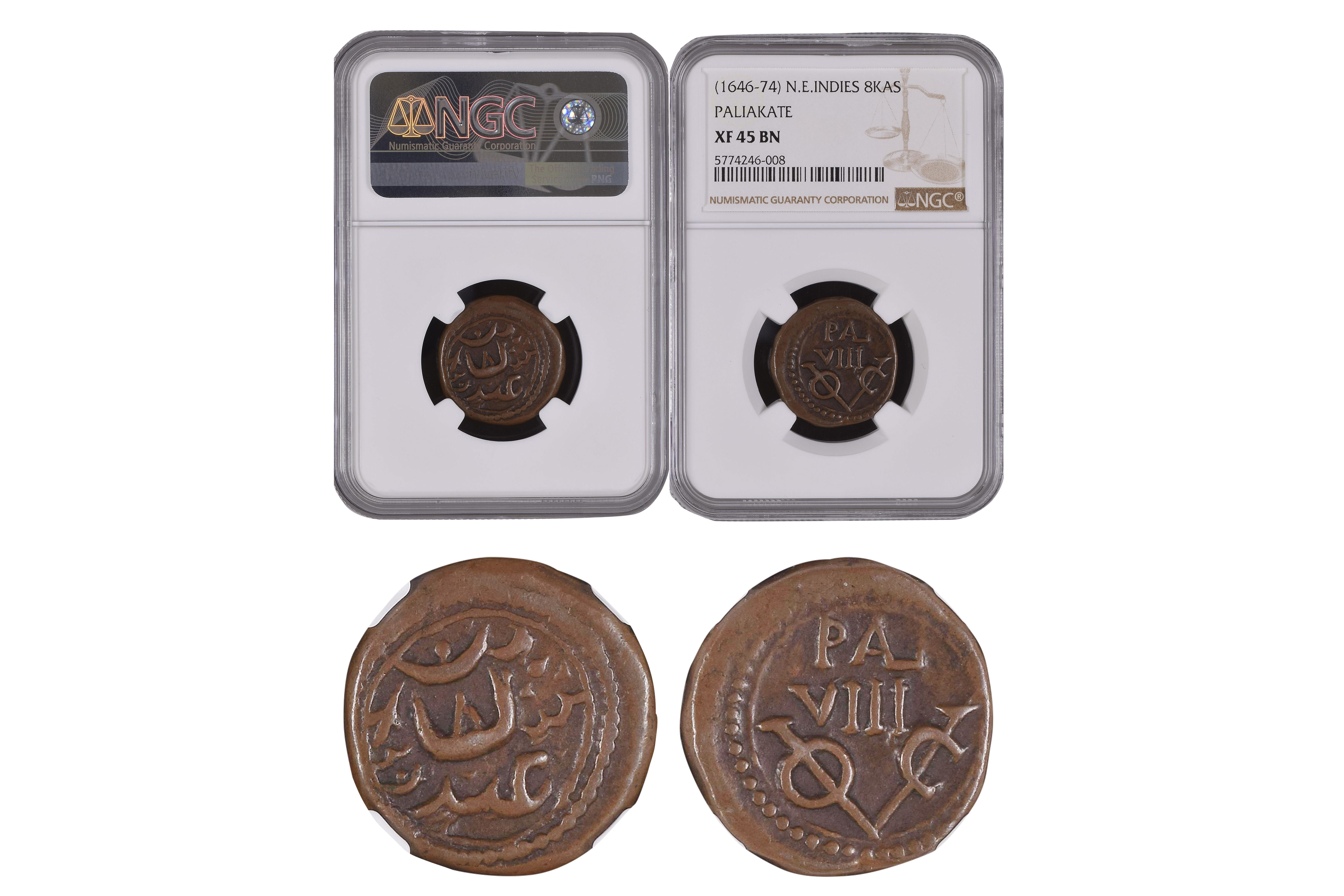
Dutch India, 8 Kas, (1646-1674) 13.20grms, Minted at Pulicat, Obv. VOC(Vereenigde Oostindische Compagnie- United Dutch East India Company) Monogram surmounted by PAL (Pulicat), Rev. Persian legend Benam Sultan Abd which is issued In the name of Sultan 'Abd Allah Qutb Shah, XF45, Extremely Rare. Abdullah Qutb Shah of Golconda permitted the Dutch East India Company (VOC) to operate and mint coins at Pulicat (Paliacate) to facilitate trade along the Coromandel Coast. The arrangement strengthened maritime commerce, especially textiles, and provided locally acceptable currency for circulation in South India and Sri Lanka. However, Dutch minting gradually declined after Golconda was annexed by the Mughals in 1687 under Aurangzeb. Changing political control, reduced Dutch influence, and shifting trade centers eventually led to the cessation of coin production at Pulicat.
 WhatsApp