
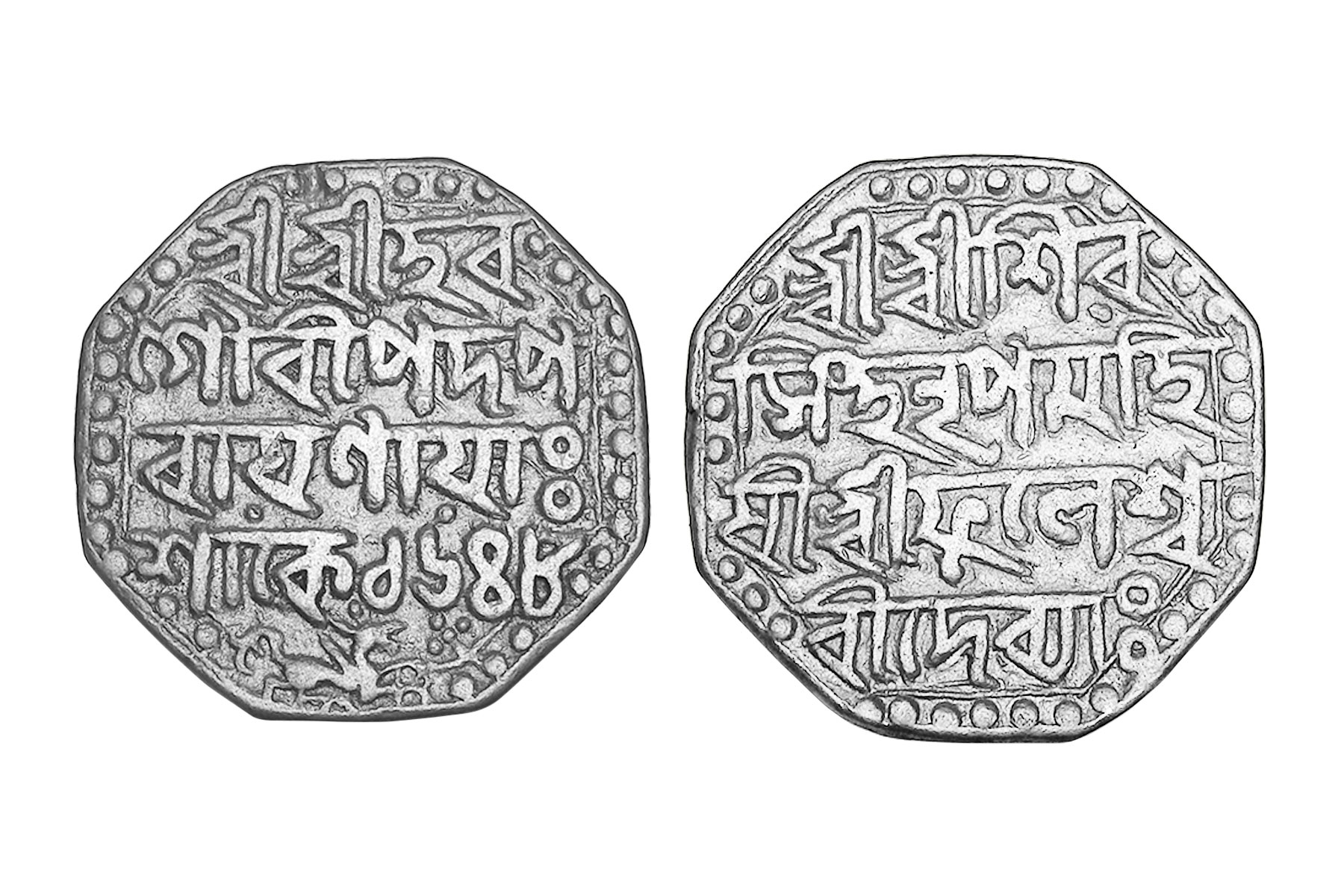
Lot No : 198
Auction No : 8
Assam Kingdom, Shiva Simha/Sutanpha, (c. 1715-1744CE), Silver Rupee, 11.20grms, issued with the name of Phulesvari, SE1648, Extra Fine, Rare During the reign of Shiva Simha (Sutanpha), effective authority rested with Queen Phulesvari, who ruled as Bar Raja. The period was marked by intense religious and political conflict, driven by the enforced spread of Shakta (worship of the goddess Shakti, especially Durga/Kali) practices. This policy provoked strong resistance from Vaishnavite Mahantas and followers, leading to widespread unrest. Major conflicts included suppression of Vaishnavite monasteries (sattras) and internal rebellions that weakened Ahom stability. Coins jointly issued in their names reflect this unusual phase of dual sovereignty
14100
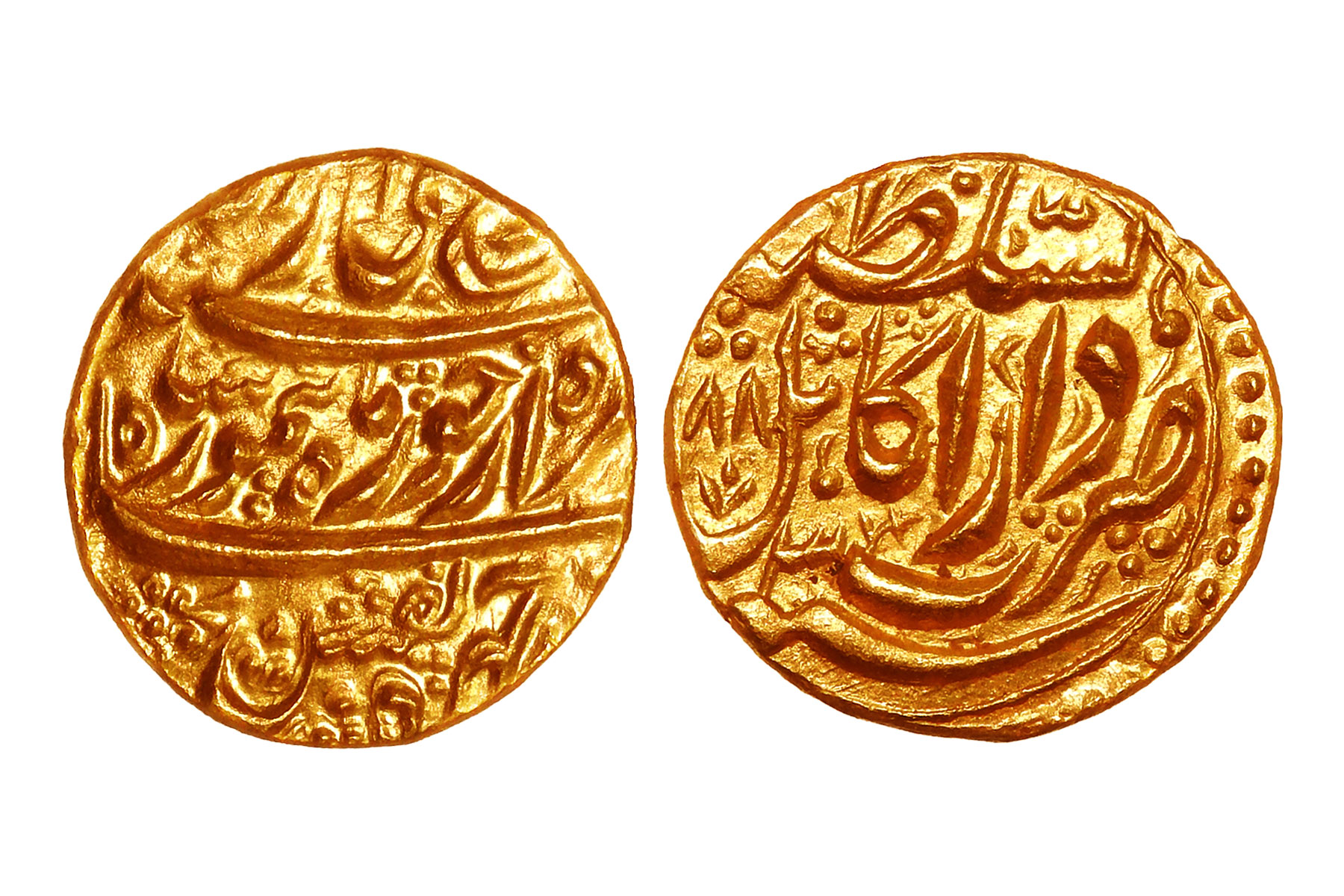
Lot No : 199
Auction No : 8
Durrani Kingdom, Taimur shah Abdali(c. 1746-1796CE), Gold Mohur, 10.90grms Minted at Dar al-Sultan Kabul, AH1188/RY03, Gem Uncirculated mohur with a deep strike and a beautiful calligraphy, Rare. Taimur Shah Abdali inherited the throne of the after his Ahmad Shah Abdali`s death. While Ahmad Shah had aggressively expanded into northern India, establishing Afghan dominance in Punjab and the Gangetic plains, Taimur Shah’s approach was comparatively administrative and consolidatory. Around the period when this coin was minted, he maintained nominal suzerainty over key Indian territories, ensuring that Afghan political influence and tribute systems continued despite growing Maratha and local powers. He was less militarily interventionist than his father but upheld the prestige of the Durrani dynasty through diplomacy, coinage, and symbolic authority. Coins minted during this period, asserts both cultural legitimacy and political presence. Taimur Shah’s reign represents a period of Afghan consolidation in India, preserving the legacy of Ahmad Shah while avoiding large-scale invasions or conflicts.
160000
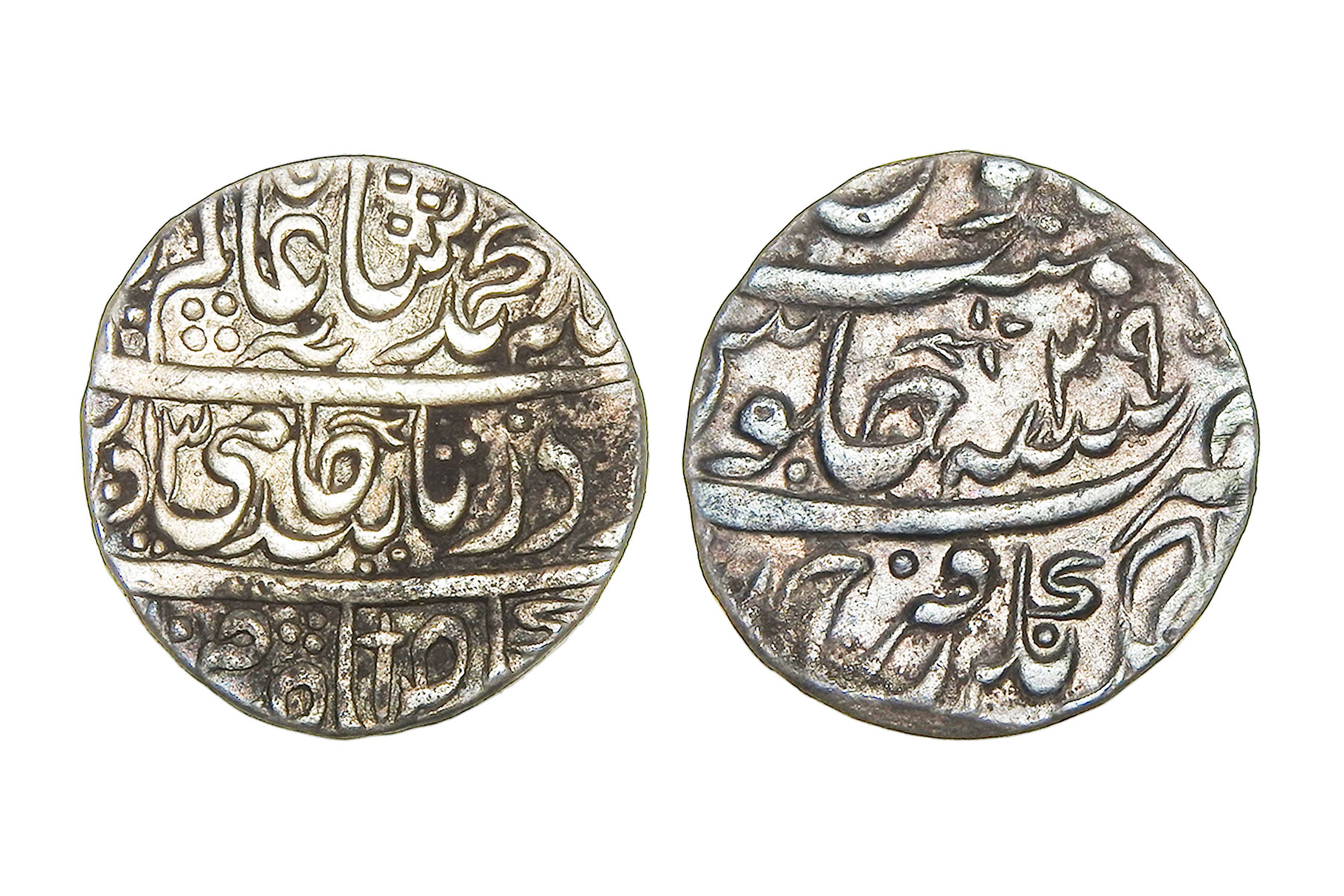
Lot No : 200
Auction No : 8
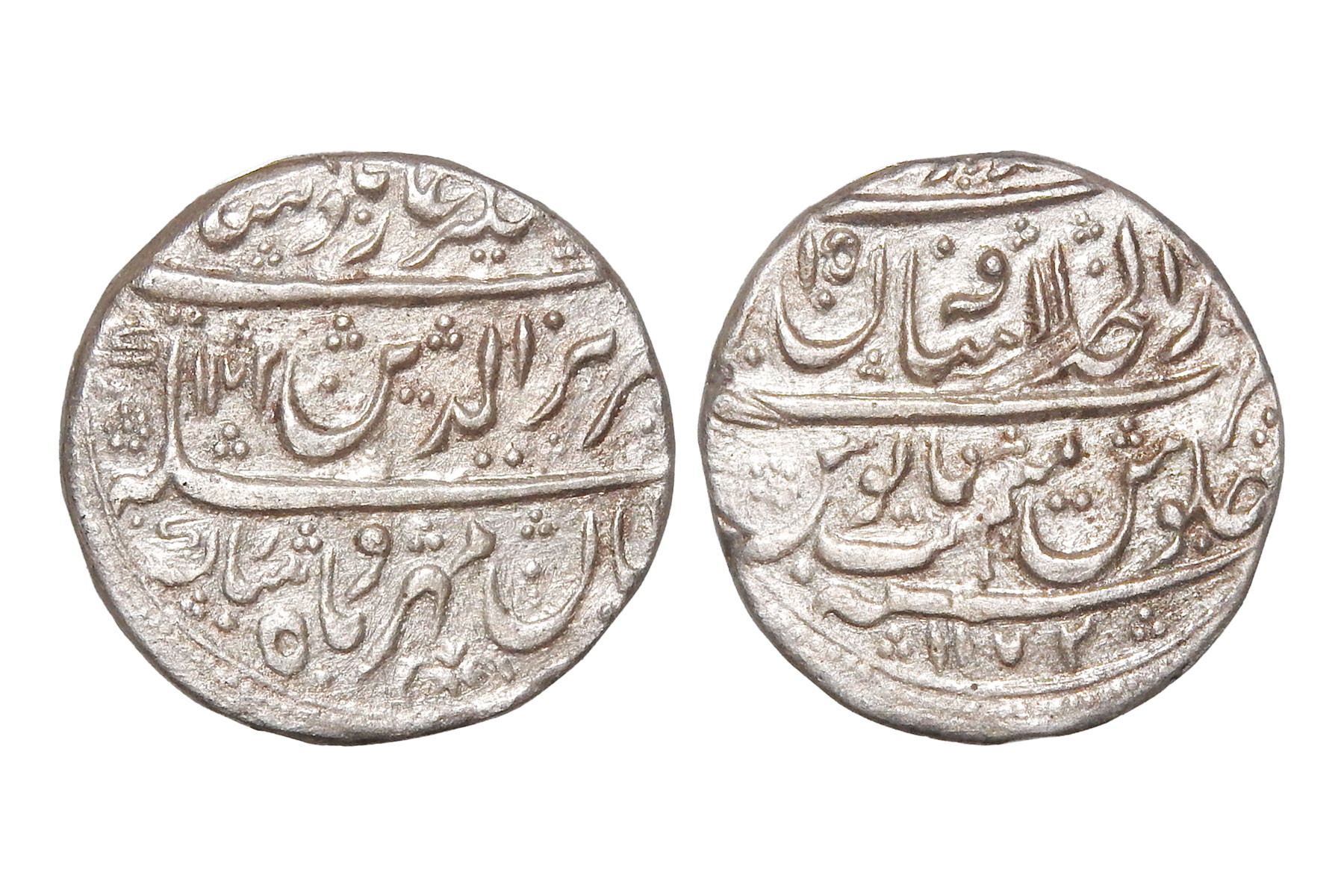
Farrukhabad Kingdom, Nawab Ahmed Khan Bangash, (c. 1714–1771 CE), Silver Rupee, 11.00grms, issued in the name of Mughal emperor Shah Alam II, AH1213/RY39, Minted at Ahmednagar Farrukhabad, ExtraFine, Very Scarce, Large Flan Nawab Ahmed Khan Bangash founded the Farrukhabad Kingdom after asserting autonomy in the Gangetic Doab during the weakening of Mughal authority. His rule was dominated by continuous warfare—notably prolonged conflicts with the Marathas, repeated clashes with Rohilla Afghans, and shifting alliances with declining Mughal emperors. Farrukhabad became a strategic Afghan stronghold resisting Maratha expansion in North India
3900

Lot No : 201
Auction No : 8
Jaintiapur Kingdom, Ram Simha,(c. 1790-1832CE), Silver Tanka, 8.90grms, SK1712, obv. Bengali legend Sri Sri Siva Charana kamala Madhu Karasya, Rev. Bengali legend Sri Sri Jayantipura Purandarasya Sake 1712, Mintmarks- Swords on eithsides of the legend with star below nad trident above the legend, Extra Fine+, Rare.Ram Simha ruled the Jaintiapur Kingdom in present-day southern Assam and north-eastern Bangladesh during a period of regional tension. His reign was marked by conflicts with the expanding Ahom Kingdom, as well as pressure from neighbouring Khasi chiefs. Continued warfare and political instability during and after his rule weakened Jaintiapur, eventually leading to its loss of independence in the late 18th century
11000
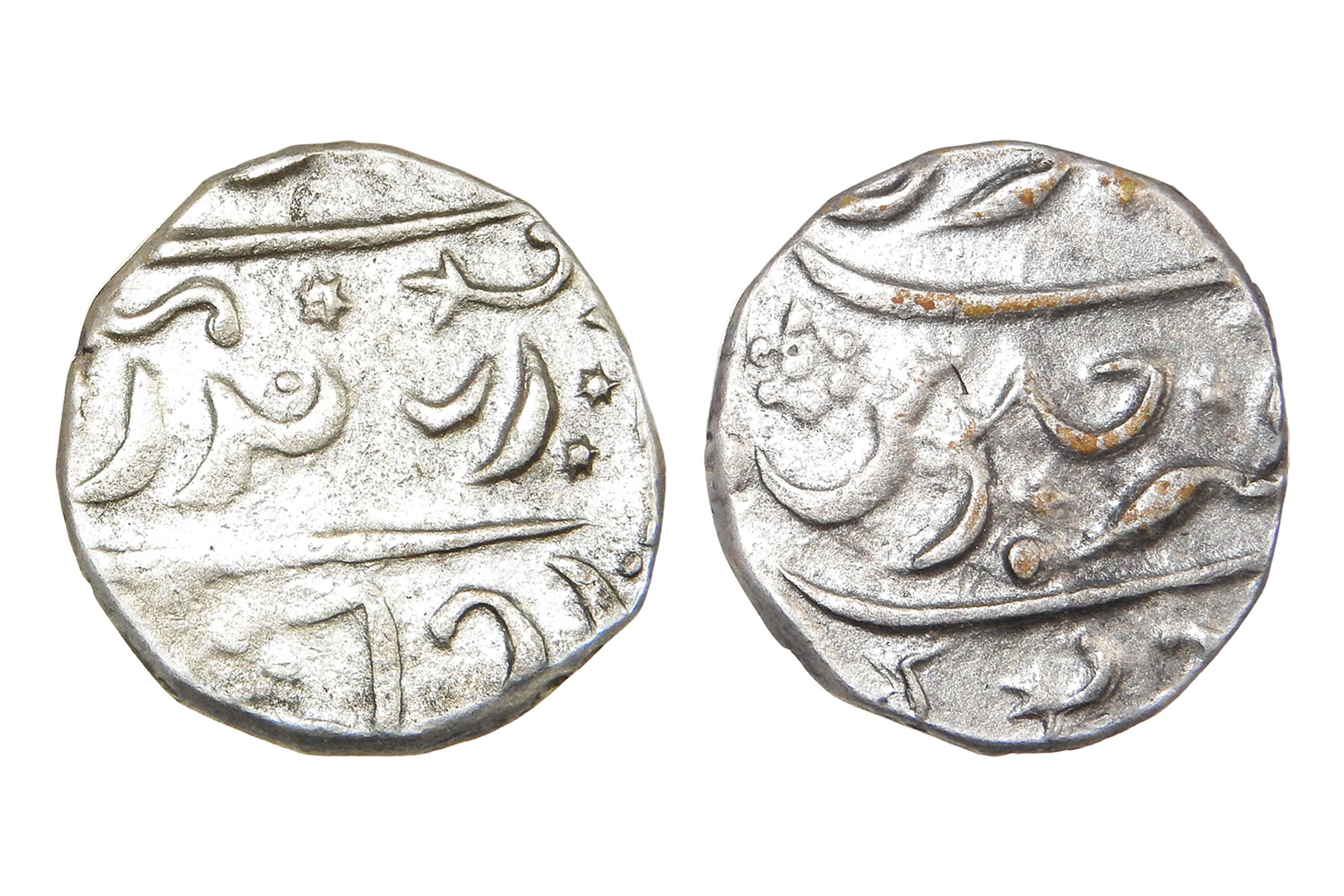
Lot No : 202
Auction No : 8
Maratha Confedracy, Kolhapur Chatrapati, Desai Family, In the name of Aurangzeb Alamgir, Silver Rupee, 11.60grms, Minted at Dichole, Shambhu-Peerkhani Type, Very Fine+, Very Scarce The Maratha Confederacy was a coalition of semi-independent Maratha states that emerged after Shivaji’s death, with the Kolhapur Chhatrapati representing a branch of the Bhonsle dynasty ruling a separate principality from c. 1710 CE. Within this polity, the Desai family served as hereditary administrators, revenue officers, and local chiefs, managing villages and supporting the Kolhapur court both administratively and militarily. While they held significant influence and oversaw collection, enforcement, and local governance, the Desais were subordinate to the Chhatrapati and did not claim sovereign authority. Their position linked the ruling dynasty with regional management across Kolhapur and allied territories
4300
Lot No : 203
Auction No : 8
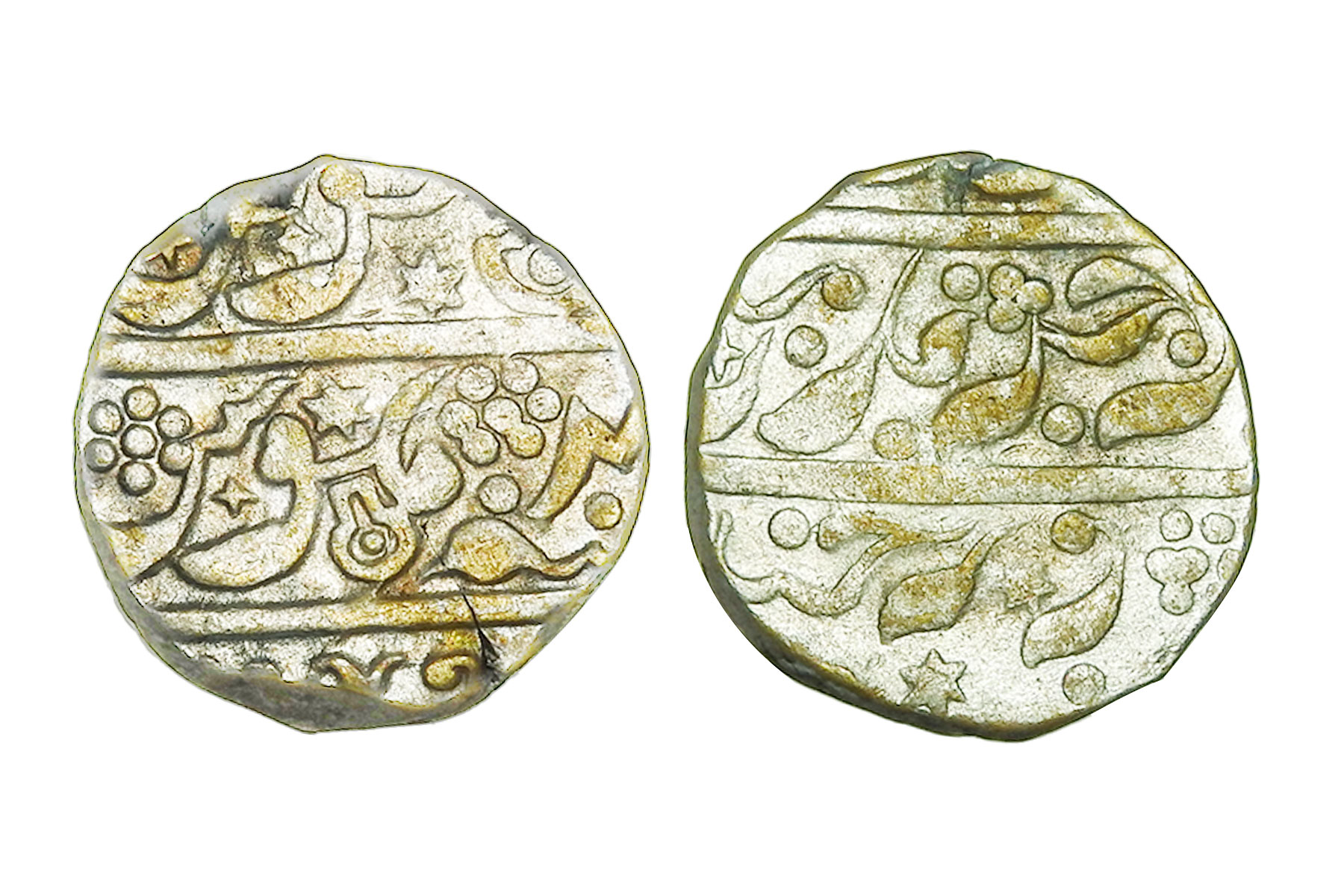
Maratha Confedracy, Kolhapur Chatrapati, Desai Family, In the name of Aurangzeb Alamgir, Silver Rupee, 11.10grms, Minted at Chikodi, Shambhu-Peerkhani Type, Mintmark Shivlingam & Flower design, Very Fine+, Very Scarce Chikodi and Dicholi mints are classified as Shambhu Peerkhani type for silver coins because they issued silver rupees under the authority of Shambhuji Peerkhani, a local Maratha official or administrator empowered to mint. These coins are distinct in their legends, calligraphy, and motifs—often incorporating Maratha dynastic marks or inscriptions in Devanagari and Persian—setting them apart from regular imperial or regional silver issues. The style denotes both administrative authority and regional identity in Maratha-controlled territories.
5100
Lot No : 204
Auction No : 8
Maratha Confedracy, Peshwas, In the name of Alamgir II, Silver Rupee, 10.00grms, AH1172/RY15, Minted at Bagalkot(Karnataka), Date on both the sides of the coin, Extra Fine+, Rare. During AH 1172 (~1760 CE), the Bagalkot region in present-day Karnataka was under the influence of the Maratha Confederacy, administered nominally by the Peshwas. Local authority was exercised by Maratha sardars, notably the Ghorpade family of Mudhol, who held hereditary estates and managed revenue collection. The period was marked by Maratha consolidation in northern Karnataka, establishing administrative control and military presence while integrating local chiefs into their confederacy network. Coins and inscriptions from this era reflect the Maratha administrative and fiscal structures, showing a blend of central authority and regional autonomy
4800
Lot No : 205
Auction No : 8
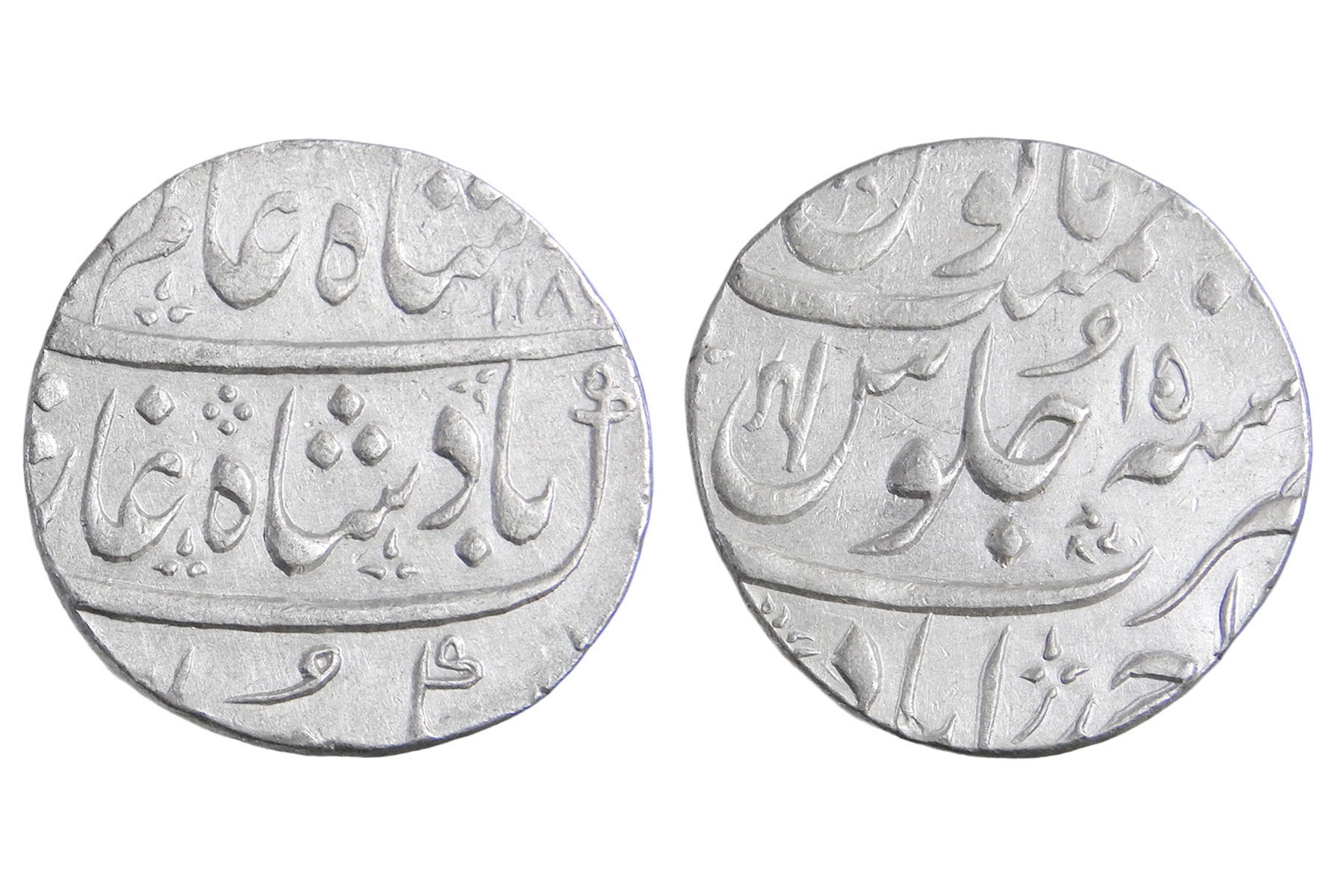
Maratha Confedracy, Peshwas, In the name of Shah Alam II, Silver Rupee, 11.30grms, AH1187/RY15, Minted at Ahmedabad, Mintmark Ankush, Large & beautiful flan, Almost Uncirculated, Very Scarce. By AH 1187, Ahmedabad had come fully under Maratha control, following the decline of Mughal authority in Gujarat. The city was administered jointly by the Peshwa faction of the Maratha Confederacy and the Gaekwad family of Baroda, who shared revenue rights and exercised local governance. Strategic and commercial, Ahmedabad was a key urban centre for trade, administration, and coinage, with Maratha-appointed officials overseeing fiscal and military matters. This period reflects the integration of former Mughal territories into the Maratha Confederacy, demonstrating decentralized administration while maintaining economic and strategic importance in western India
4500
Lot No : 206
Auction No : 8
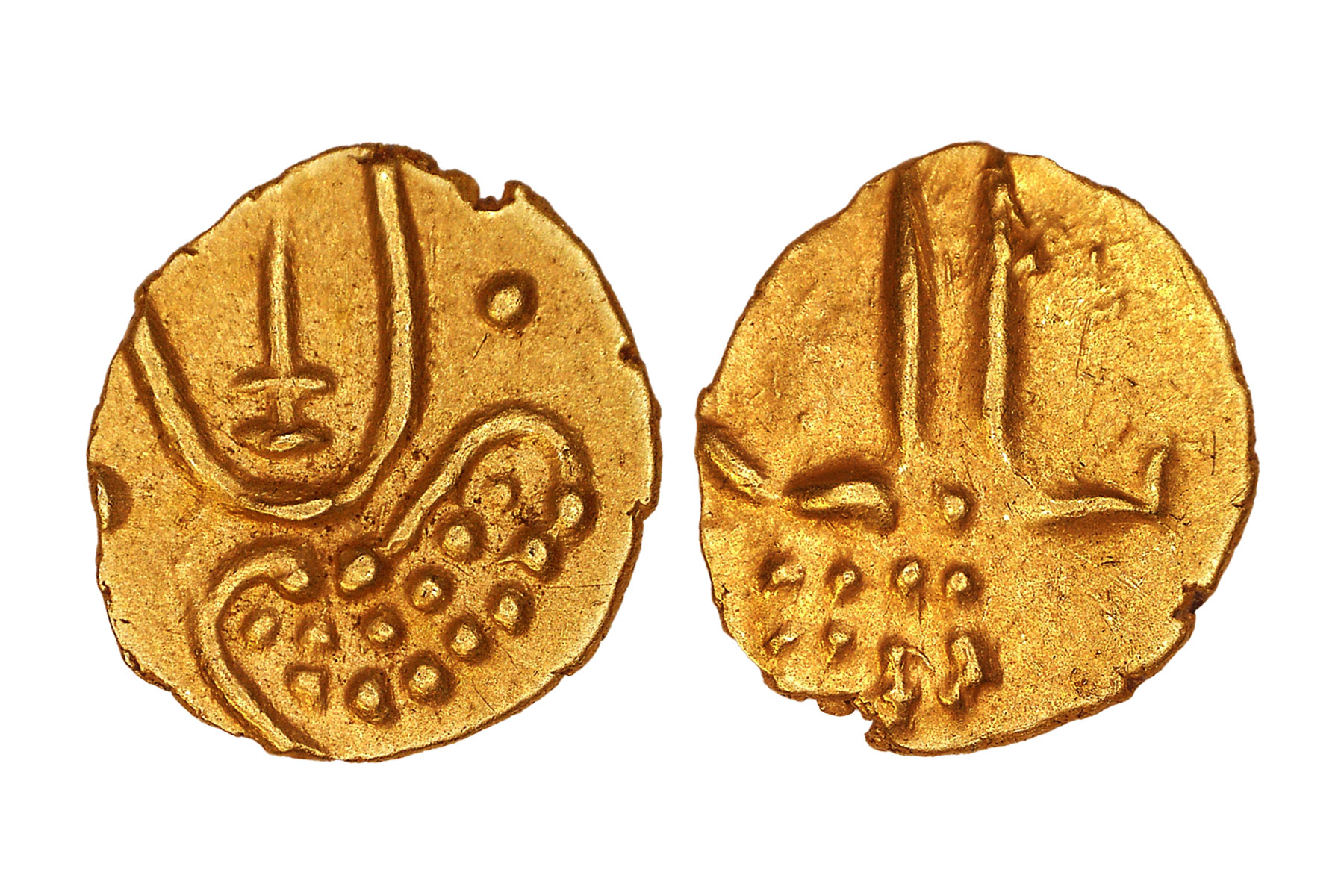
Gingee Maratha(c. 1689–1698), Gold Fanam, 0.40grms, Obv. A powerful lion facing right, set beneath a crescent, clutching an upward-pointing sword, Rev. A dynamic crocodile charging to the right, Uncirculated and very rare, this Gingee Maratha coin is a remarkable survivor from a period when such issues were uncommon. Identification can be challenging, but the sword motif is a clear indicator of Maratha authority, distinguishing it from the typical Veera Raya-type coins of the era. Its striking design, exceptional condition, and historical significance make it a must-have piece for collectors of rare Maratha numismatics.
8000
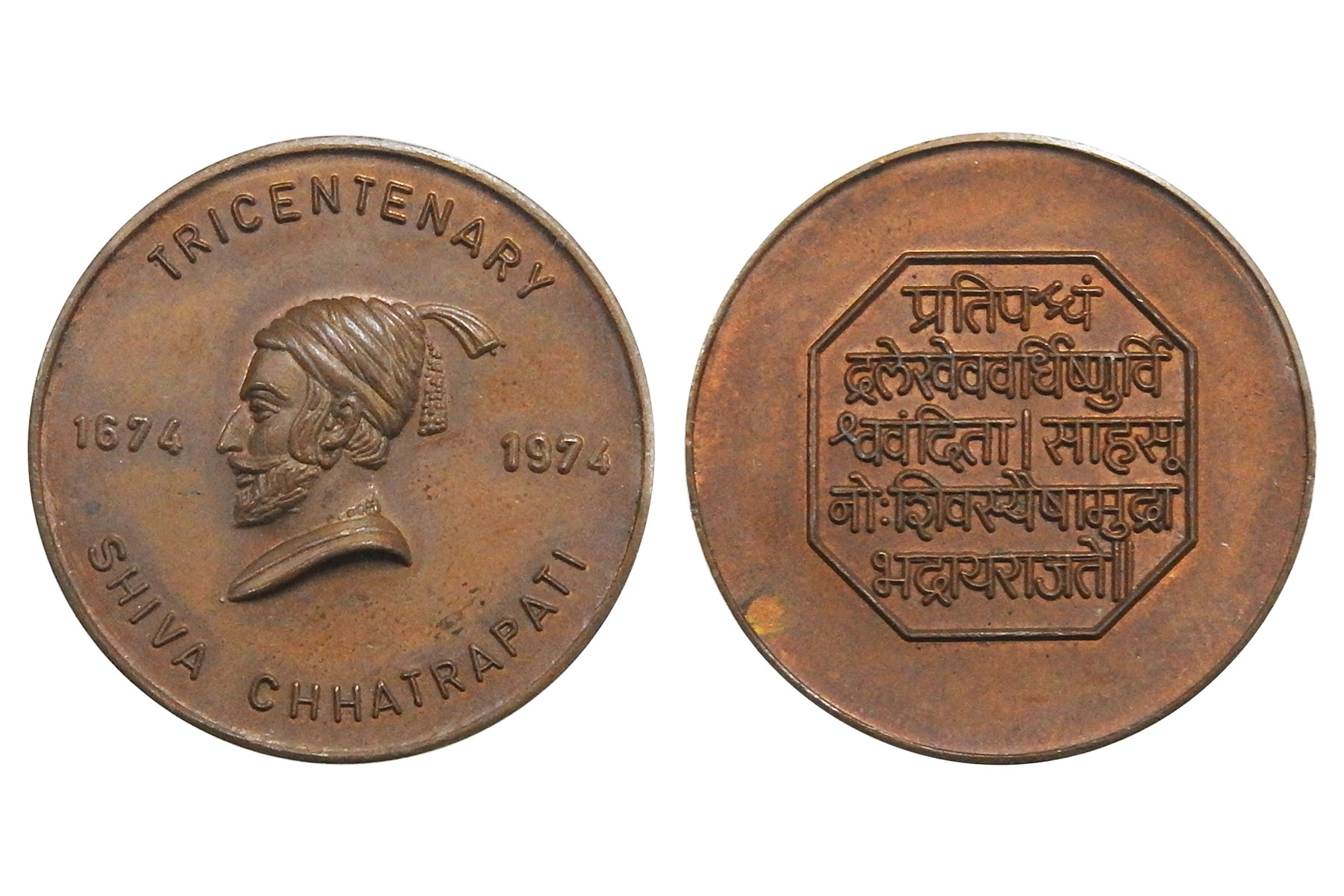
Lot No : 207
Auction No : 8
Chhatrapati Shivaji Maharaj Tricentenary Copper Medal (1974), Obv. A finely struck, high-relief portrait of Chhatrapati Shivaji Maharaj, commemorating 300 years of his legacy (1674–1974), Rev. The Rajmudra, the royal seal of Shivaji Maharaj, symbolizing the Maratha Empire’s vision of Swarajya. Inscribed in Sanskrit: "प्रतिपच्चंद्रलेखेव वर्धिष्णुर्विश्ववंदिता शाहसुनोः शिवस्यैषा मुद्रा भद्राय राजते।" – “The glory of this Mudra of Shahaji’s son Shivaji will grow like the first-day moon. It will be worshipped by the world and will shine only for the well-being of the people.” Uncirculated, very rare, a pristine tribute to the valor, vision, and enduring legacy of the Maratha sovereign. This medal is a must-have for collectors of Maratha history and numismatic masterpieces, blending artistry, symbolism, and historical reverence
 WhatsApp