
Lot No : 41
Auction No : 8
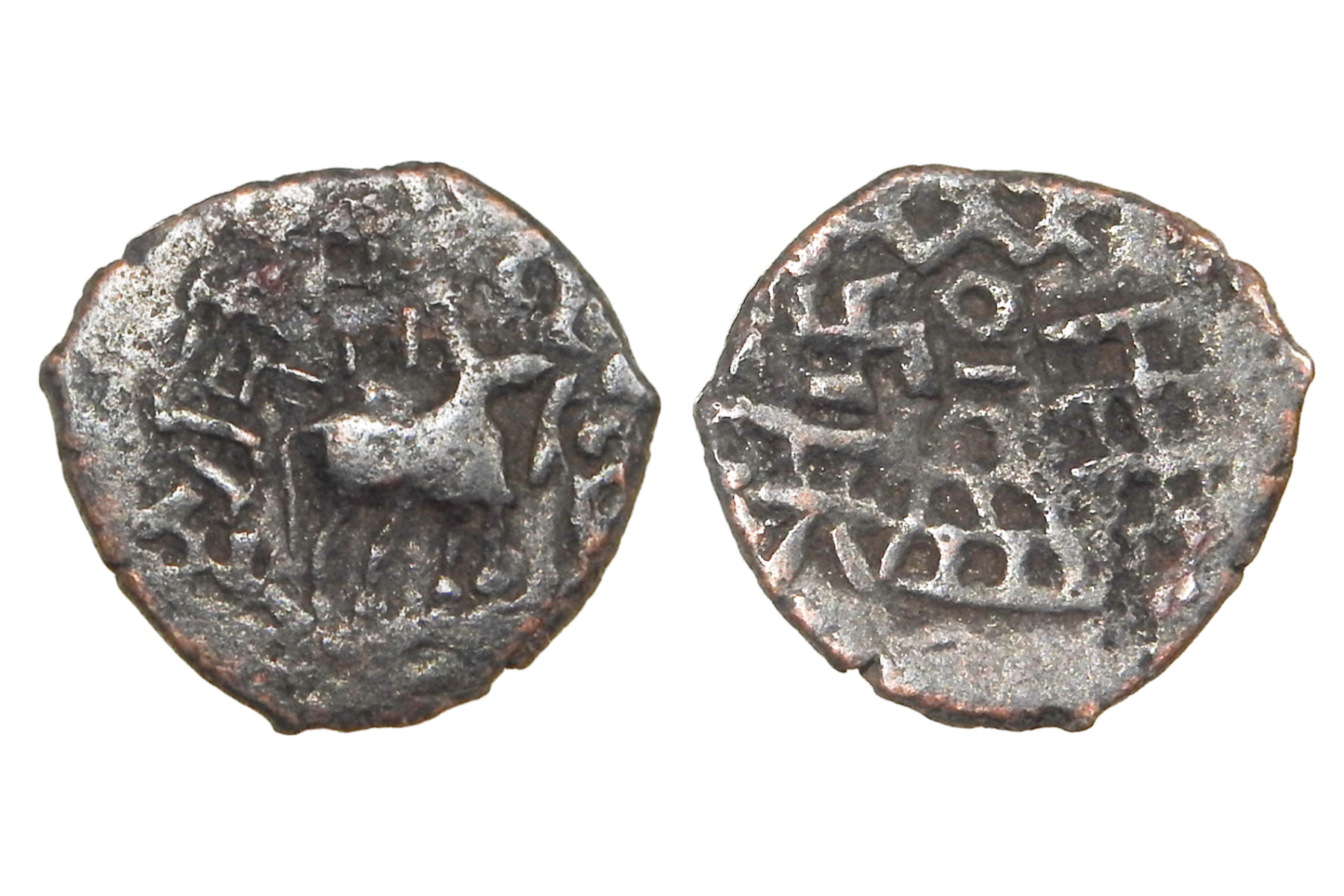
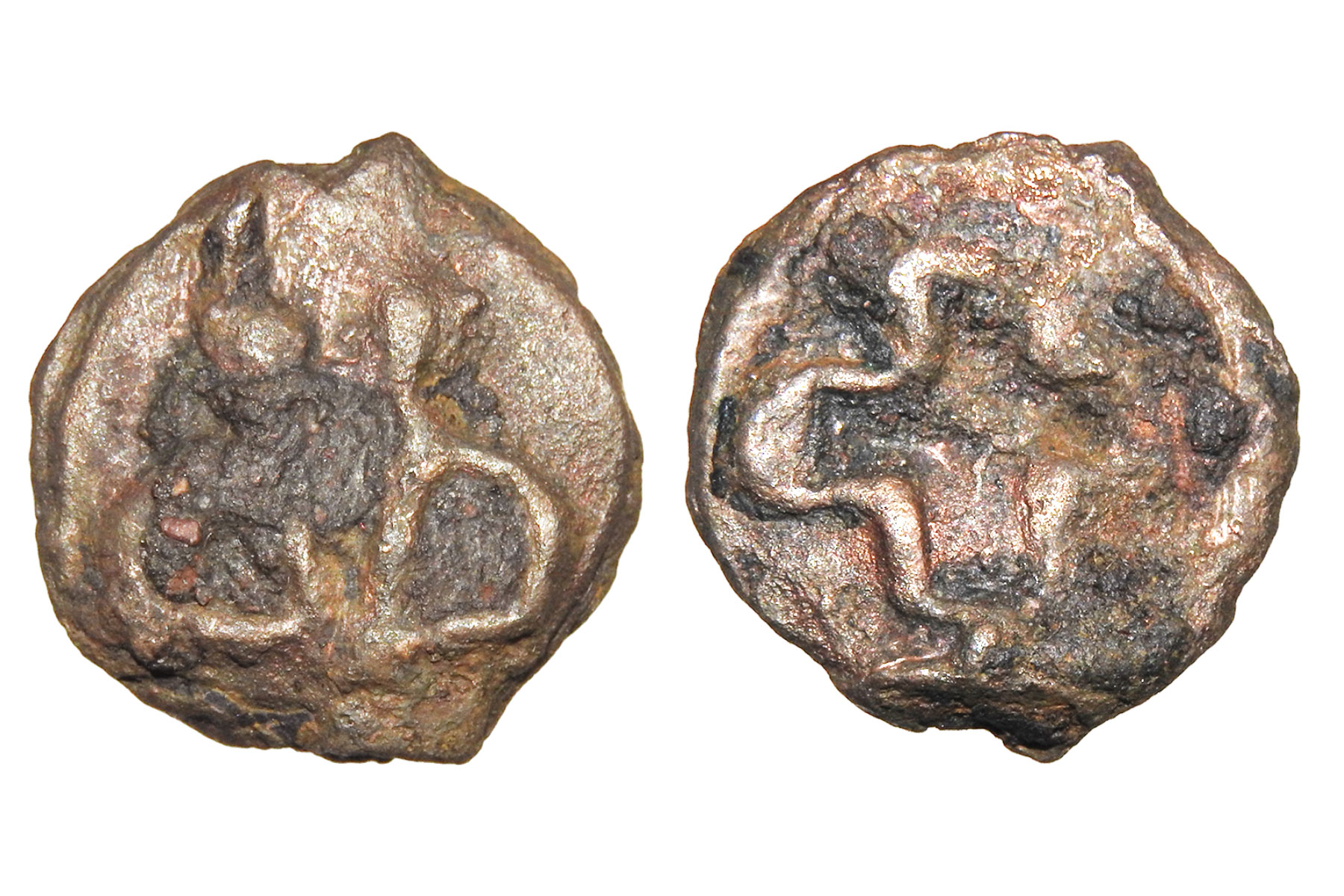
Kuninda Dynasty (c. 100BC), Amoghabhuti, Later copper Drachm, 2.60grms, Obv. Deer to right towards Lakṣmī who is holding lotus in her upraised right, square vase above the deer, śrivatsa between its horns with Brāhmī legend around reading rājñaḥkunimdasyaamoghabhūtisyamahārājasya, rev. Six-arched hill with nandipada on top, river line below; swastika and forked Indradhvaja on left, railed tree on right; Kharoşthī legend rañakunidasaamoghabhutisamaharajasa, Pieper#1240, Extra Fine+, Very Scarce
4100
Lot No : 42
Auction No : 8
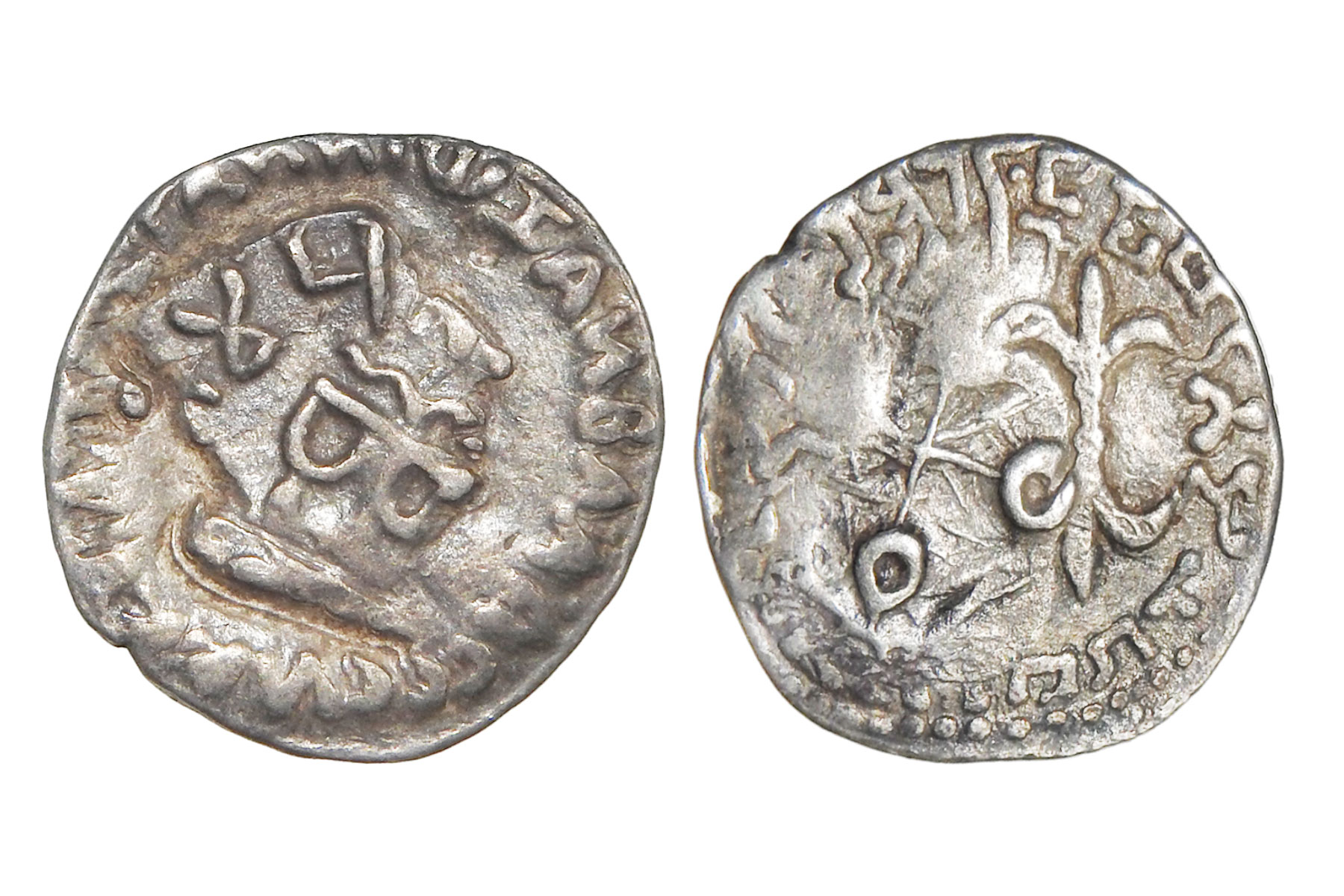
Satavahana Empire, Gautamiputra Satakarni overstruck on king Nahapana`s coin (c. 60-84CE), Silver Drachm, 2.20grms, Obv: three-arched hill, legend R-año Go-ta-mi-pu-ta-sa Si-ri Sa-ta-ka-ni-sa, Rev: Ujjain symbol with crescent, Undertype of Nahapana`s coin clearly visible with the complete bust and entire legend of the western kshtapa king on obverse, pieper#2749, Superb condition, Very Rare and historically important. Gautamiputra Satakarni is best known for his decisive conflict with the Kshtarpa ruler Nahapana. This confrontation marked a major turning point in Deccan politics, as Gautamiputra reversed the expansion of the Western Kshtarpa and restored Satavahana control over previously lost territories. The defeat of Nahapana ended Kshtarpa dominance in the western Deccan and re-established Satavahana authority in the region. Contemporary records portray Gautamiputra as a powerful ruler who destroyed rival dynasties and consolidated imperial power, laying the foundation for Satavahana resurgence in the early centuries of the Common Era.
22000
Lot No : 44
Auction No : 8
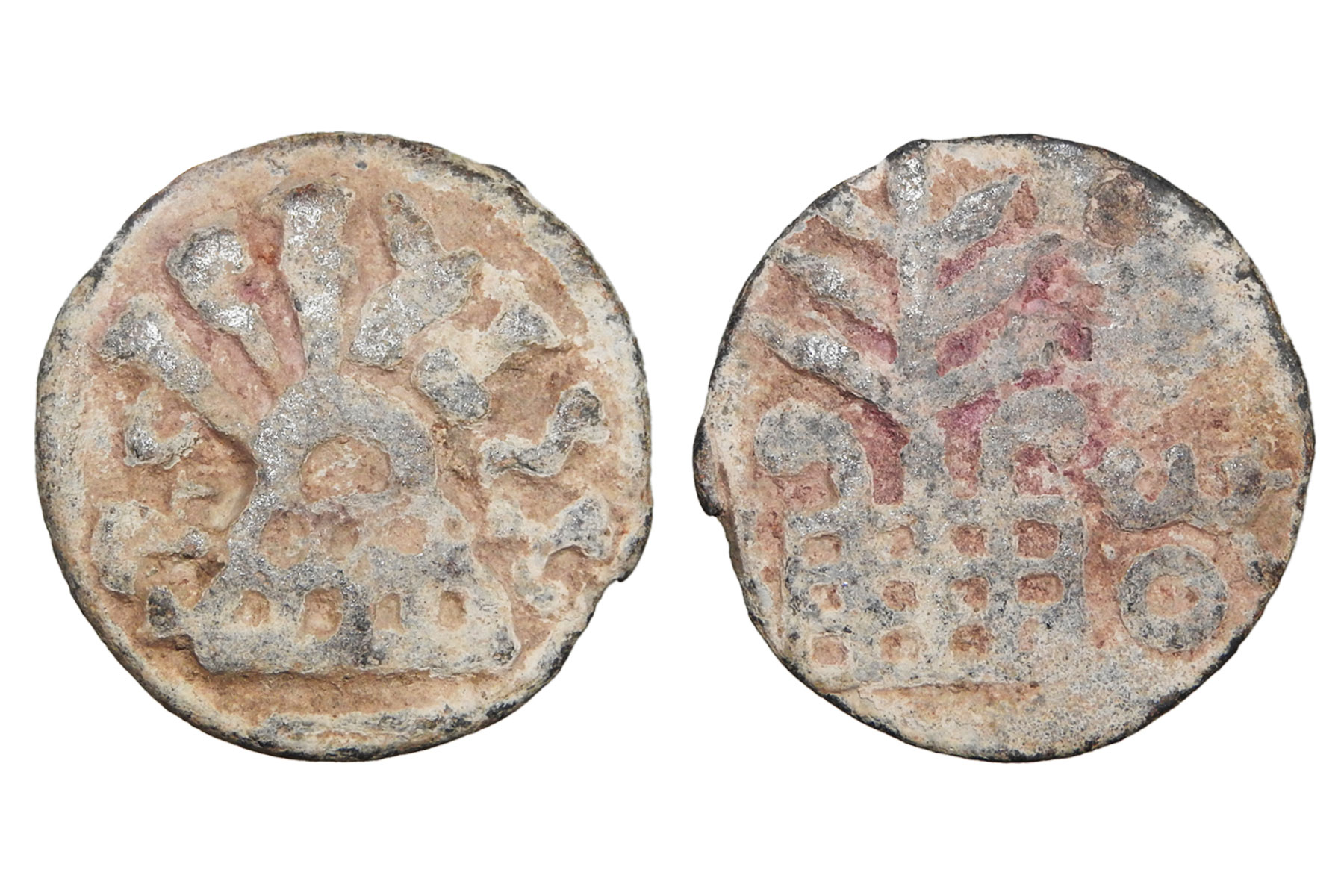
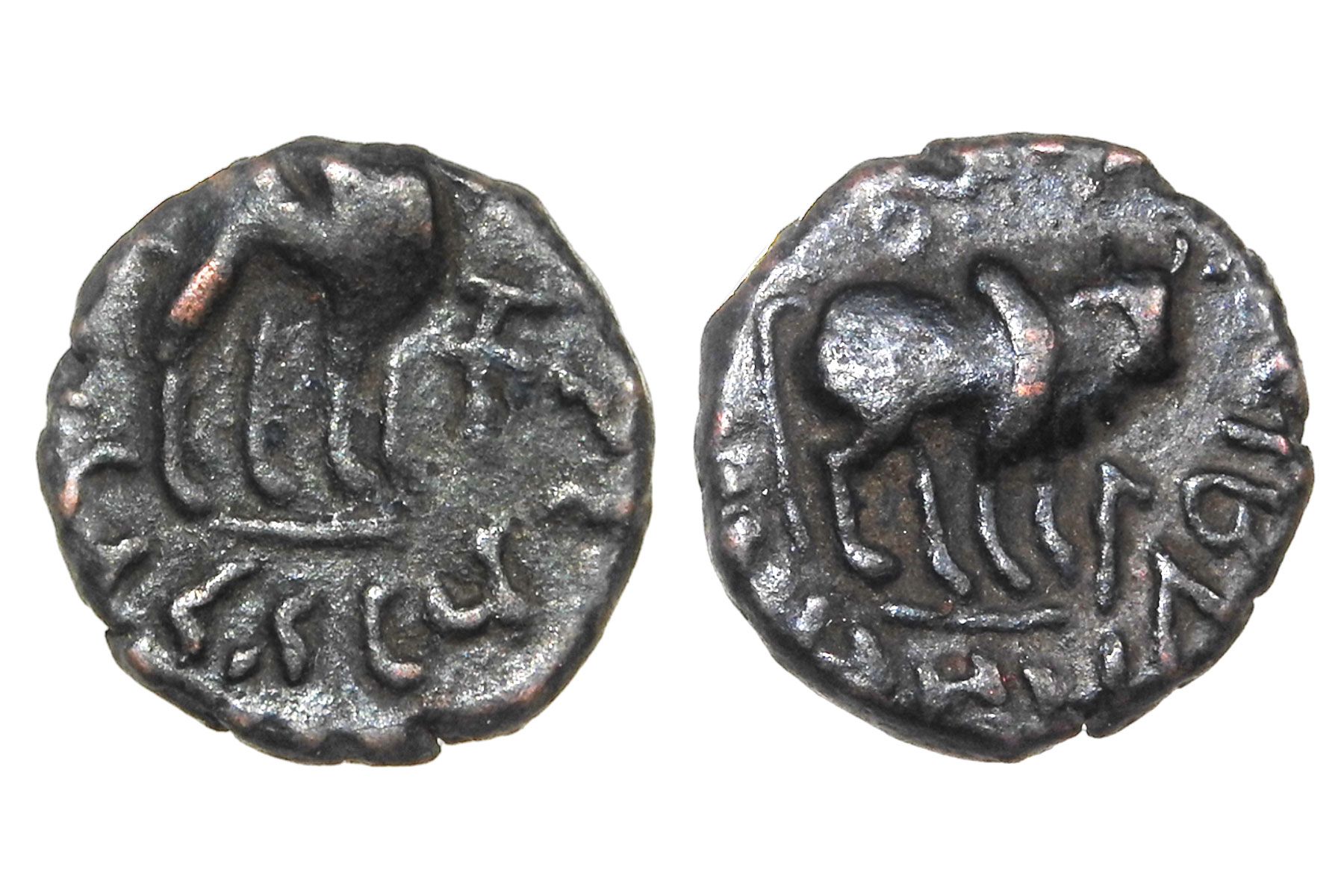
Kushan Empire, Vima Takha(c. 80-90CE), Copper Unit, 3.70grms, Obv. Bull facing right with nandipada above and Kharoşṭhī letter to right with corrupt Greek legend around, Rev: Baktrian Camel to right and Kharoşṭhī legend maharajasa rajatirajasa devaputrasa vema takha sround, well-preserved specimen, Rare Vima Takha (also known as Vima Taktu) was an early Kushan ruler who succeeded Kujula Kadphises. He consolidated Kushan authority across Bactria and northwestern India and is often credited with stabilizing the empire before its major expansion. Although historical details are limited, his reign bridged the formative phase of the Kushan state and the prosperous era of Vima Kadphises and Kanishka I.
1600
Lot No : 45
Auction No : 8
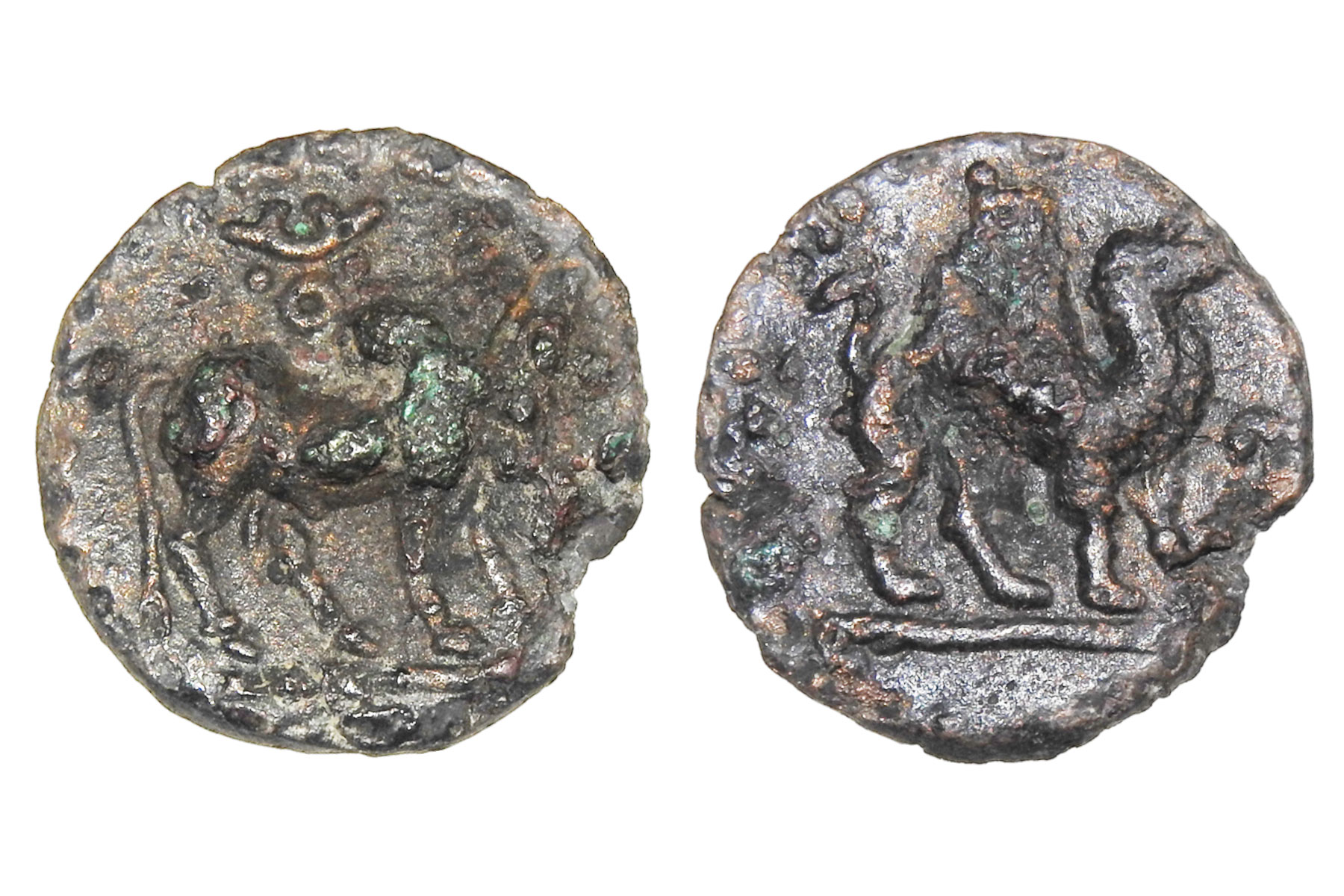
Kushan Empire, Kujula Kadphises (c. 30-80CE), Heavy Copper Unit, 7.40grms, Obv: Bull right with nandipada above- Kharoşṭhī letter 'ra'on right and corrupt Greek legend around, Rev: Camel right, Kharoşṭhī letter 'pu'on right, Kharoşthī legend Maharayasa Rayatirayasa Devaputrasa Kuyula Kara Kapasa, well-preserved specimen, Rare Kujula Kadphises was the founder of the Kushan Empire and a key figure in Central and South Asian history. He united the Yuezhi tribes and expanded his control into Bactria and northwestern India, absorbing Indo-Greek and Indo-Scythian territories. His reign laid the political and administrative foundations for later Kushan rulers, especially Vima Kadphises and Kanishka I, who transformed the Kushans into a major imperial power
5000

Lot No : 46
Auction No : 8
Kushan Empire, Vasudeva II (c. 290-310CE), Gold Dinar, 7.80 grms, Obv. Vasudeva II standing front, nimbate and head to left, holding ribboned staff in his left hand and sacrificing over lighted altar with his right; in field to left, ribboned trident with BAZOΔHO ('Vasudeva' in Batrian). Rev. Ardoksho enthroned facing, holding cornucopiae in her left hand and diadem in her right; in field to upper left a tamgha, Minted in Mathura or Gandhara. Ex-ANACS encapsulation, graded AU 50 (6256771) Extra Fine+, Very Scarce. Vasudeva II was one of the last rulers of the Kushan Empire, ruling during a period of political fragmentation and decline. His reign was marked by reduced territorial control, with Kushan authority largely confined to parts of northwestern India. The weakening of central power coincided with pressure from the Sasanians in the northwest and rising regional dynasties in India. Vasudeva II’s rule represents the final phase of Kushan imperial dominance
155000
Lot No : 47
Auction No : 8
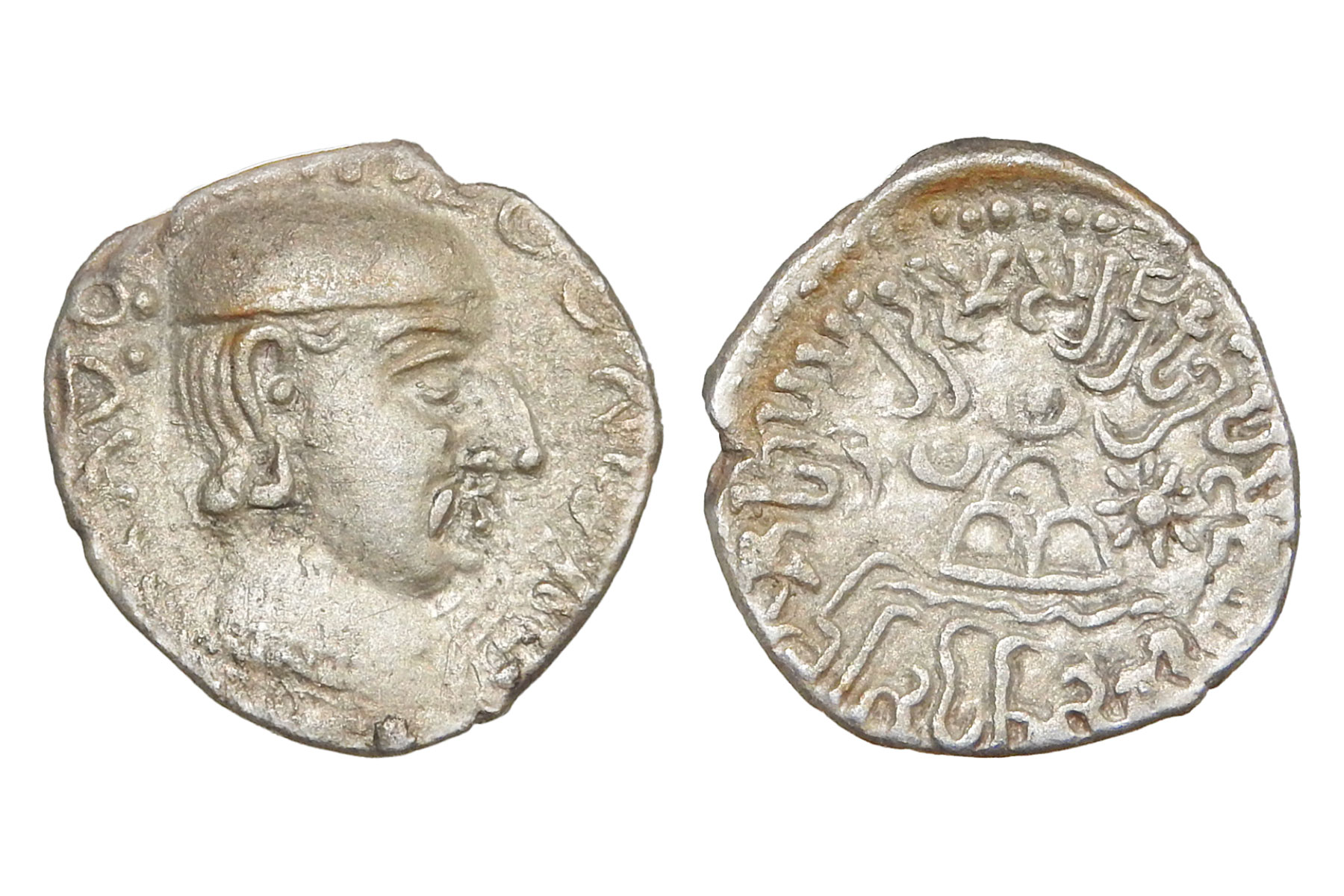
Western Kshatrapas, Rudradāman, son of Jayadāman (c.130-165 СЕ), Silver Drachm, 2.10grms, Obv: Rudradāman's bust, Greek legend, Rev: Brahmi legend Rājño Ksatrapasa Jayadāmasaputrasa Rājño Mahākşatrapasa Rudradāmasa, with three arched hill-crescent above with sun and moon in the centre, Pieper#3366, Extra Fine+, Rare Rudradāman I expanded Western Kshatrapa power through sustained warfare against the Satavahanas, defeating Vashishtiputra Satakarni and reversing Satavahana control in western India. He also waged successful campaigns against Yaudheyas, Malavas, and other republican clans, asserting dominance over central and western regions. To stabilize relations after conflict, he formed a marital alliance with the Satavahanas by giving his daughter in marriage to Vashishtiputra Satakarni, combining military victory with diplomatic settlement.
1700
Lot No : 48
Auction No : 8
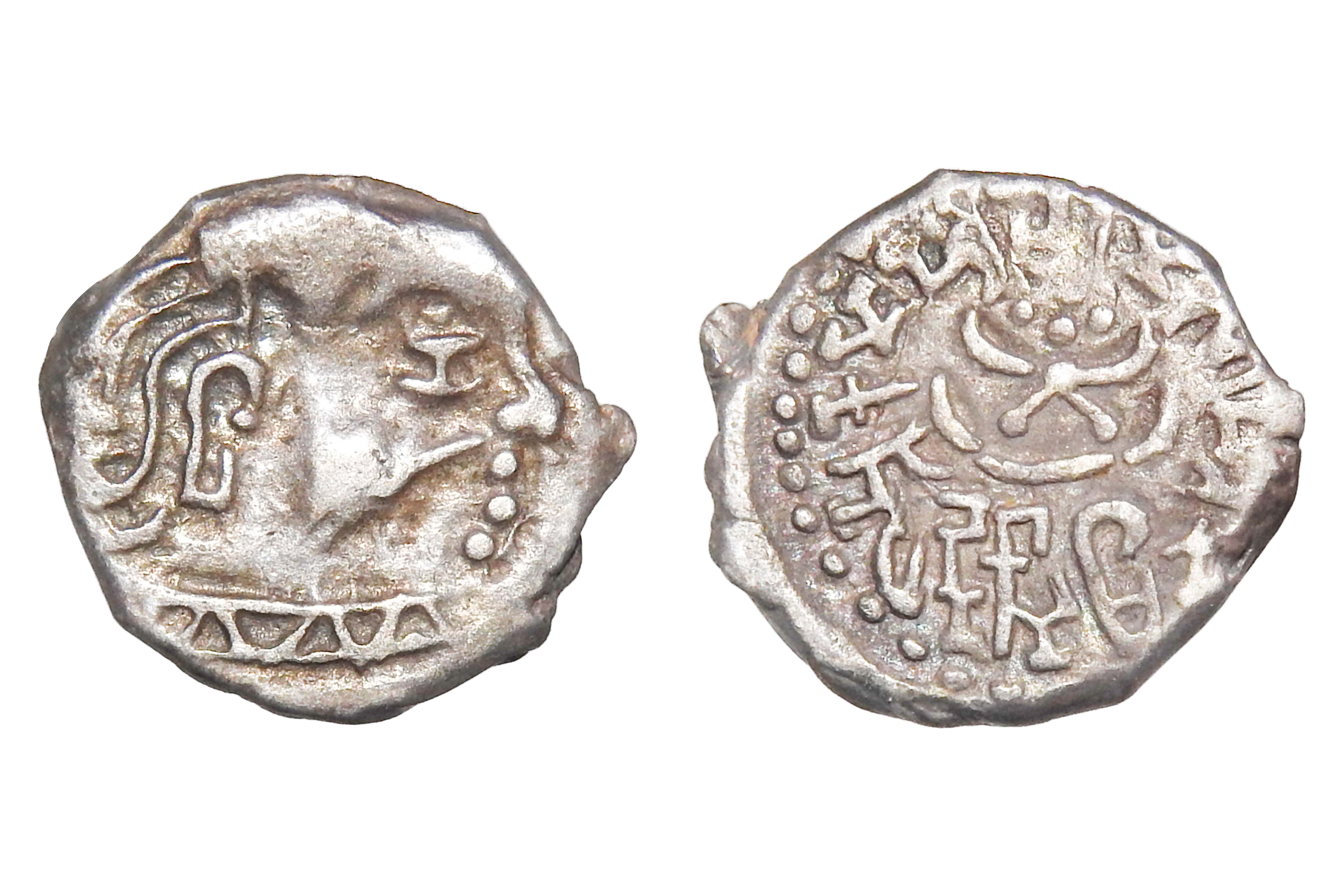
Gupta Empire, Skanda Gupta(c. 448-467CE), Silver Drachm, 1.70grms, Obv. Significantly stylised bust usually without satrapal cap, Rev: Garuda standing holding a serpent (Naga) in its talons with Brähmi inscription around: Paramābhāgavata Mahārājadhirāja Śri Skandagupta Kramaditya ("Supreme devotee of Vişņu, Great King of Kings Skandagupta Kramaditya"), Execellent condition with 70% legend visible on reverse, Todd&Fishman G#18, Very Scarce Skandagupta fought decisive wars against the Pushyamitras, crushing their rebellion and restoring Gupta control in central India. His reign was dominated by repeated invasions of the Hunas (likely Kidarites), whom he defeated in major frontier battles, halting their advance into the Gupta heartland. These conflicts severely strained Gupta resources. Skandagupta relied on military resistance rather than formal alliances, choosing direct confrontation to defend imperial territory. His victories temporarily preserved Gupta supremacy but marked the beginning of prolonged warfare against Hun powers
1700
Lot No : 49
Auction No : 8
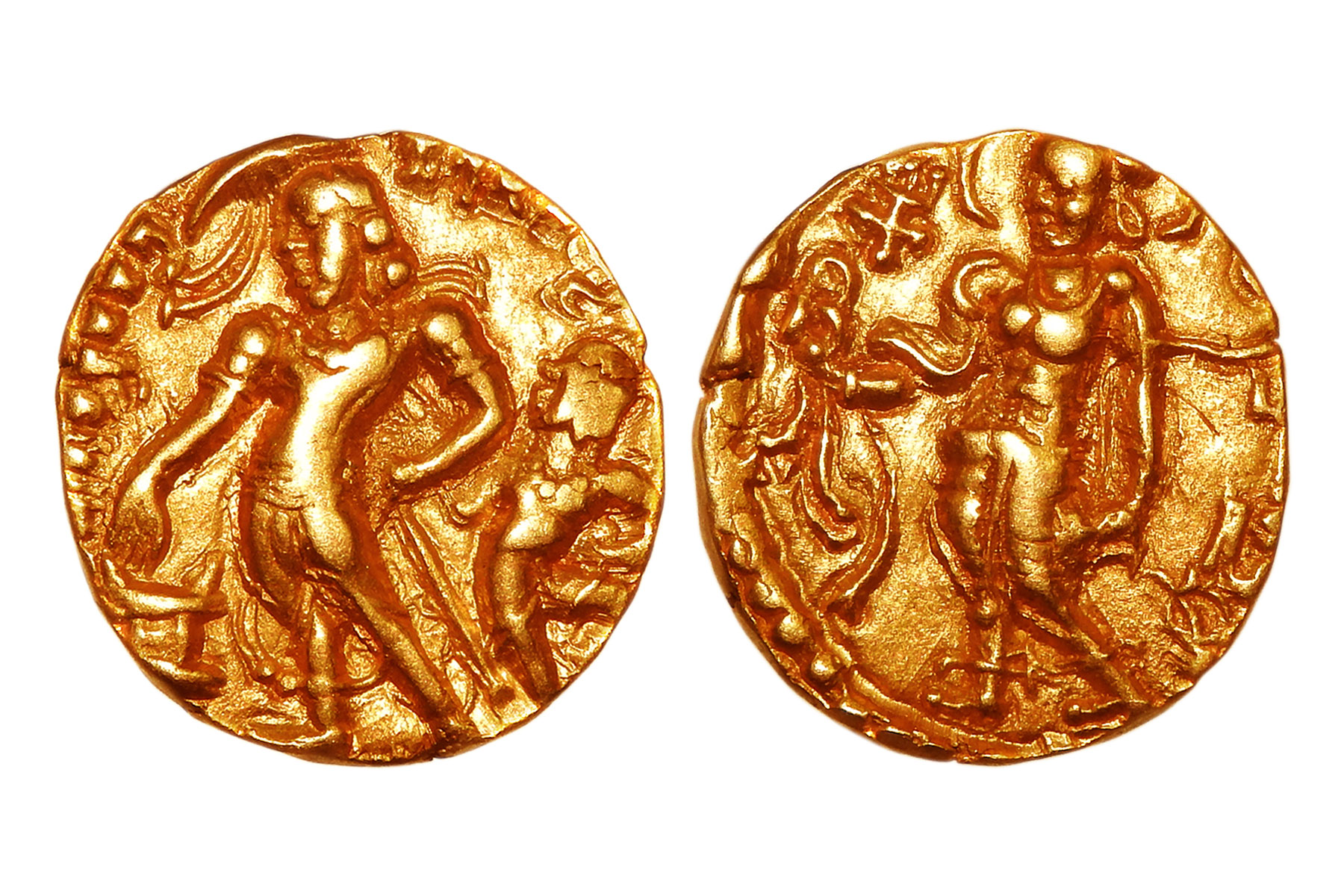
Gupta Empire, Chandragupta II Vikramaditya, (c. 380-413), Chhatra Type, Gold Dinar, 7.87 grms, Obv. Chandragupta II standing front under a parasol, head facing to left, sacrificing above lighted altar with his right hand and holding sword in his left; behind him, dwarf standing facing with his left leg bent up, looking up toward the king; to right, with legend KSHITIMAVAJITYA SUCHARITAIRDIAVAM JAYATI VIKRAMADITYAH ('Having conquered the earth, Vikramaditya wins the heavens by his meritorious deeds' in Brahmi) Rev. Lakshmi advancing to left, holding diadem in her right hand and holding lotus with a long stalk in her left; to the upper left, tamgha. Kumar Class I, C.2. Extra Fine+, Very Rare The Mighty Chandragupta II, son of Samudragupta and Dattadevi, is considered to be one of the strongest rulers of Gupta empire, he expanded Gupta power through decisive military campaigns. He defeated the Western Kshatrapas under Rudradāman I, annexing Malwa, Gujarat, and Saurashtra, and subdued rebellious groups such as the Yaudheyas and other western clans. To consolidate his conquests, he forged alliances with former rivals and local elites, ensuring loyalty and stability in newly acquired territories. His reign combined battlefield victories with pragmatic diplomacy, securing the western frontier and establishing the Gupta Empire at its maximum territorial and political strength.
 WhatsApp