
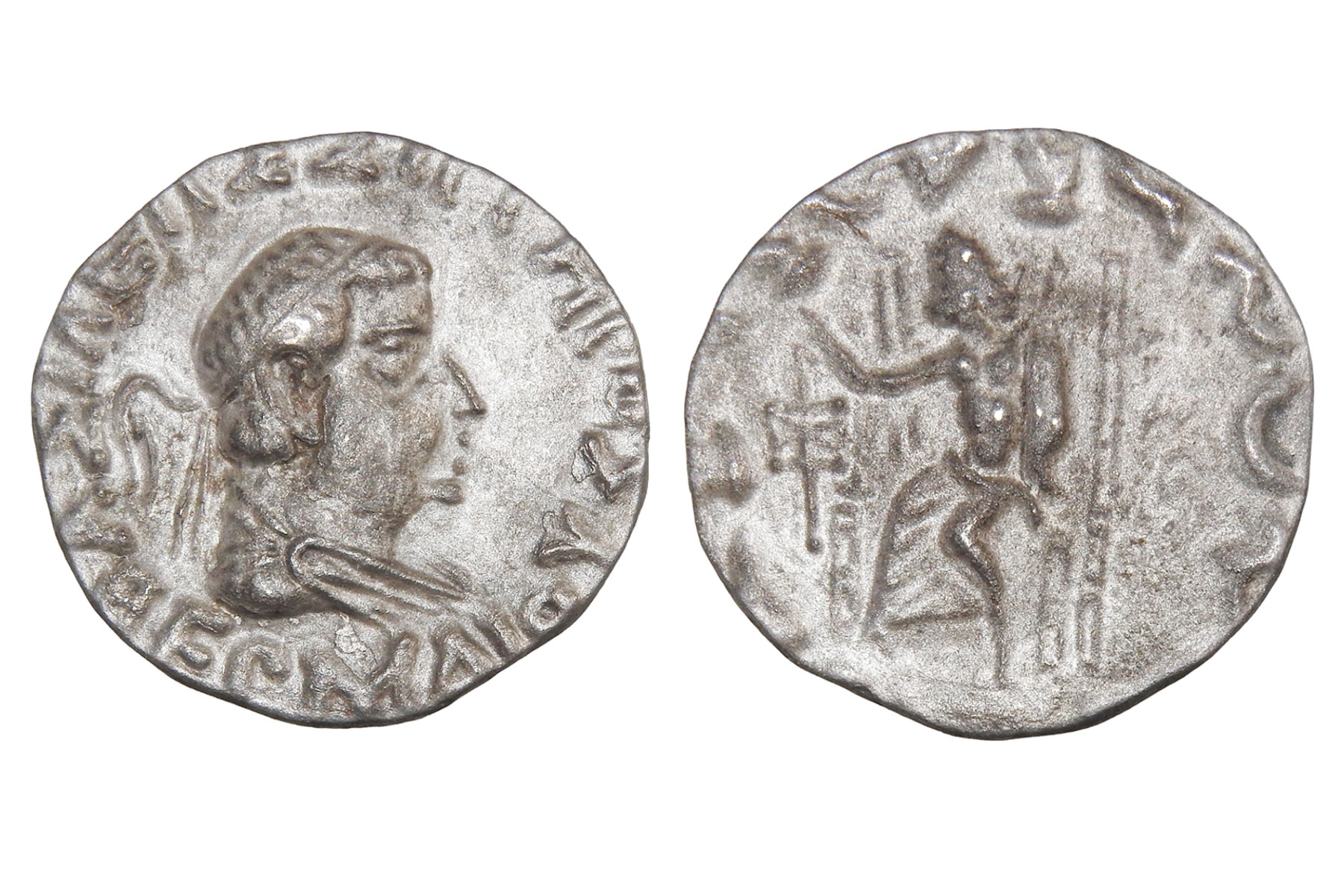
Lot No : 61
Auction No : 8
Indo Greek, Hermaios (c. 105-90BC), Silver Tetradrachm, 7.70grms, Obv. Greek legend ΒΑΣΙΛΕΩΣ ΣΩΤΗΡΟΣ/ΕΡΜΑΙΟΥ surrounding Diademed bust of Hermaios facing right. Rev. Maharajasa tratarasa Heramavasa [of Great King Hermaios the Savior]) surrounding Zeus enthroned facing three fourth to left, making benediction gesture and holding scepter. Monogram to left with Kharoshthi letter to right, minted in Gandhara, Extra Fine+, Very Scarce denomination. Hermaios, one of the last significant Indo-Greek kings, ruled in the Kabul and Gandhara regions. His reign was marked by constant military pressure from the Yuezhi (later Kushans) advancing from Central Asia, which threatened Indo-Greek control. He also faced resistance from local Indian and Central Asian tribal chiefs, requiring frequent defensive campaigns. To stabilize his realm, Hermaios maintained alliances with neighboring Greek and Hellenized communities, coordinating defense and administration against external threats. Despite his efforts, the Indo-Greek domain weakened under repeated invasions, ultimately succumbing to the Yuezhi expansion in the region
12000
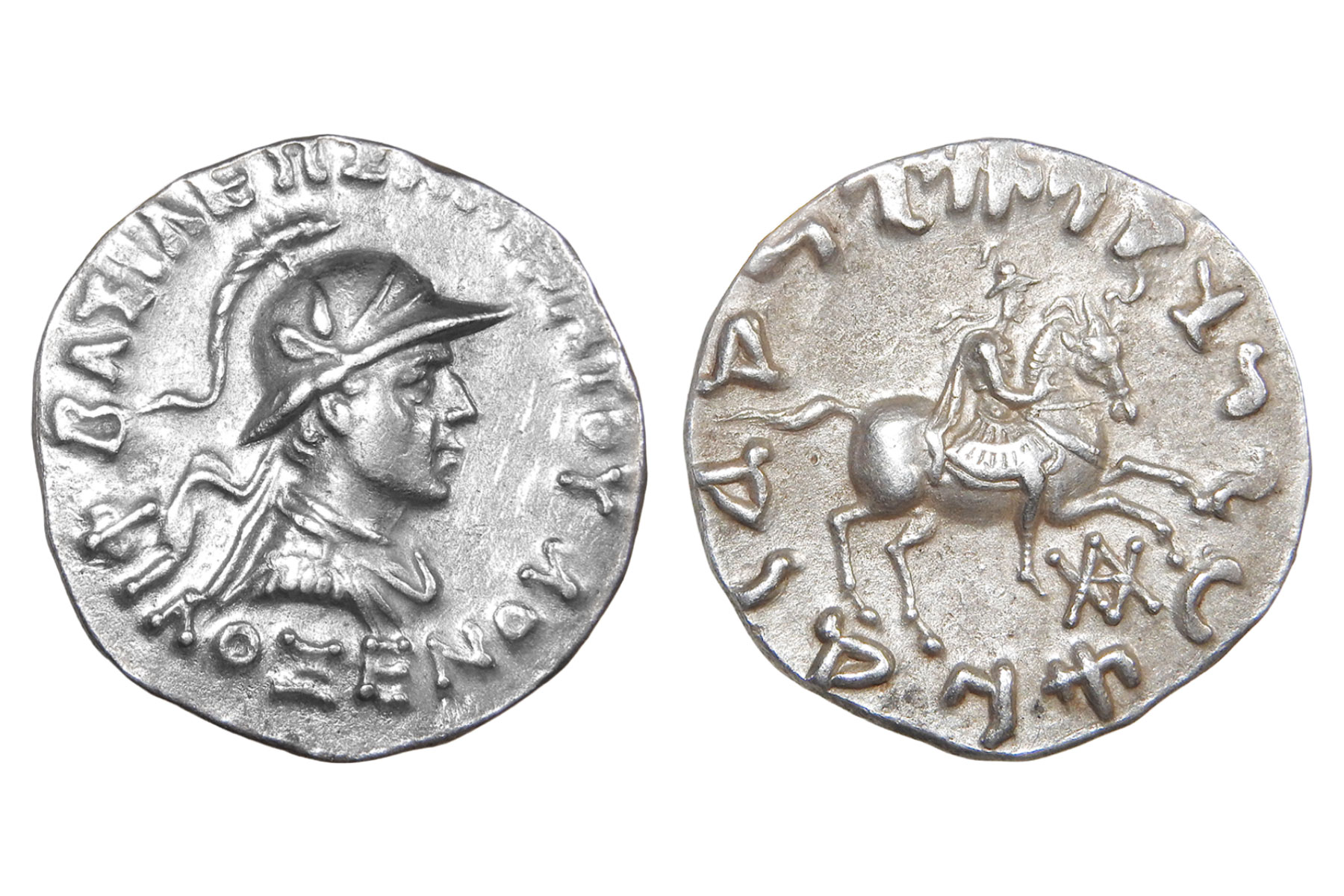
Lot No : 62
Auction No : 8
Indo Greek, Philoxenos (c. 125-110 BC), Silver Tetradrachm, 9.80grms, Obv. Greek legend ΒΑΣΙΛΕΩΣ ΑΝΙΚΗΤΟΥ/ΦΙΛΟΞΕΝΟΥ surrounding a Diademed bust of Philoxenos in horned Boiotian helmet facing right. Rev. Maharajasa Apadihatasa Philasinasa [of Great King Philoxenos the Unconquered] surrounding a Helmeted and armored king charging to right on horseback with a Monogram below. Minted in the Paropamisadai or Gandhara, Bopearachchi Série 5. R2, Very Rare. Philoxenos ruled the eastern Punjab and western India, faced ongoing threats from Yuezhi/Kushan nomads pressing from the northwest, as well as resistance from local tribal confederations asserting autonomy in frontier regions. His reign involved defensive campaigns to protect Greek-controlled territories and maintain Hellenistic influence in the region. To strengthen his position, Philoxenos forged alliances with neighboring Greek cities and Hellenized elites, coordinating military and political support against invading forces. Despite these efforts, his authority remained limited geographically, and his reign represents the final phase of Indo-Greek power before Kushan dominance
75000
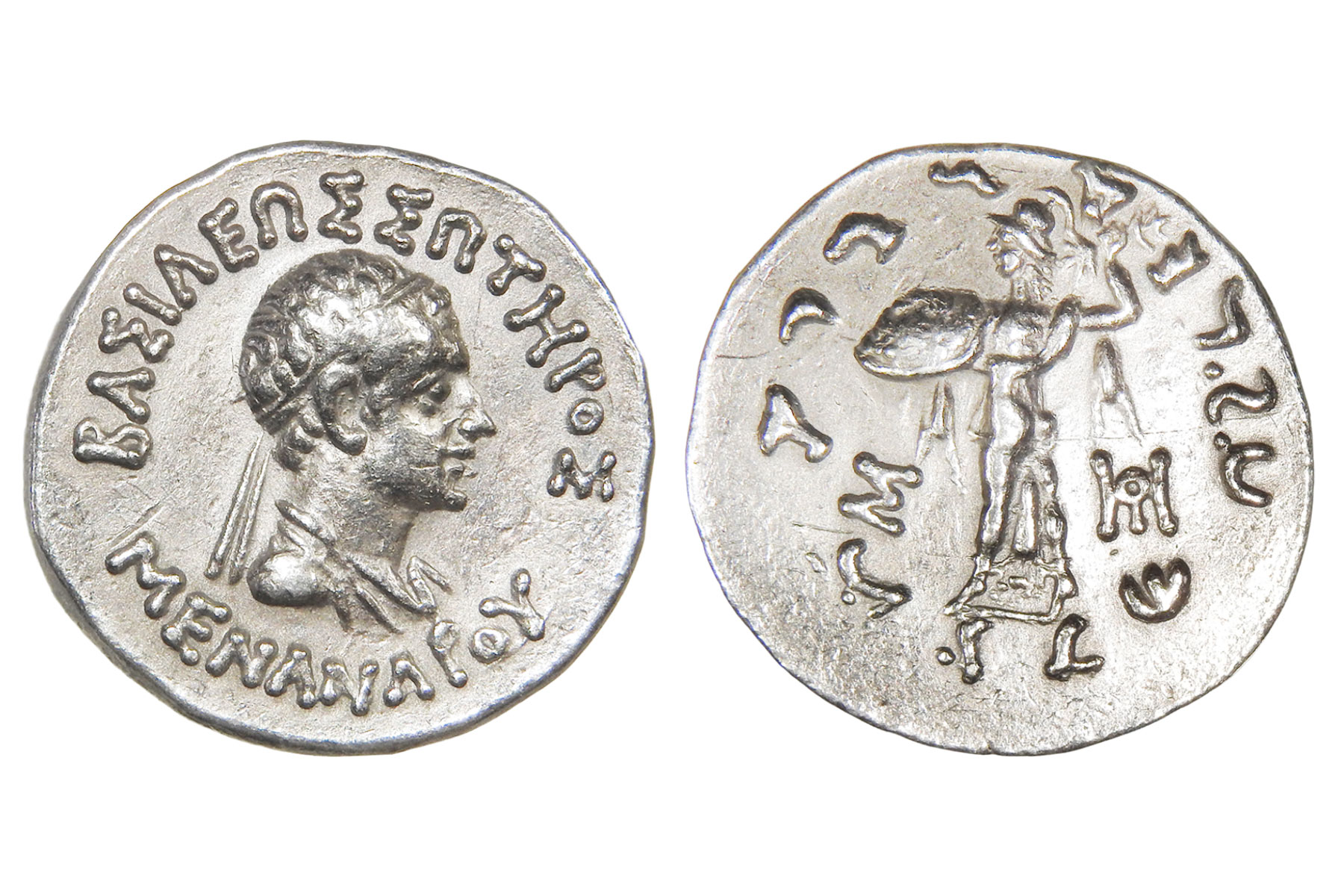
Lot No : 63
Auction No : 8
Indo Greek, Menander I (c. 155-130BC), Silver Tetradrachm, 9.80grms, Obv. Greek legend ΒΑΣΙΛΕΩΣ ΣΩΤΗΡΟΣ/ΜΕΝΑΝΔΡΟΥ surrounding Diademed bust of Menander facing right, Rev. Kharoshtri legend (Maharajasa tratarasa Menamdrasa [of Great King Menander the Savior]) surrounding Athena Promachos standing left brandishing thunderbolt and shield, Monogram on both either sides, Minted in Paropamisadai or Gandhara. Bopearachchi Série 12. Extra Fine+, Very Rare in this quality. Menander I is one of the most renowned Indo-Greek kings, celebrated as a major conqueror. Following the murder of Eukratides I, he rapidly moved into the former Indian territories of the Greco-Bactrian kingdom, consolidating control over Punjab, Himachal Pradesh, and Jammu. His authority may have extended east to the former Mauryan capital at Pataliputra and south to Mathura. During this period, rival Indo-Greek king Zoilos I appears to have claimed Arachosia and parts of Paropamisadai. Menander is historically significant for his conversion to Buddhism, recorded in the Milinda Panha, where he is depicted in philosophical dialogue with the Buddhist sage Nagasena. Some sources suggest he abdicated in favor of his son and retired as a monk. An alternative tradition records that he died on campaign, with his cities disputing possession of his remains until agreeing to share his ashes, possibly enshrined in stupas across his territories
65000
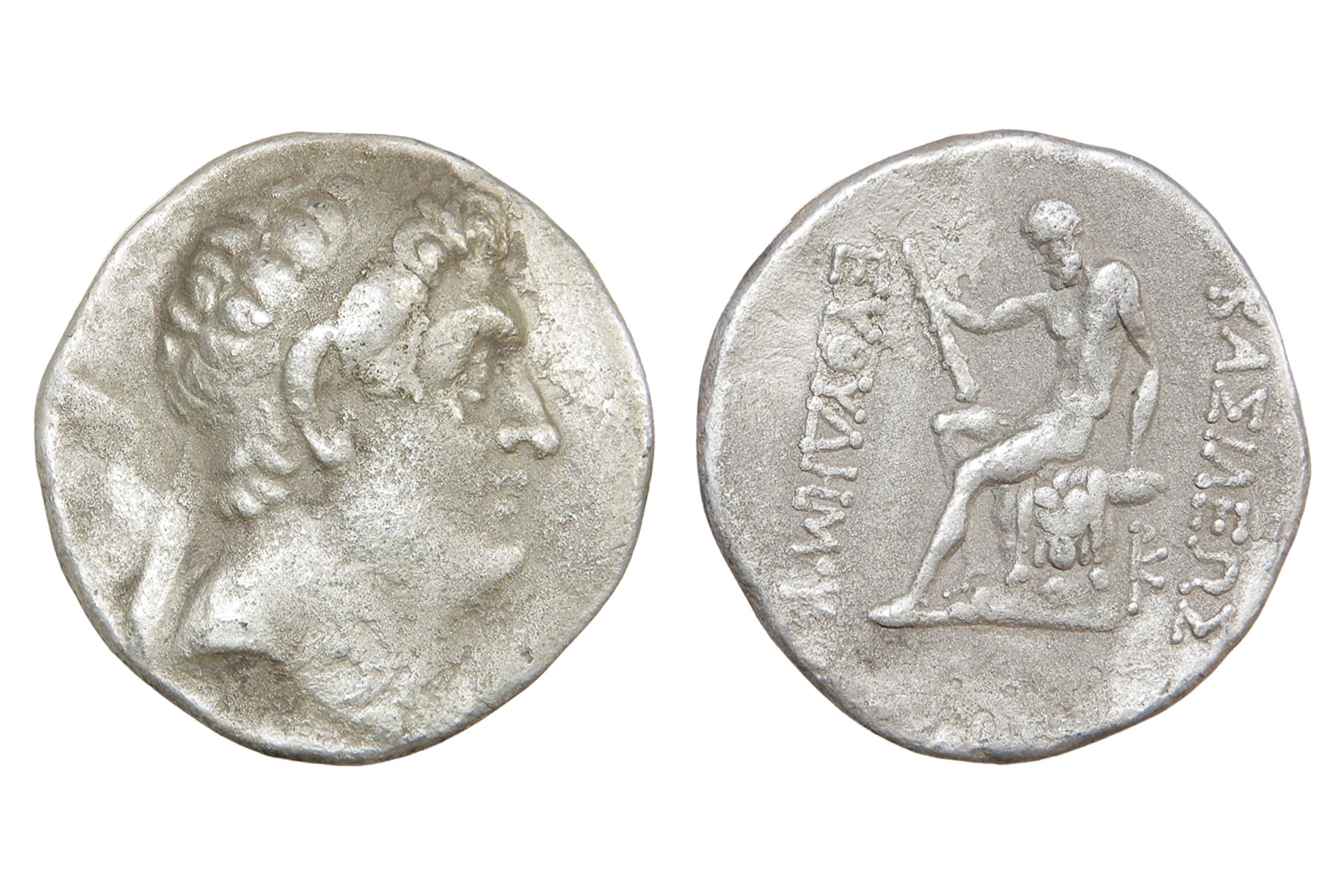
Lot No : 64
Auction No : 8
Indo Greek, Euthydemos I (c. 225-200BC), Silver Tetradrachm, Greek Standard, 15.90grms, Obv. Diademed and aged head of Euthydemos facing right. Rev. Greek legend ΒΑΣΙΛΕΩΣΙ ΕΥΘΥΔΗΜΟΥ surrounding Herakles seated to left on a rock, holding club. Monogram to right, Minted in Baktra Bopearachchi Série 12; Kritt B17. Very Fine, Rare. Euthydemos I, originally from Magnesia, controlled Bactria and Sogdiana around 225 BCE and may have influenced parts of northwestern India. His reign became notable when he clashed with Seleucid king Antiochos III in Areia, near the western approaches to India. After losing a battle, he withdrew to Bactra, successfully withstanding a three-year siege. Antiochos III eventually recognized his authority, partly to secure the region against nomadic threats from the north. Through this recognition and the alliance sealed by his son Demetrios’ marriage to Laodike, Euthydemos’ dynasty maintained control over Bactria and adjoining territories, indirectly stabilizing Greek influence along the northwestern frontier of India.
28000
Lot No : 65
Auction No : 8
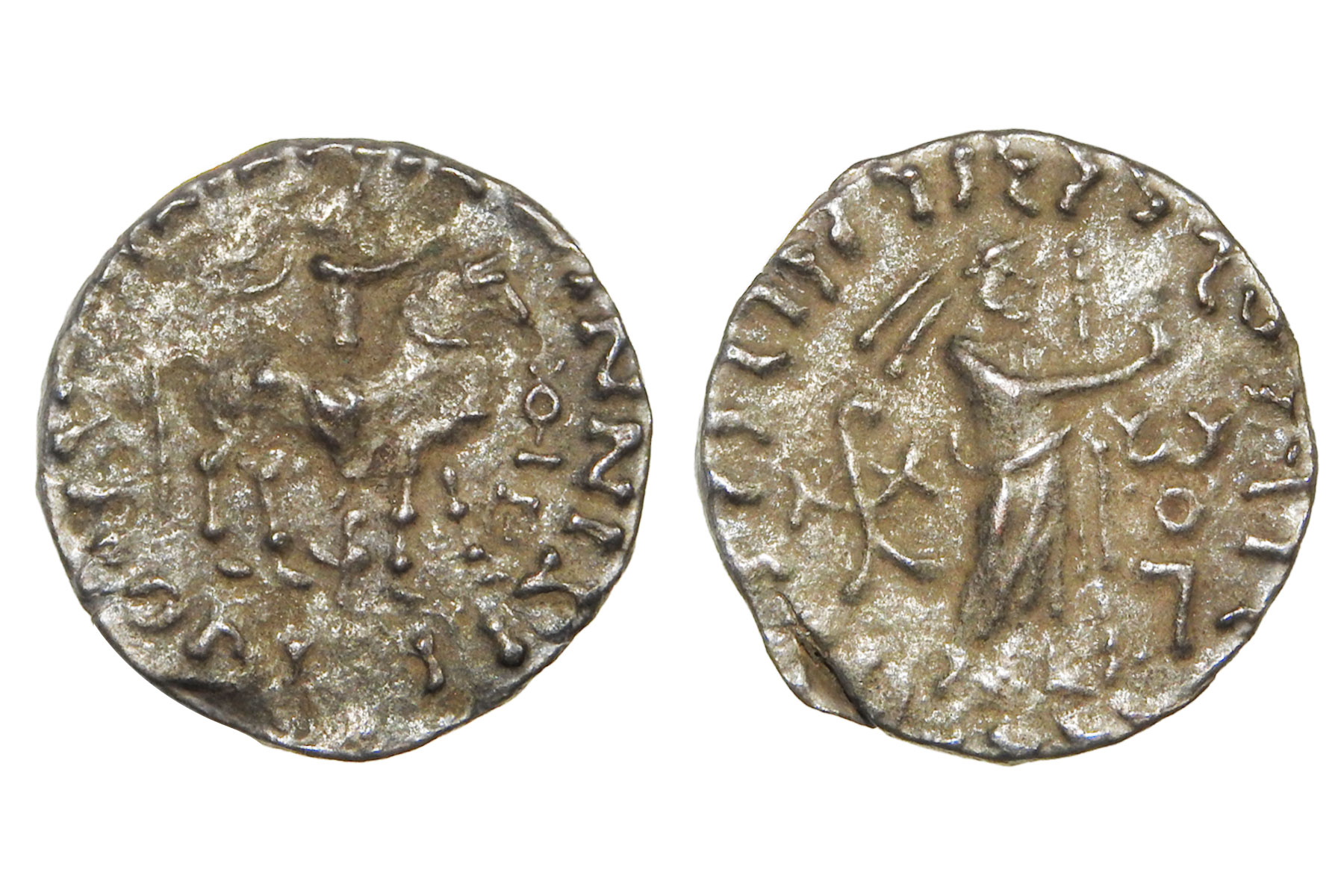
Indo- Parthian, Gondophares-Sases (c. 100AD), Silver Tetradrachm, 8.50grmsm obv. King on horseback moving towards right side with control mark on the right and Greek legend surrounding the horse and kharoshti letter below the horse, Rev. Zeus standing facing right holding scepter with nandipada and two control marks on eitherside and legend surrounding the god, Very Fine, Very Scarce Gondophares–Sases ruled parts of north-western India as a member of the Indo-Parthian Gondopharid dynasty. His authority was centered on Gandhara and the Indus region, areas contested by Indo-Scythian chiefs and emerging Kushan powers. Gondophares–Sases maintained Parthian control over key Indian trade corridors linking the Iranian plateau with the subcontinent. His reign represents a transitional phase marked by continuous pressure from nomadic groups advancing from Central Asia. By the mid-1st century CE, Indo-Parthian control weakened, allowing the Kushans to overtake Gandhara and replace Parthian rule in north-western India through sustained military expansion.
6000
Lot No : 66
Auction No : 8
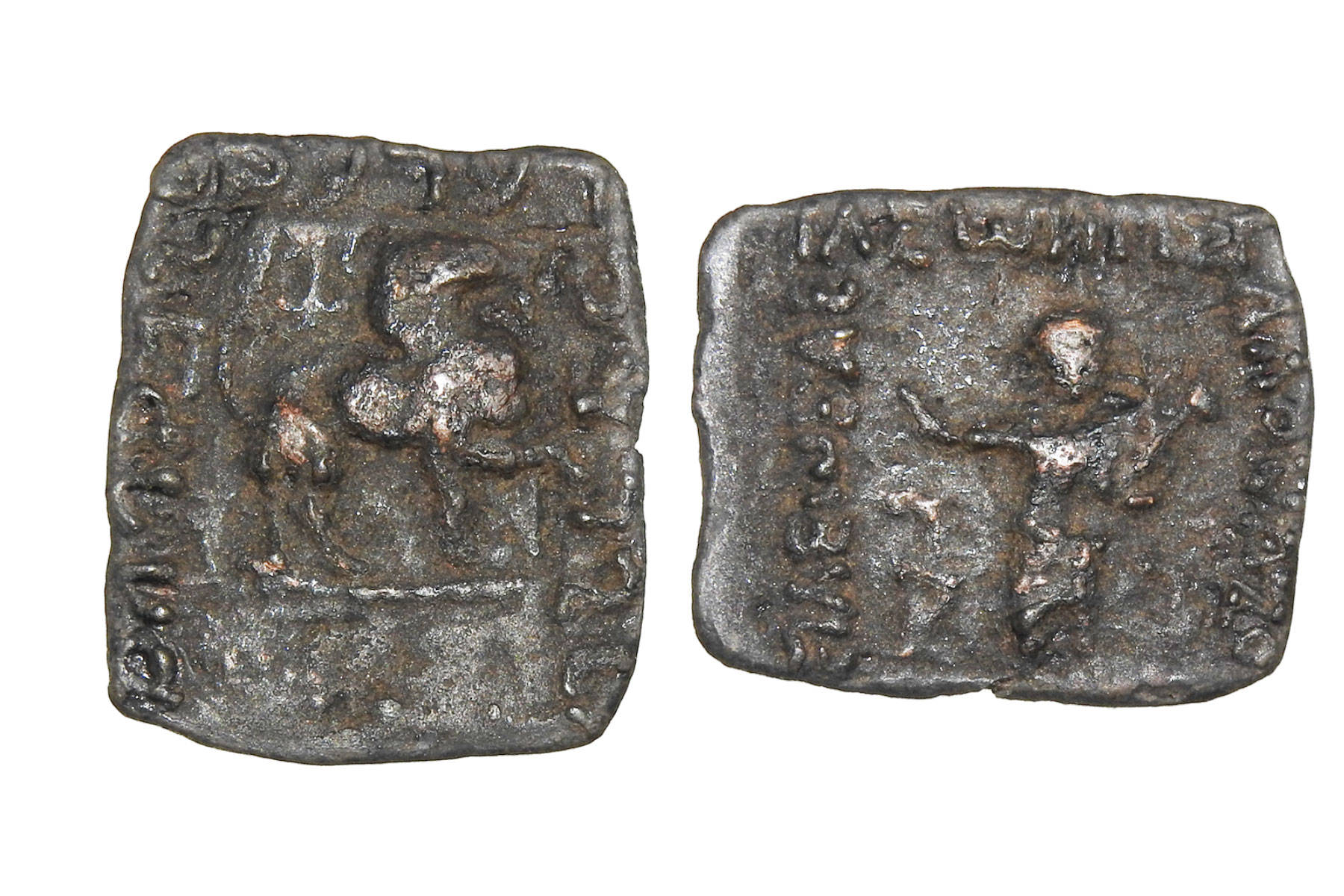
Indo- Skythians, Azes (c. 58-12BC), Quadrangular Copper Unit, 3.60grms, Obv. Greek legend ΒΑΣΙΛΕΩΣ Β/ΑΣΙΛΕΩΝ ΜΕ/ΓΑΛΟΥ ΑΖOY surrounding Hephaistos who is standing front facing, holding hammer and tongs and making benediction gesture with a Monogram, Rev. Kharoshti legend Rajarajasa Mahatasa Avasa [of Great King, King of Kings Azes the Great]) surrounding a Lion who is facing left, Minted in Taxila. ISCH 2,116.10-30, R2, Extra Fine+, Very Rare Azes I was a major Indo-Scythian ruler active in north-western India . He consolidated Scythian control over Gandhara, the Indus region, and parts of Punjab after defeating remaining Indo-Greek kings. Azes is closely associated with the defeat of Hippostratos and the end of effective Indo-Greek political power in India. His reign marks the firm establishment of Indo-Scythian dominance over key Indian trade routes linking Central Asia with the subcontinent. Azes ruled amid constant pressure from rival nomadic groups and local Indian powers, setting the stage for later conflicts with Indo-Parthians and the eventual Kushan expansion into north-western India
2700
Lot No : 67
Auction No : 8
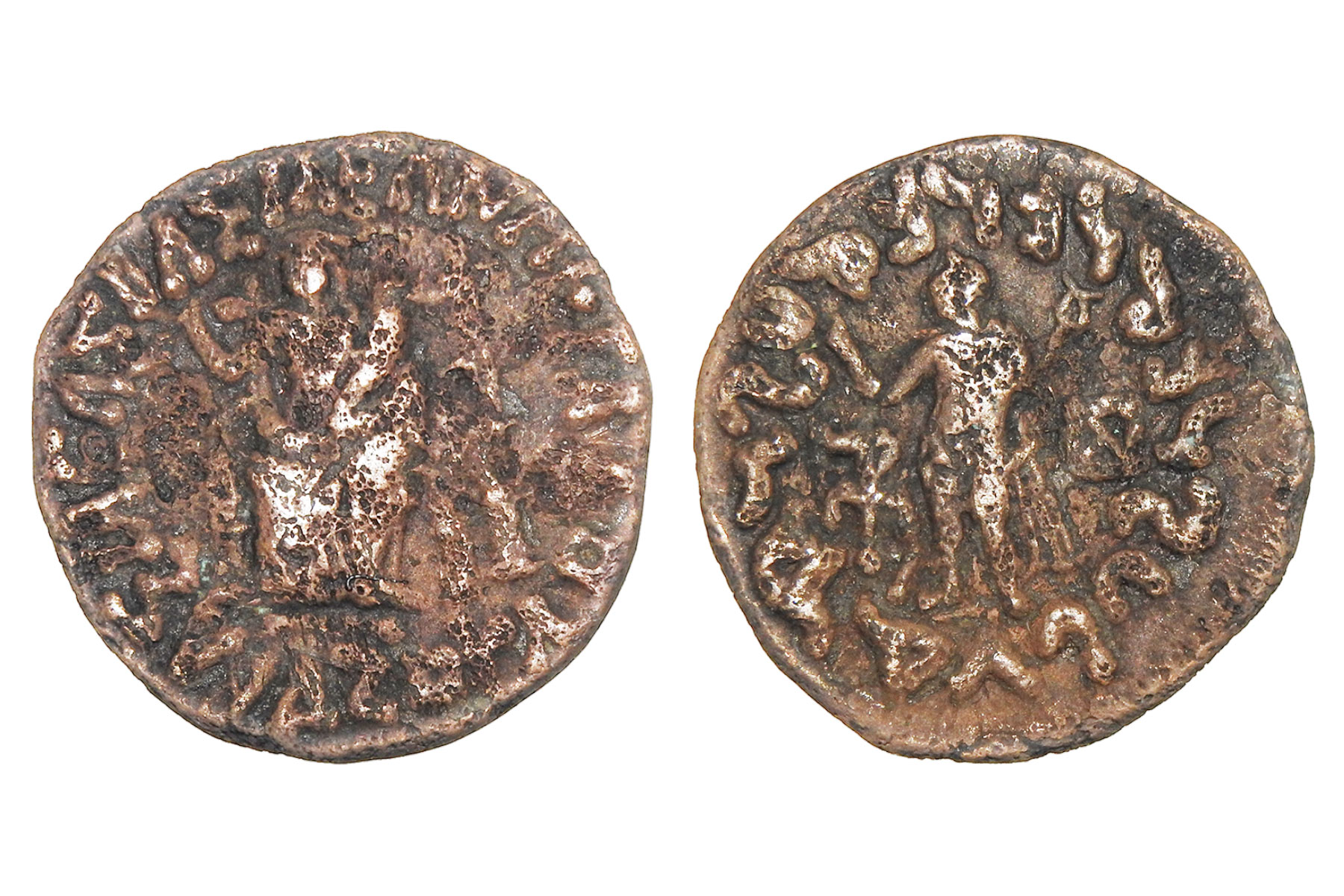
Indo- Skythians, Azes (c. 58-12BC), Copper Unit, 12.70grms, Obv. Greek legend ΒΑΣΙΛΕΩΣ ΒΑΣΙΛΕΩΝ ΜΕΓΑΛΟΥ/ΑΖOY surrounding a Tyche enthroned facing 3/4 to left, holding cornucopia, Rev. Kharoshti legend (Maharajasa rajarajasa mahatasa Ayasa [of Great King, King of Kings Azes the Great]) surrounding Hermes who is standing front facing and holding caduceus and making benediction gesture. Monogram to the left and right, Minted in Pushkalavati. ISCH 2, 101. R2, Very Fine+, Heavy, Rare in this condition Azes I reshaped north-western India. His campaigns marked the final collapse of Indo-Greek political power in India, particularly in Gandhara and the Punjab. By defeating kings such as Hippostratos, Azes secured control over the Indus region and key routes linking India with Central Asia. His reign is associated with the “Azes Era,” reflecting his political dominance in the northwest. Azes ruled amid constant military competition with Indo-Greek remnants and other nomadic groups, laying the groundwork for later struggles between Indo-Scythians, Indo-Parthians, and the rising Kushans in Indian territory.
1700
Lot No : 68
Auction No : 8
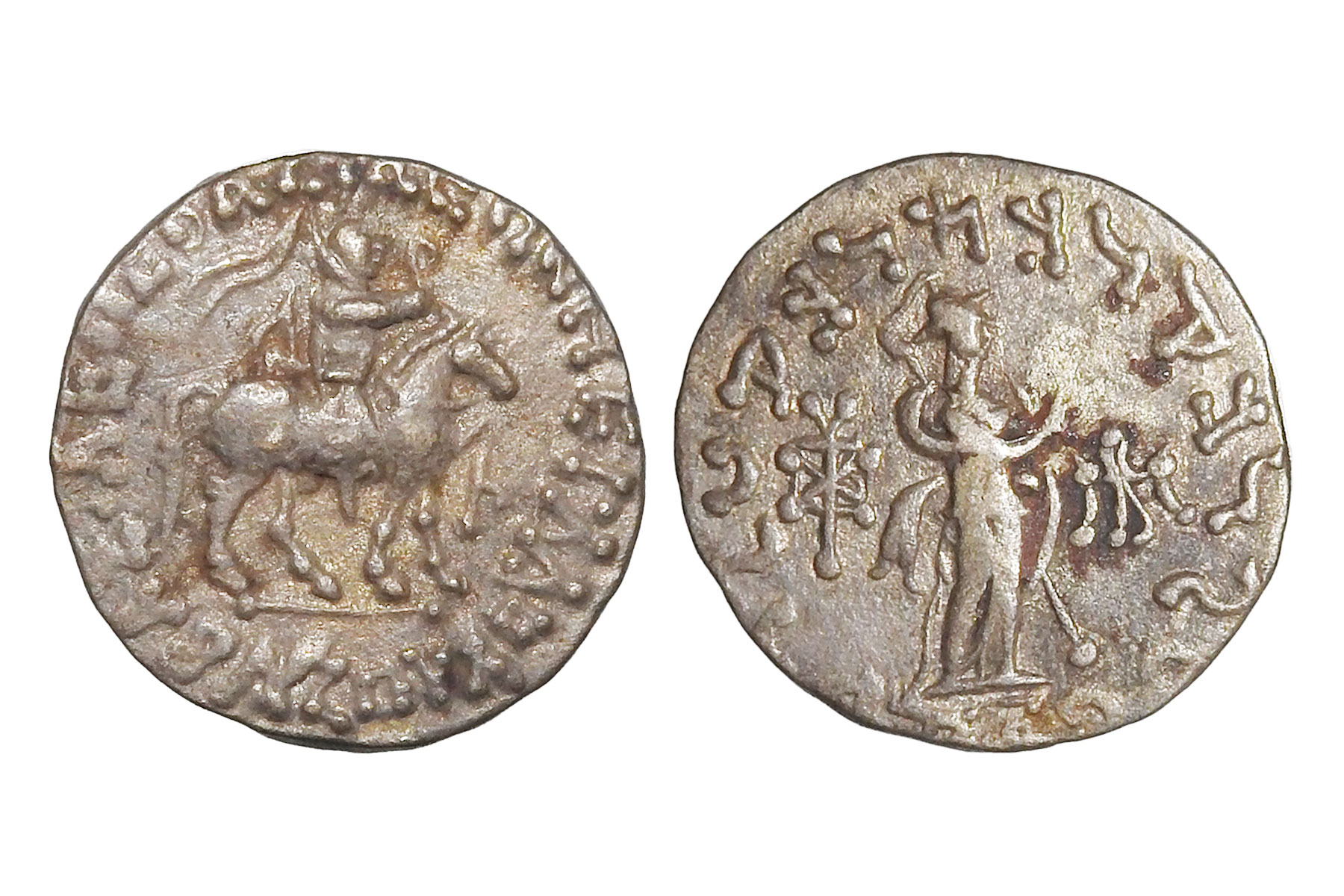
Indo- Skythians, Azes (c. 58-12BC), Silver Tetradrachm, 8.90grms, Obν. Greek legend ΒΑΣΙΛΕΩΣ ΒΑΣΙΛΕΩΝ ΜΕΓΑΛΟΥ ΑΖOY surrounding a Armored Skythian king advancing to right on a horseback, holding elephant goad. Kharoshthi letter to right, Rev. Kharoshti legend Maharajasa Rajarajasa Mahatasa Ayasa [of Great King, King of Kings Azes the Great]) surrounding a Athena who stands to right, holding spear and shield and making benediction gesture with Monogram to left and right, Minted in western Gandhara. ISCH 2, 98T. C, Very Fine+, Very Scarce. Azes I emerged as a dominant Indo-Scythian ruler in north-western India, consolidating power after a period of Indo-Greek fragmentation. His authority was centered in Gandhara and the Indus basin, regions critical for controlling Indo-Central Asian trade routes. Azes is associated with the establishment of the Azes Era, later used in north-western Indian inscriptions, reflecting his political impact. His reign represents the transition from Greek to Scythian dominance in India, marked by military displacement of Indo-Greek rulers and the stabilization of Scythian control. This consolidation later allowed Indo-Parthians and Kushans to inherit a unified north-western Indian power base.
18000
Lot No : 69
Auction No : 8
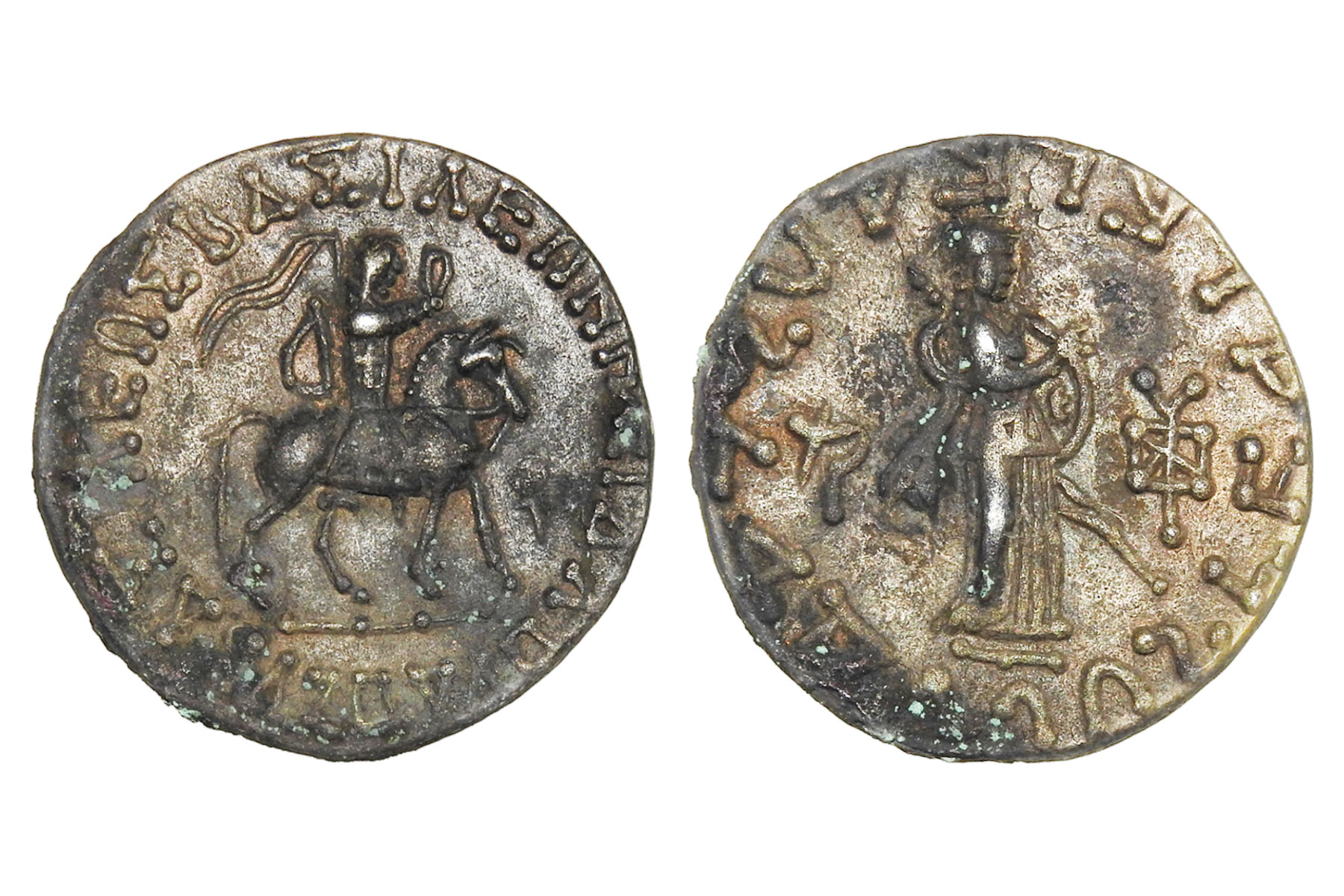
Indo- Skythians, Azes (c. 58-12BC), Silver Tetradrachm, 9.60grms, Obν. Greek legend ΒΑΣΙΛΕΩΣ ΒΑΣΙΛΕΩΝ ΜΕΓΑΛΟΥ ΑΖOY surrounding a Armored Skythian king advancing to right on a horseback, holding elephant goad. Kharoshthi letter to right, Rev. Kharoshti legend Maharajasa Rajarajasa Mahatasa Ayasa [of Great King, King of Kings Azes the Great]) surrounding a Athena who stands to right, holding spear and shield and making benediction gesture with Monogram to left and right, Minted in western Gandhara. ISCH 2, 98T. C, Very Fine+, Very Scarce. Azes I emerged as a dominant Indo-Scythian ruler in north-western India, consolidating power after a period of Indo-Greek fragmentation. His authority was centered in Gandhara and the Indus basin, regions critical for controlling Indo-Central Asian trade routes. Azes is associated with the establishment of the Azes Era, later used in north-western Indian inscriptions, reflecting his political impact. His reign represents the transition from Greek to Scythian dominance in India, marked by military displacement of Indo-Greek rulers and the stabilization of Scythian control. This consolidation later allowed Indo-Parthians and Kushans to inherit a unified north-western Indian power base.
 WhatsApp