
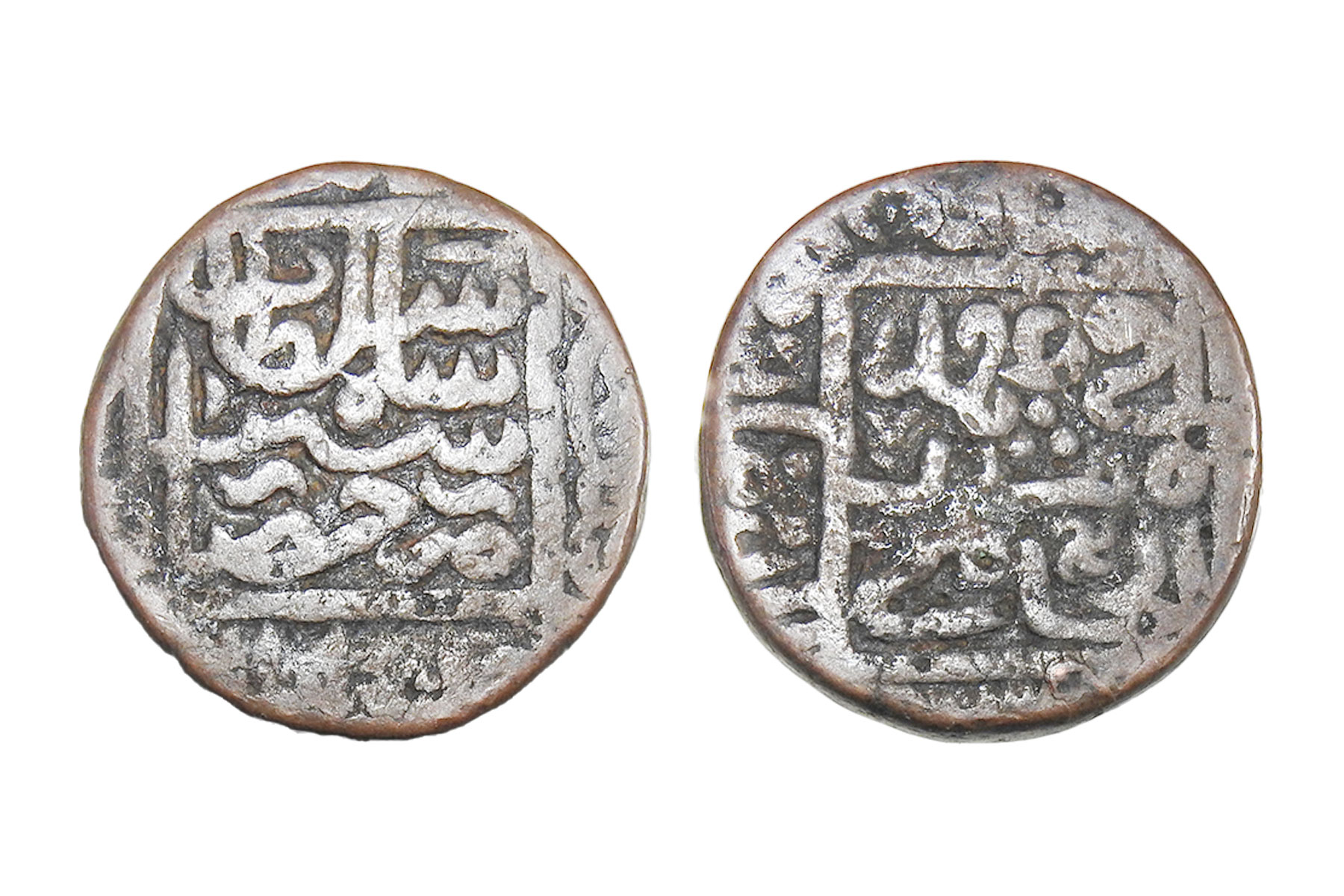
Lot No : 98
Auction No : 8
Delhi Sultanate, Suris, Sher Shah Suri(c. 1538-1545CE), Copper Paisa, 19.80grms, Minted in Hissar, Obv. in square: sher shah sulțān darb abū, Rev. in square: ft 'ahd (a)l-amir al-hāmī. in margins, parts of al-sultan al-'adil al-dīn al-dayyan, Swastik as MintMark, G&G#D857, Very Fine, Very Scarce. Sher Shah Suri had a strong connection to Hisar (Hissar-i-Firoza), which he used as a strategic military and administrative centre in north India. From Hisar, he controlled routes to Punjab and Rajasthan, stationed troops, collected revenue, and secured the northwest frontier during his wars against the Mughals and Rajput chiefs.
2200
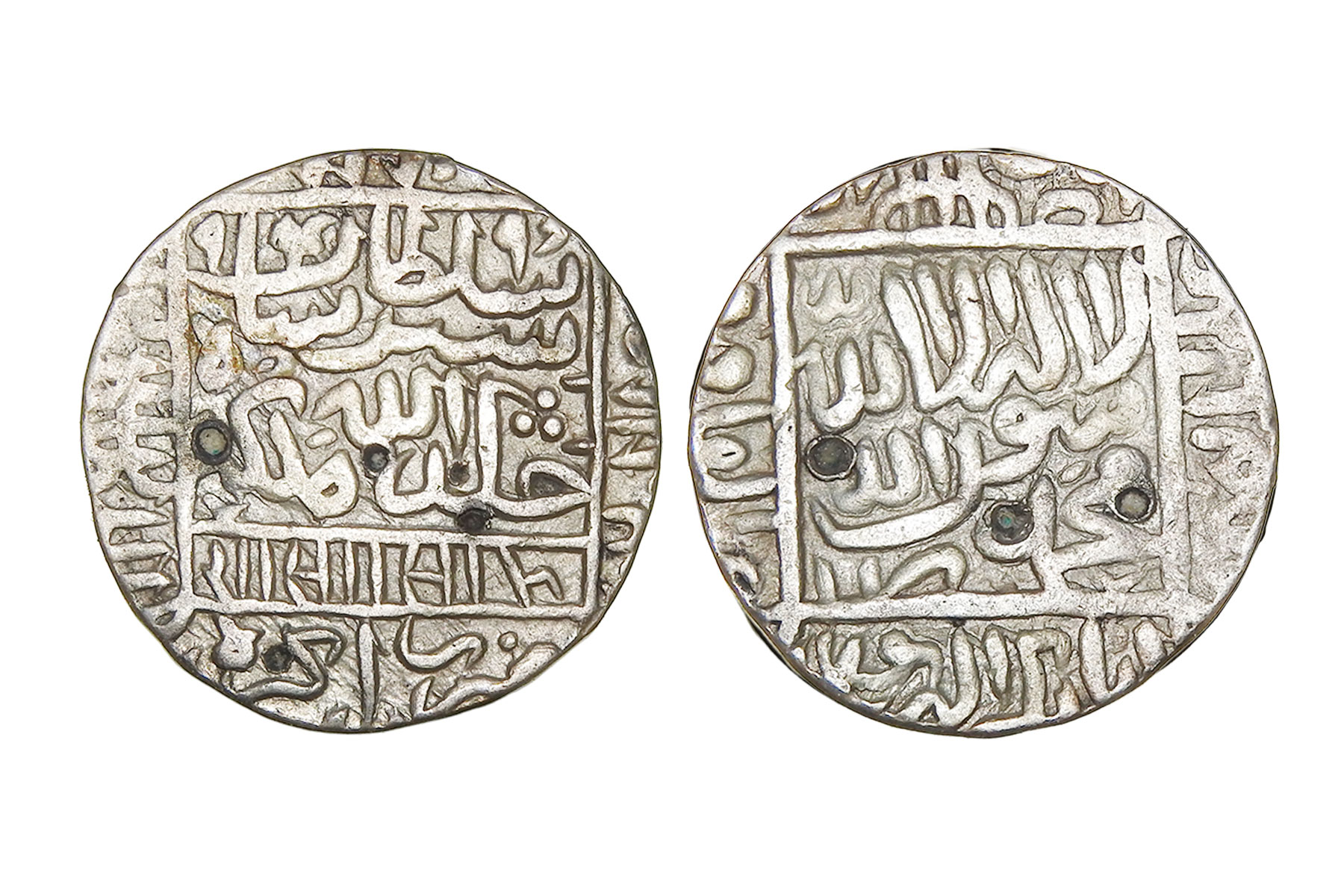
Lot No : 99
Auction No : 8
Delhi Sultanate, Suris, Sher Shah Suri(c. 1538-1545CE), Silver Rupee, 11.20grms, Minted in Agrah, Standard Type, AH949, Names of three caliphs, G&G#D770, Very Fine+, Very Scarce. After defeating Humayun at Chausa (1539) and Kannauj/Bilgram (1540), Sher Shah occupied Agra, seized the Mughal treasury, and used the city as a forward base against remaining Mughal loyalists. He shifted the imperial focus away from Agra toward Delhi, reducing Agra’s political primacy while consolidating Sur control over the Indo-Gangetic plain
3900
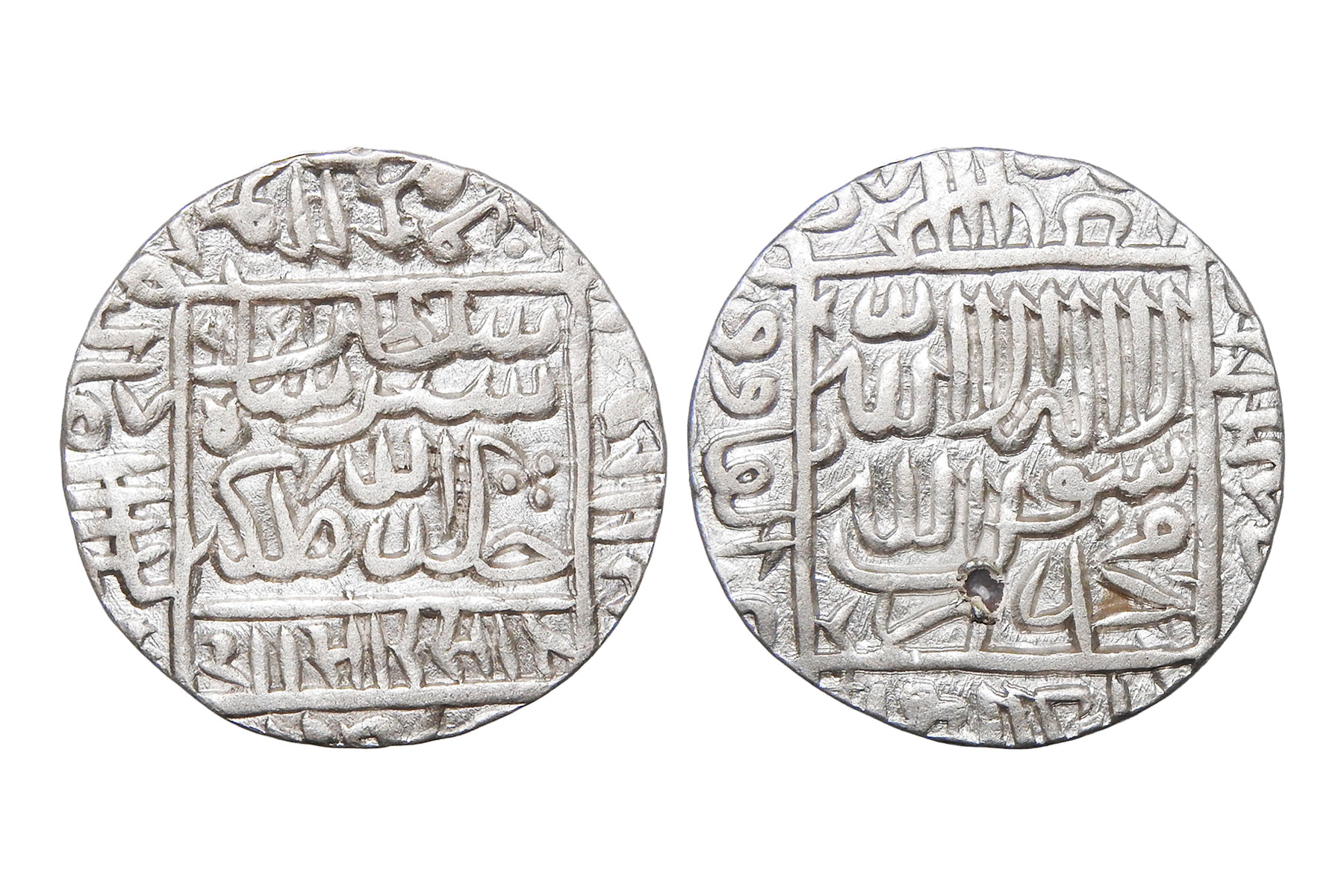
Lot No : 100
Auction No : 8
Delhi Sultanate, Suris, Sher Shah Suri(c. 1538-1545CE), Silver Rupee, 11.40grms, Minted in Gwalior, Standard Type, AH951, Names of three caliphs, G&G#D781, Very Fine+, Scarce. He captured Gwalior Fort in 1540, immediately after defeating Humayun at Kannauj. The fort was used to neutralise Mughal resistance in central India and to secure the route between Agra–Malwa–Rajasthan. Gwalior later became a state prison for political rivals, reinforcing Sur control over north and central India.
4200
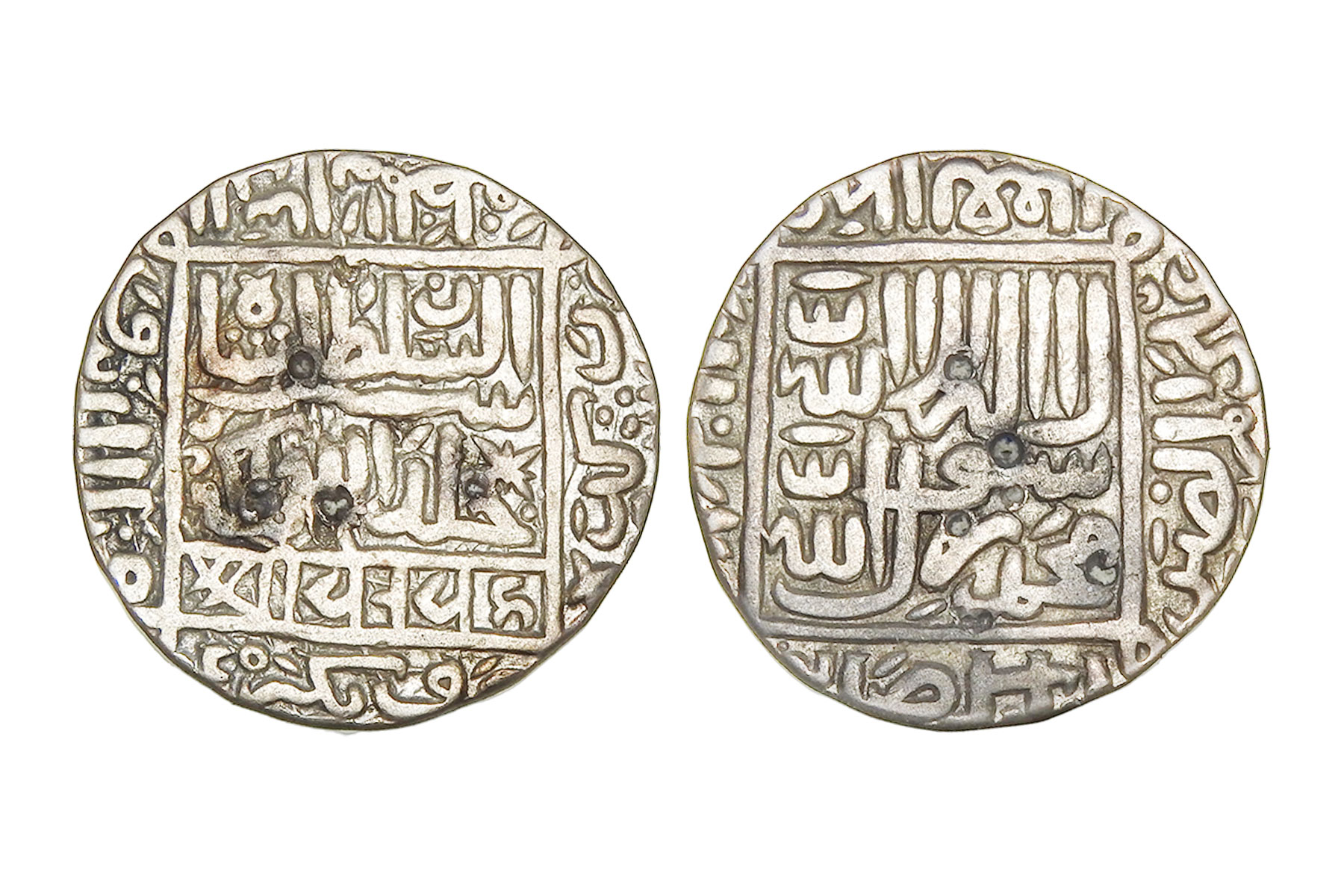
Lot No : 101
Auction No : 8
Delhi Sultanate, Suris, Sher Shah Suri(c. 1538-1545CE), Silver Rupee, 11.20grms, Minted in Shergarh Bakkar, Standard legends within square on both sides. The mint-name is written shergadh 'urf shiqq bakkar, The word shigg is an administrative area, AH950, G&G#D804, Very Fine+, Rare Sher Shah Suri captured Bukkur (Bakkar) Fort on the Indus around 1541, renaming it Shergarh. The conquest was aimed at blocking Humayun’s escape route toward Sindh and Persia and cutting Mughal-aligned Afghan chiefs in the region. From Shergarh, Sur forces controlled river traffic on the Indus and pressured Humayun and his ally Shah Hasan Arghun, forcing the Mughals further west.
3900
Lot No : 103
Auction No : 8
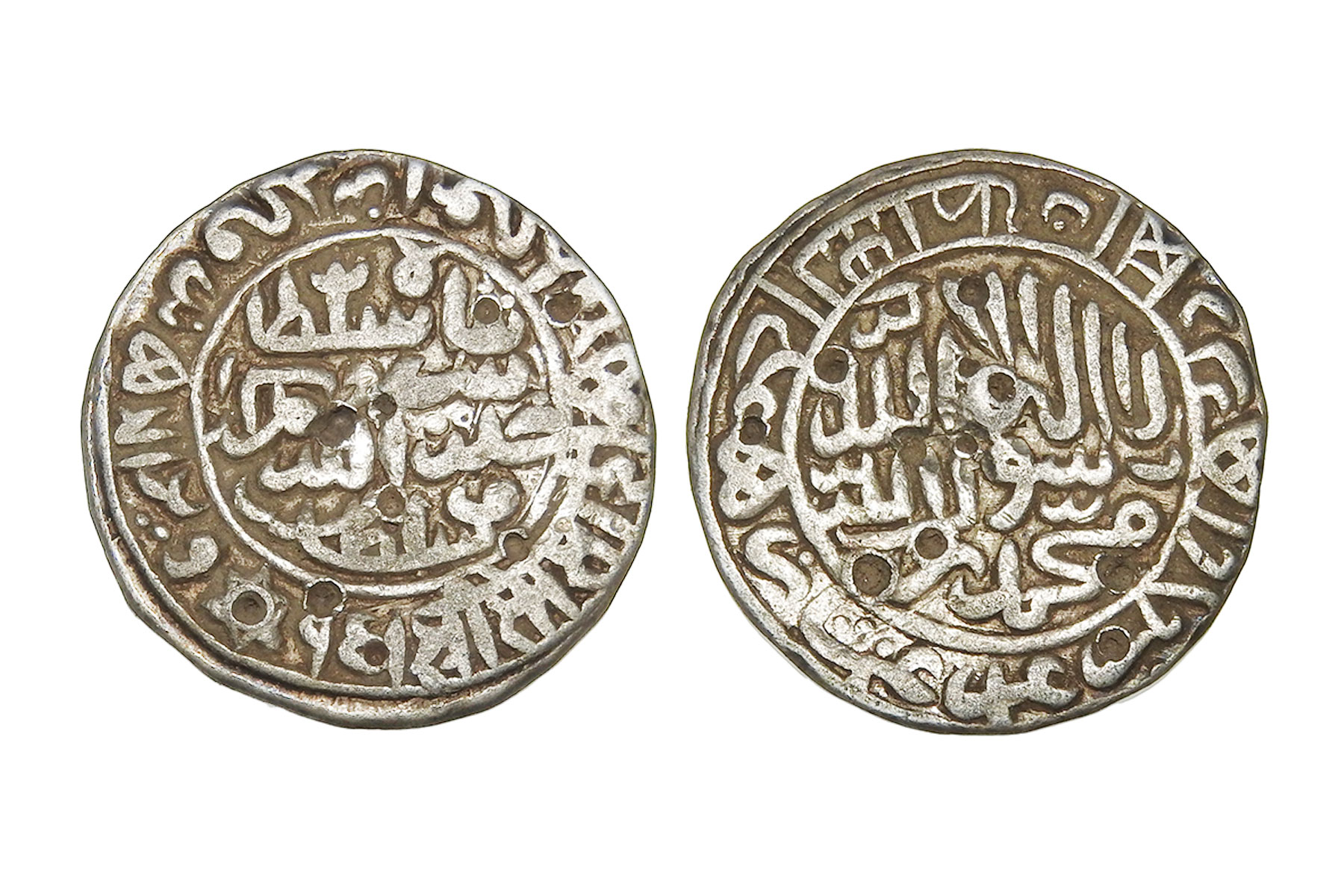
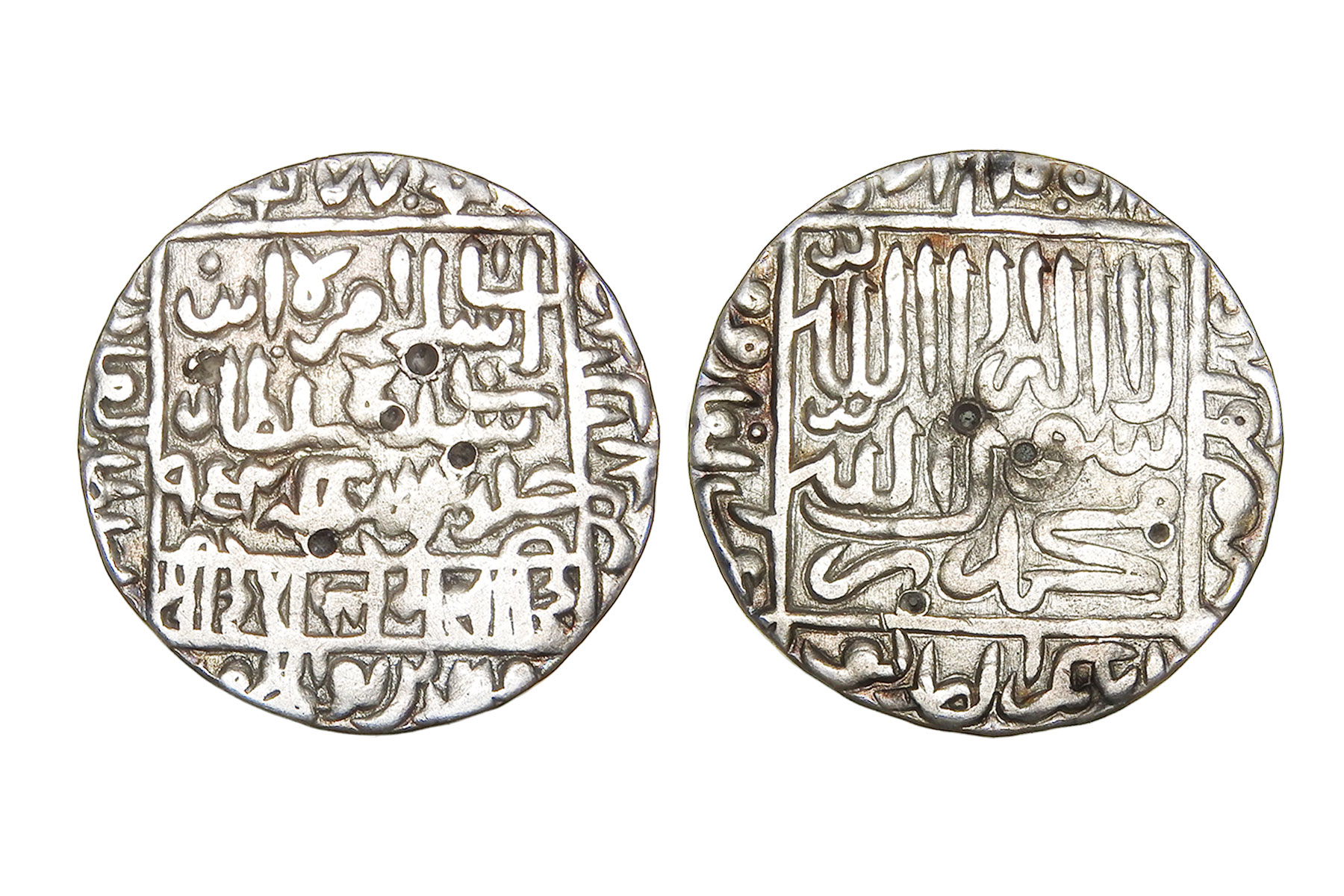
Delhi Sultanate, Suris, Islam Shah Suri(c. 1545-1552CE), Silver Rupee, 11.10grms, Mintless type, AH954, G&G#D980, Usual legends, caliphs type 3, Both sides within square, 1477 in obverse top margin. A Bengal type, probably struck at the provincial capital, Large Flan Size, Very Fine+, Scarce He crushed Afghan rebellions led by Adil Shah Suri, Ibrahim Khan, and eastern Afghan chiefs in Bihar and Bengal. He fought Rajput rulers in Malwa and Bundelkhand, besieged Gwalior, and kept constant pressure on Humayun, preventing any Mughal comeback until his death. No lasting alliances—rule sustained by force.
3300
Lot No : 104
Auction No : 8
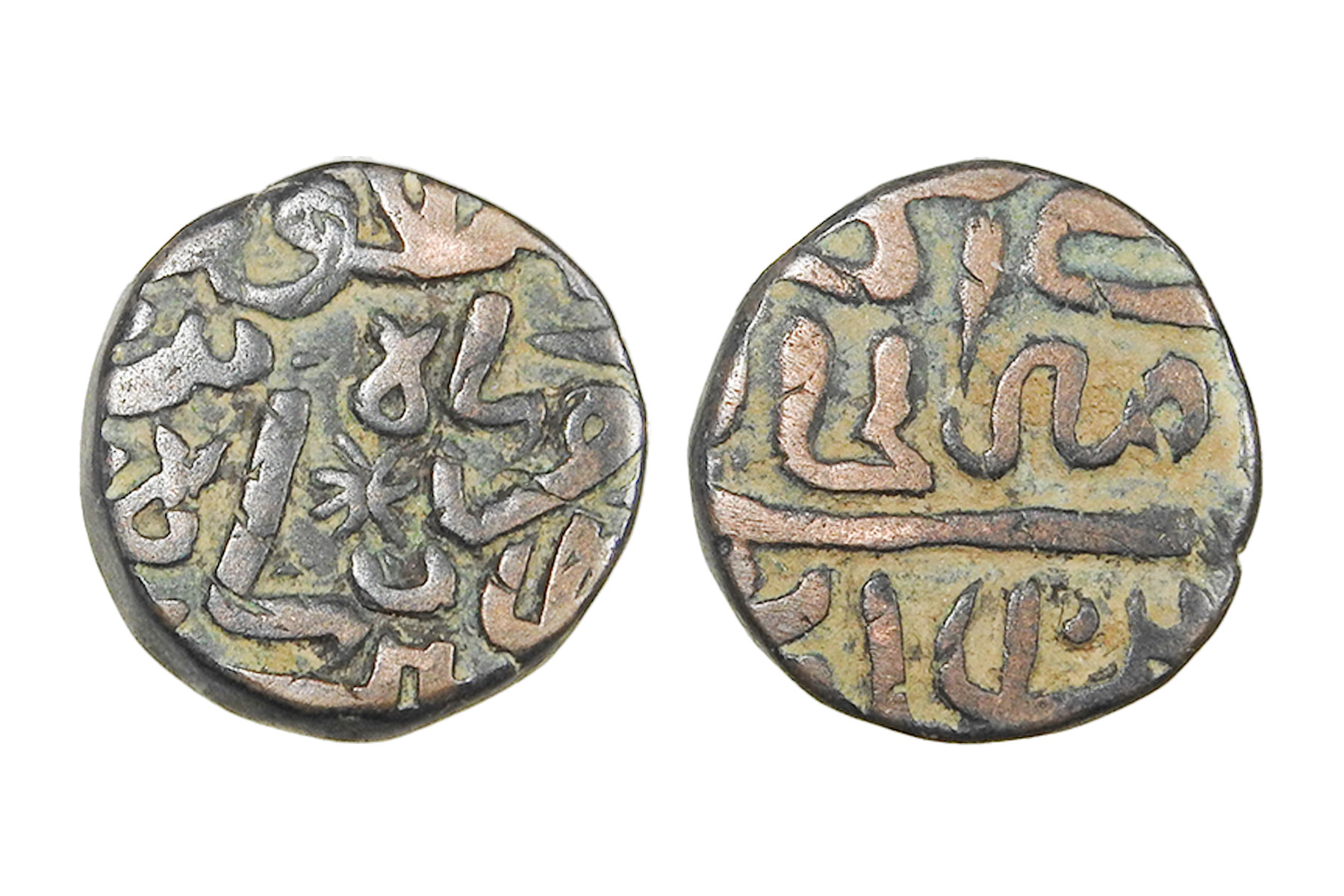
Delhi Sultanate, Suris, Islam Shah Suri(c. 1545-1552CE), Copper Paisa, 20.60grms Minted in Shahgarh, AH959, Mintmark as Lion, G&G#D1014, Very Rare Mint, only a few seems to have surfaced till date. Shahgarh(present-day Bukkur (Bakhar) Fort near Sukkur, Sindh, Pakistan) was a short-lived regional mint, active mainly during Islam Shah’s consolidation after crushing Afghan rebellions, resulting in limited output compared to Delhi or Agra. Its importance lies in reflecting Sur military control over frontier territories and Islam Shah’s effort to enforce central authority through coinage. Shahgarh issues are therefore historically significant and less frequently encountered
4300
Lot No : 105
Auction No : 8
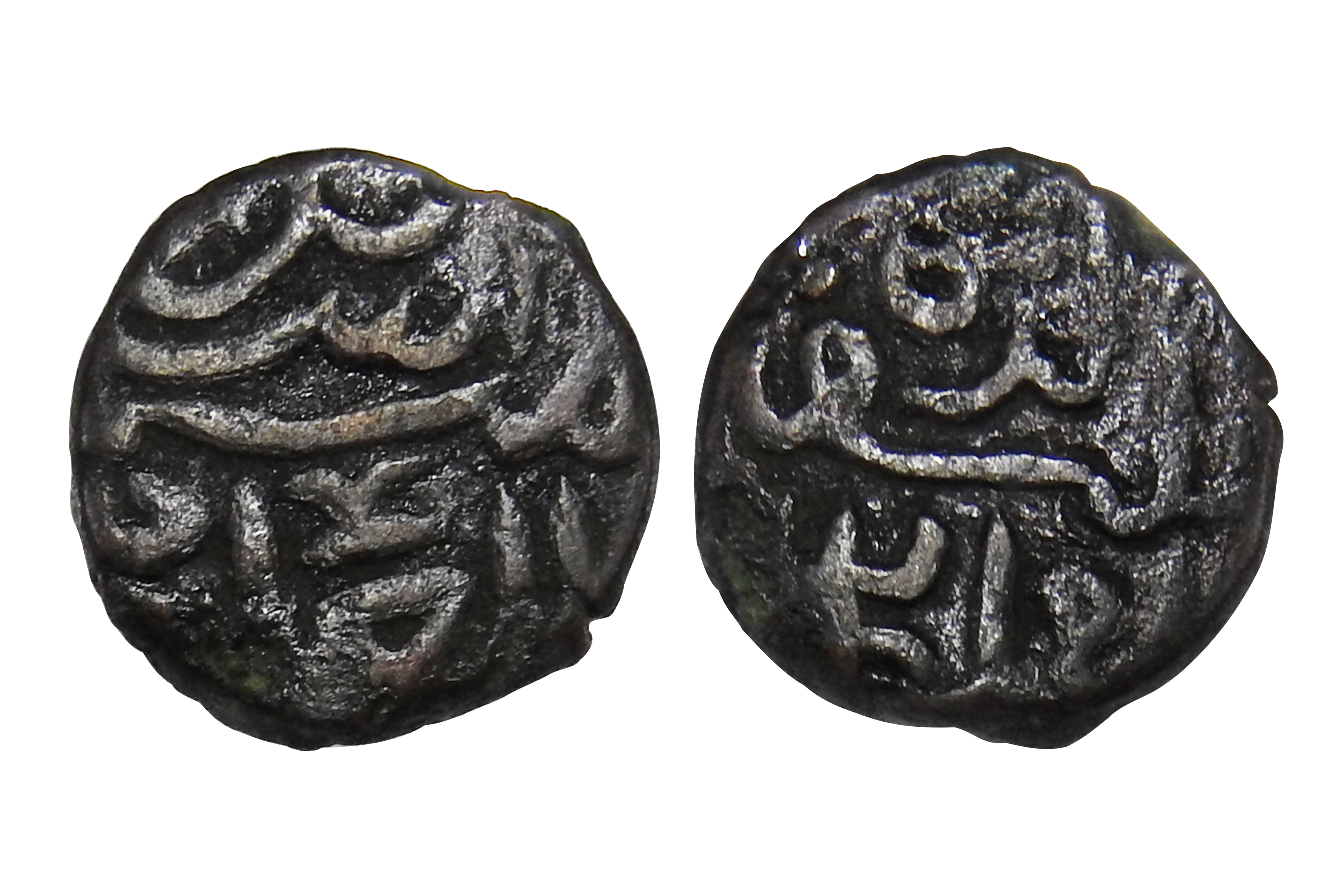
Delhi Sultanate, Suris, Islam Shah Suri(c. 1545-1552CE), Copper 1/2 Paisa, 9.20grms, Mintless Type, G&G#D1068, NW TYPE H, Very Fine+, Very Rare. ½ paisas are rarer than paisas because Islam Shah prioritised full paisas for army payments and tax circulation, while ½ paisas were struck sporadically and in limited numbers for local markets. Their heavier circulation, low intrinsic value, and poor preservation led to high attrition. Several mints issued them briefly, making surviving examples far scarcer than standard paisas
8000
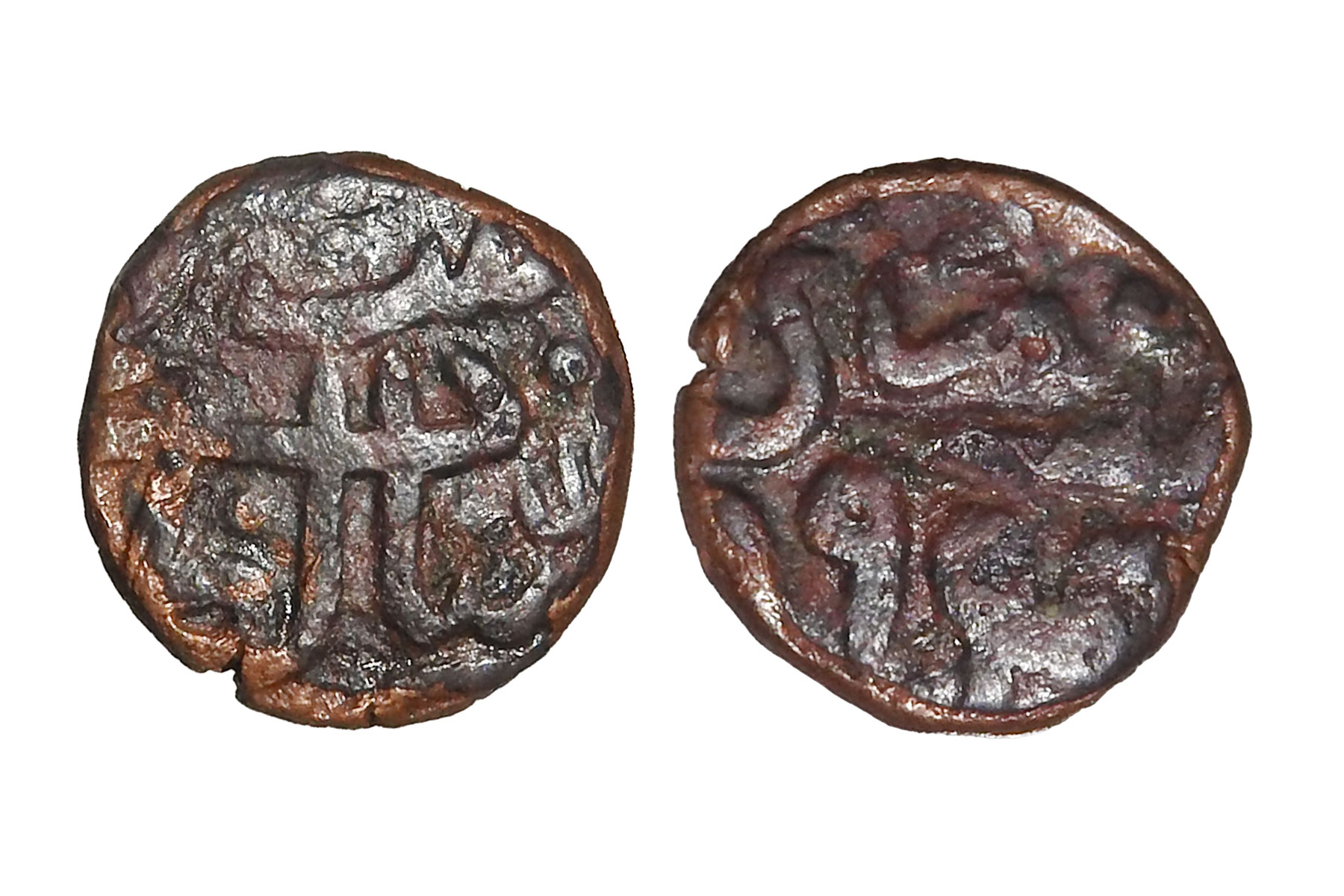
Lot No : 106
Auction No : 8
Delhi Sultanate, Suris, Islam Shah Suri(c. 1545-1552CE), Copper 1/8 Paisa, 2.50grms, Mintless Type, Obv. shāh/ islām / sher shāh / sulļān, Rev. khalifat al-zamān al-'ādil, G&G#D1085, Very Fine+, Very Scarce. 1/8 paisa coins are extremely rare. They were emergency, fractional issues, struck in very small quantities for micro-transactions in local markets. Islam Shah’s administration focused on full paisas, not tiny fractions. Their tiny size, rapid wear, melting, and neglect by hoarders caused very low survival. Many mints issued them briefly or not at all.
8000
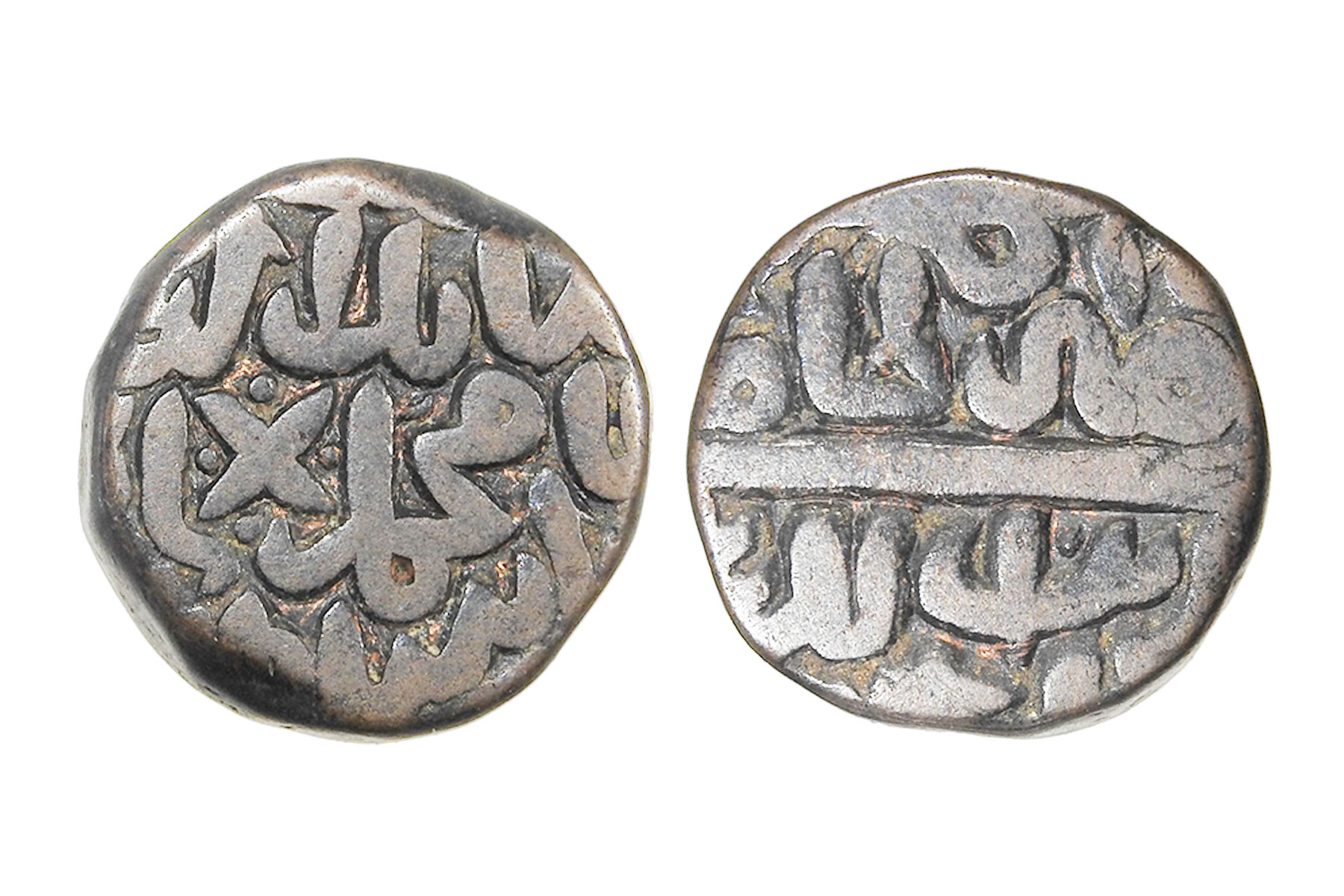
Lot No : 107
Auction No : 8
Delhi Sultanate, Suris, Muhammad Adil Suri(c. 1552-1556CE), Copper Paisa, 20.00grms, Minted at Jaunpur, Obv. abü'l muzaffar/bi-ta'yid al-rahman / muhammad shāh /'adil sultan. Large dotted cross mint-mark to the left of muhammad. Mint-name at bottom of reverse, G&G#D1114, Extra Fine, Very Rare Muhammad Adil Shah Suri rose to power after the death of Islam Shah Suri, eliminating his minor son Firuz Shah and ruling as a usurper. He never firmly controlled Delhi and was driven east by rival Sur claimants and advancing Mughal forces. Jaunpur, a strategic provincial capital controlling the eastern Gangetic routes, became his main power base. Coins struck at Jaunpur are rare because they were issued briefly during intense civil war, limited territorial control, disrupted administration, and the rapid collapse of Suri authority before Mughal reconquest
 WhatsApp