
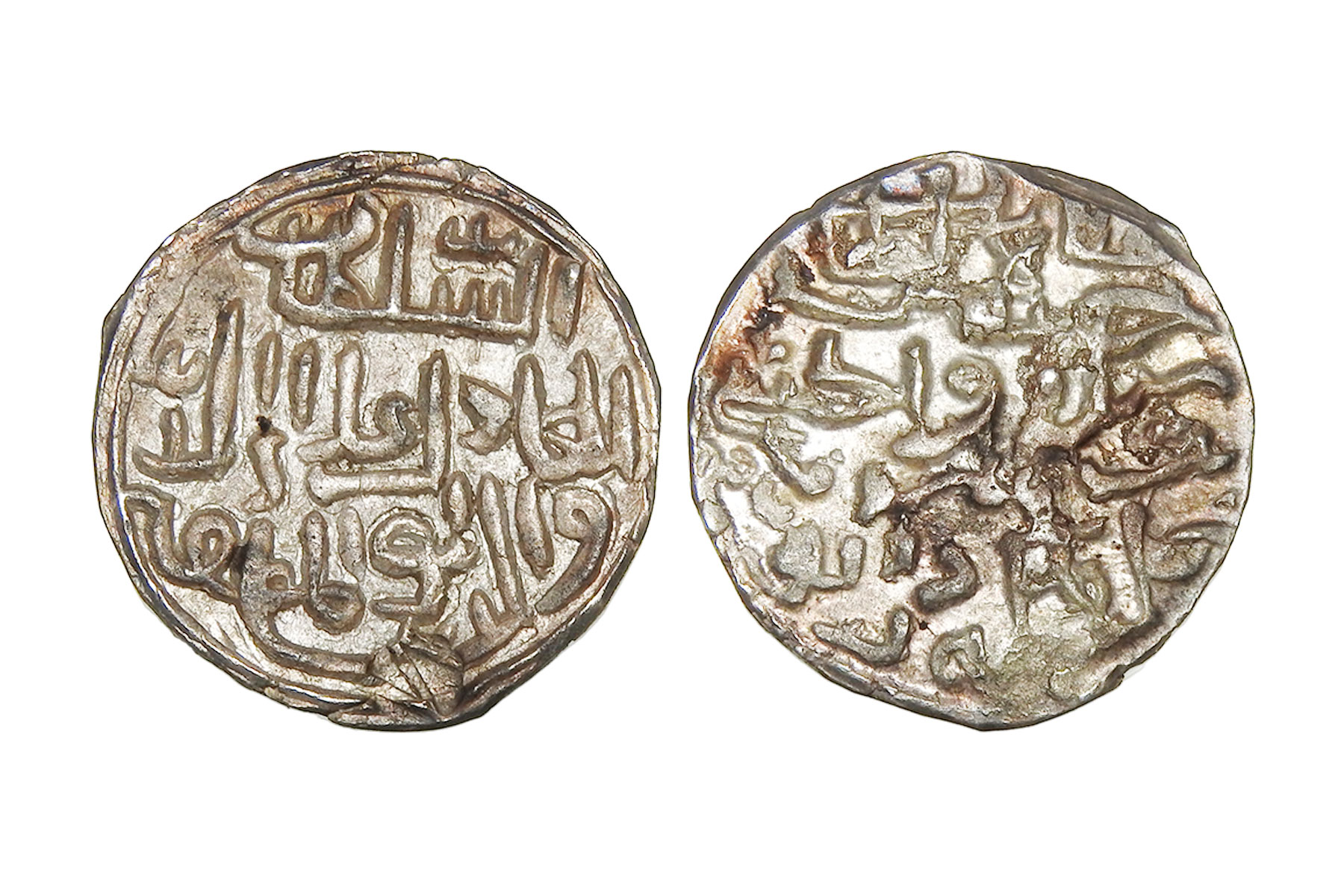
Lot No : 108
Auction No : 8
Bengal Sultanate, Ala Al-din Husain Shah (c. 1397-1422CE), Silver Tanka, 10.60grms, Minted at Dar Al-Darb(Husainabad), AH 910, G&G#B761, Very Fine+, Very Scarce Ala al-Din Husain Shah, founder of the Husain Shahi dynasty of Bengal, rose to power after overthrowing the Abyssinian ruler Shams-ud-Din Muzaffar Shah, whom he had served as wazir. His reign is considered the most stable and prosperous of the Bengal Sultanate
3300
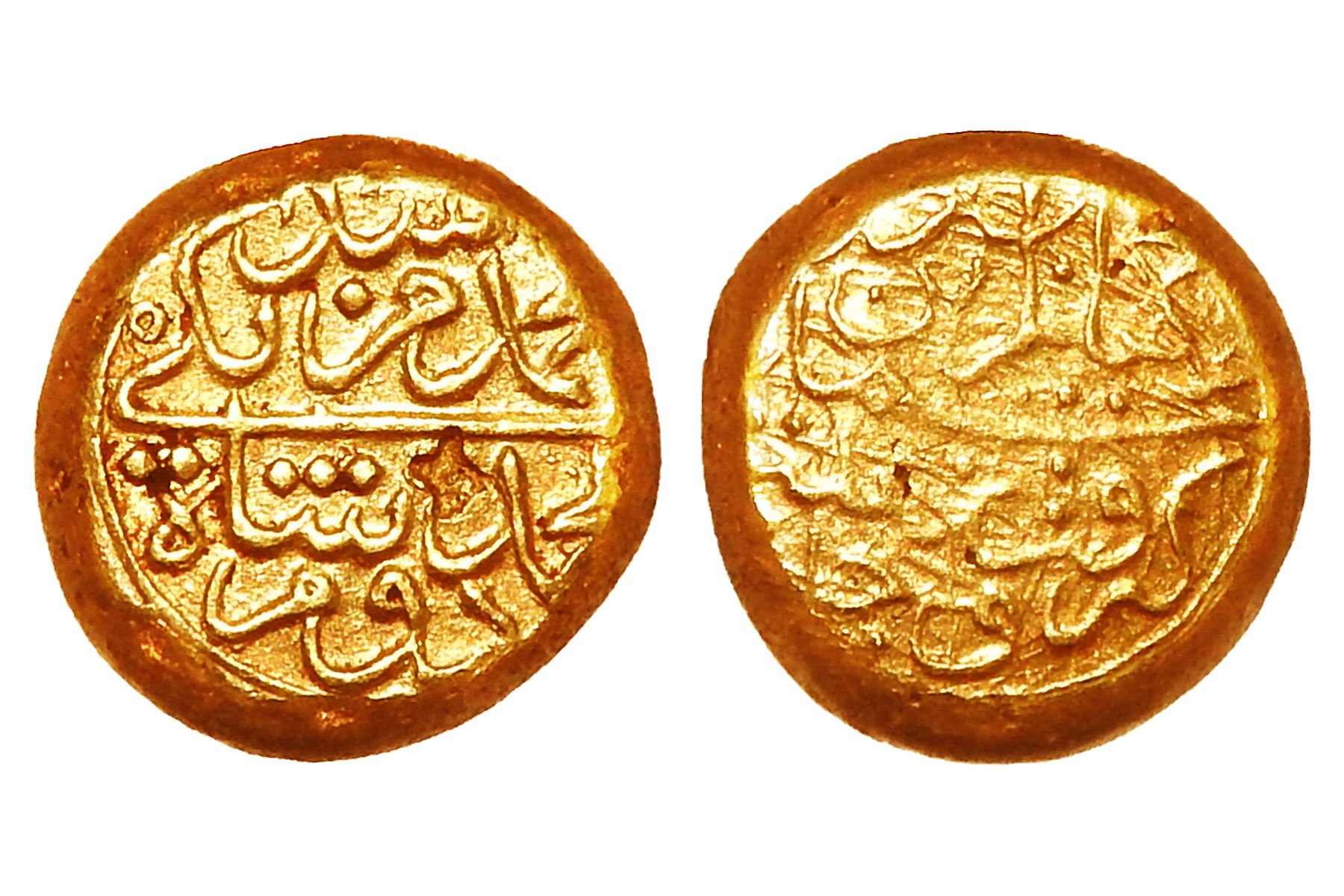
Lot No : 109
Auction No : 8
Bijapur Sulatan, Muhammad Adil Shah(c. 1627-1657CE), Gold Pagoda, 3.40grms, G&G#BJ20, Poetic couplet- Jahān Zin Do Muhammad Girift Zīnat-O Jāh Yake Muhammad-I-Mursal Duwam Muhammad Shah, which means - The world received beauty and dignity from two Muhammads, the one is Muhammad the apostle and the other Muhammad Shah, Extra Fine+ and extraordinarily rare, this magnificent specimen is appearing in an auction after several years, offering a once-in-a-decade opportunity for discerning collectors. Every detail is stunningly preserved, with the complete couplet fully legible, showcasing the artistry and historical significance of the issue. A truly breathtaking and must-have coin, it represents the pinnacle of numismatic beauty and rarity, destined to be the centerpiece of any serious collection. Muhammad Adil Shah of the strengthened his kingdom’s architectural legacy with iconic structures like the Gol Gumbaz, patronized arts and literature, and maintained political stability amidst regional conflicts. His reign saw defensive consolidation, strategic alliances, and promotion of culture, leaving a lasting imprint on Deccan history.
170000
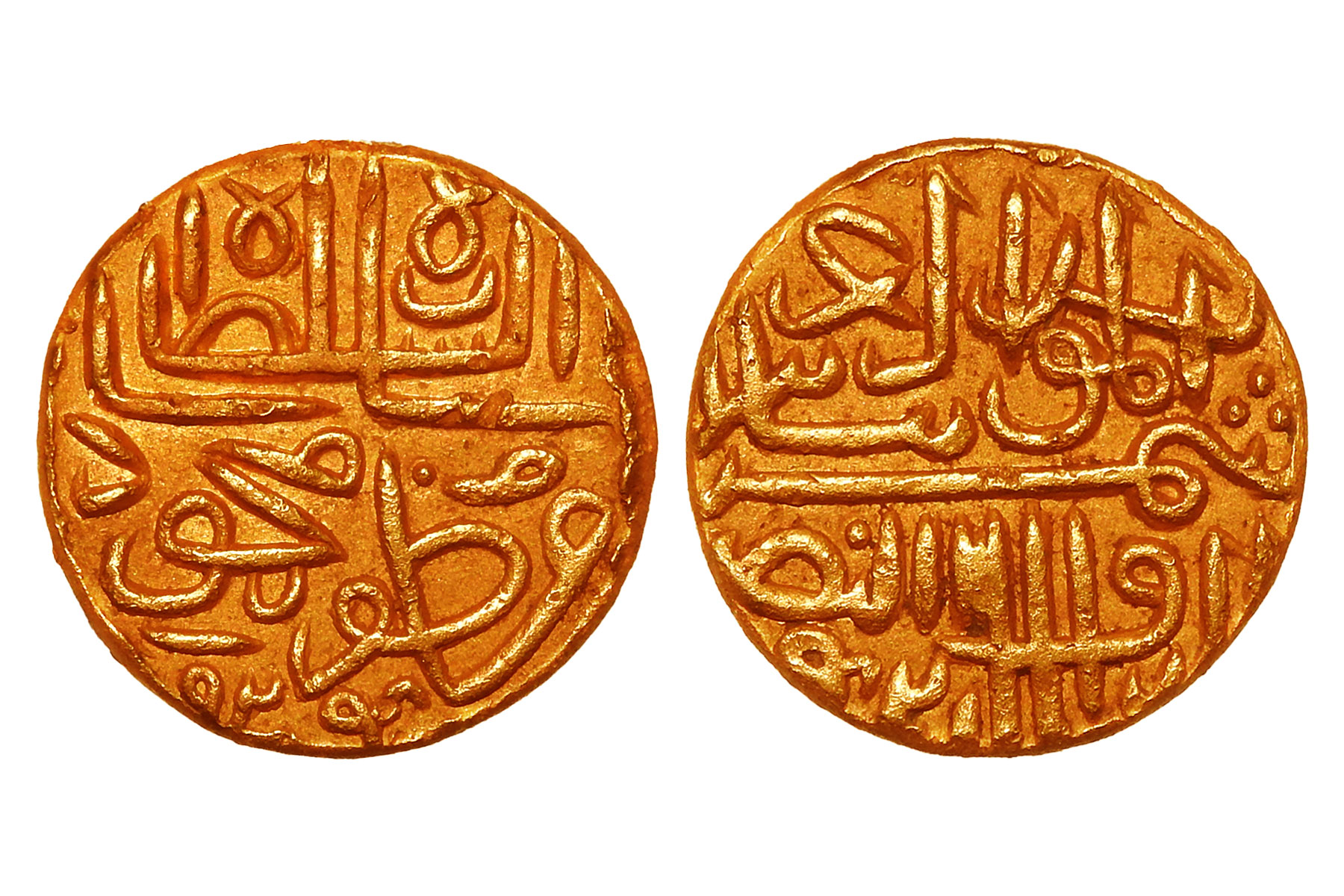
Lot No : 110
Auction No : 8
Gujrat Sultanate, Shams al-din Muzaffar Shah II(c. 1511-1525CE), Gold Tanka, 11.40grms, obv. al-mu'ayyad bi-ta'yiīd al-rahmān shams al-dunya wa'l din abu'l naşr muzaffar shāh bin mahmud shah al-sulțān, Rev. muzaffar shāh bin mahmūd shāh al-sulțān within single scalloped circle. mahmûd to the left of Muzaffar, AH 924, Minted at Muhammadabad, G&G#G231, Almost Uncirculated, Rare. Shams-ud-Dīn Muzaffar Shah II, born Khalil Khan, was the eighth Sultan of the Gujarat Sultanate, was the eldest son of Sultan Mahmud Begada and succeeded him on the throne. Early in his reign he subdued the princely state of Idar, but he later suffered continuous defeats against Rana Sanga of Mewar, losing northern Gujarat and Idar to the Rajput ruler. During this period, Gujarat’s influence waned in the north as Rana Sanga asserted dominance. Muzaffar Shah II died in Ahmedabad in 1526 and was succeeded by his son Sikandar Shah. His reign was marked by military challenges and setbacks, particularly against Rajput forces, weakening the sultanate’s territorial hold before the rise of his more powerful successors.
160000
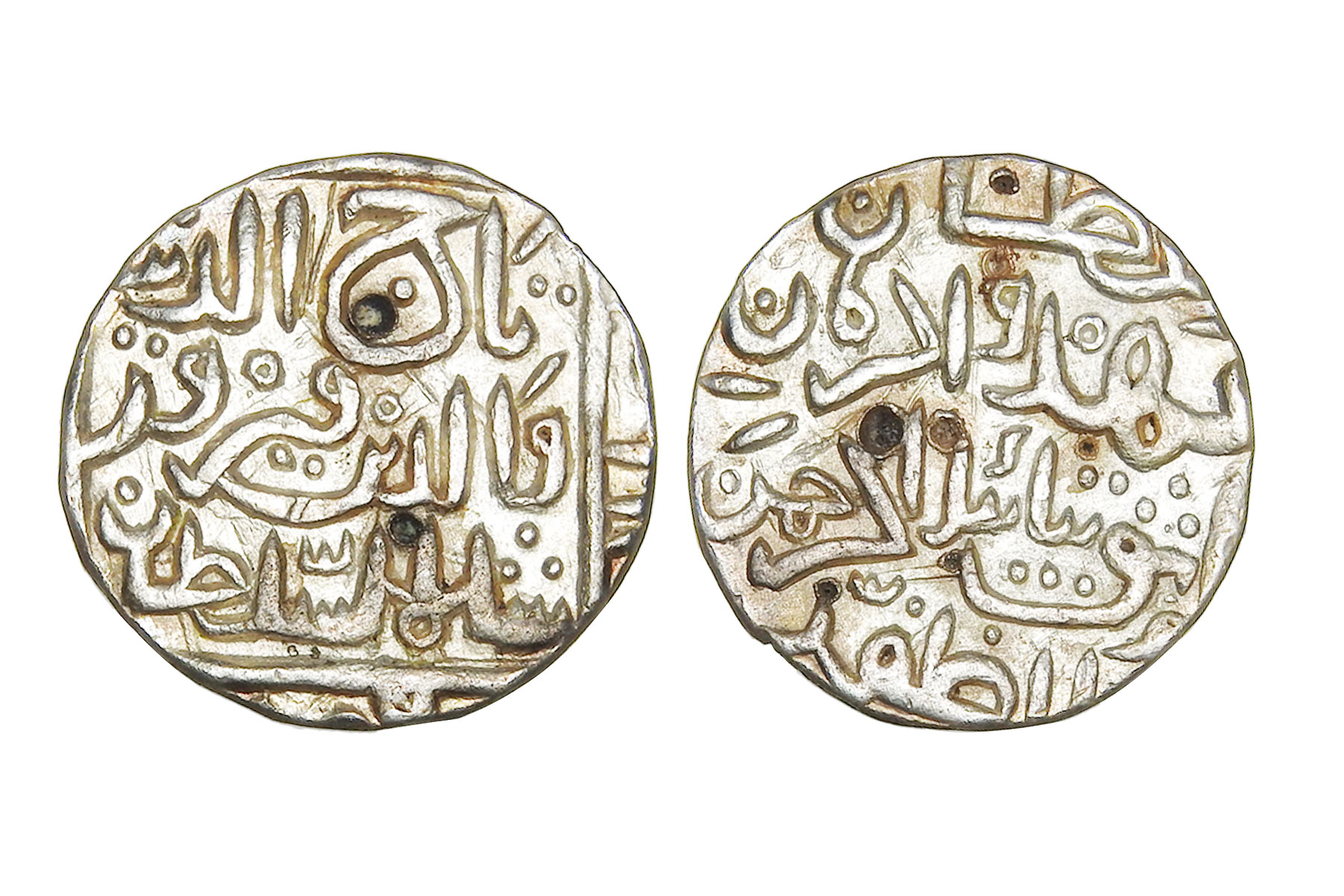
Lot No : 111
Auction No : 8
Bahamani Sultanate, Taj Al-din Firuz Shah (c. 1397-1422CE), Silver Tanka, 10.70grms, Minted at Ahsanabad, G&G#BH63, Very Fine+ Taj al-Din Firuz Shah Bahmani (c. 1397–1422 AD / 800–825 AH) ruled during constant warfare, fighting repeated campaigns against the Vijayanagara Empire over the Raichur Doab and southern frontiers. He also faced internal noble revolts and factional conflicts within the Bahmani court. Strategic marriage alliances with Deccan Hindu elites were used to stabilize rule. Coinage from Ahsanabad (Gulbarga) reflects authority maintained through war and negotiated power
3600
Lot No : 112
Auction No : 8
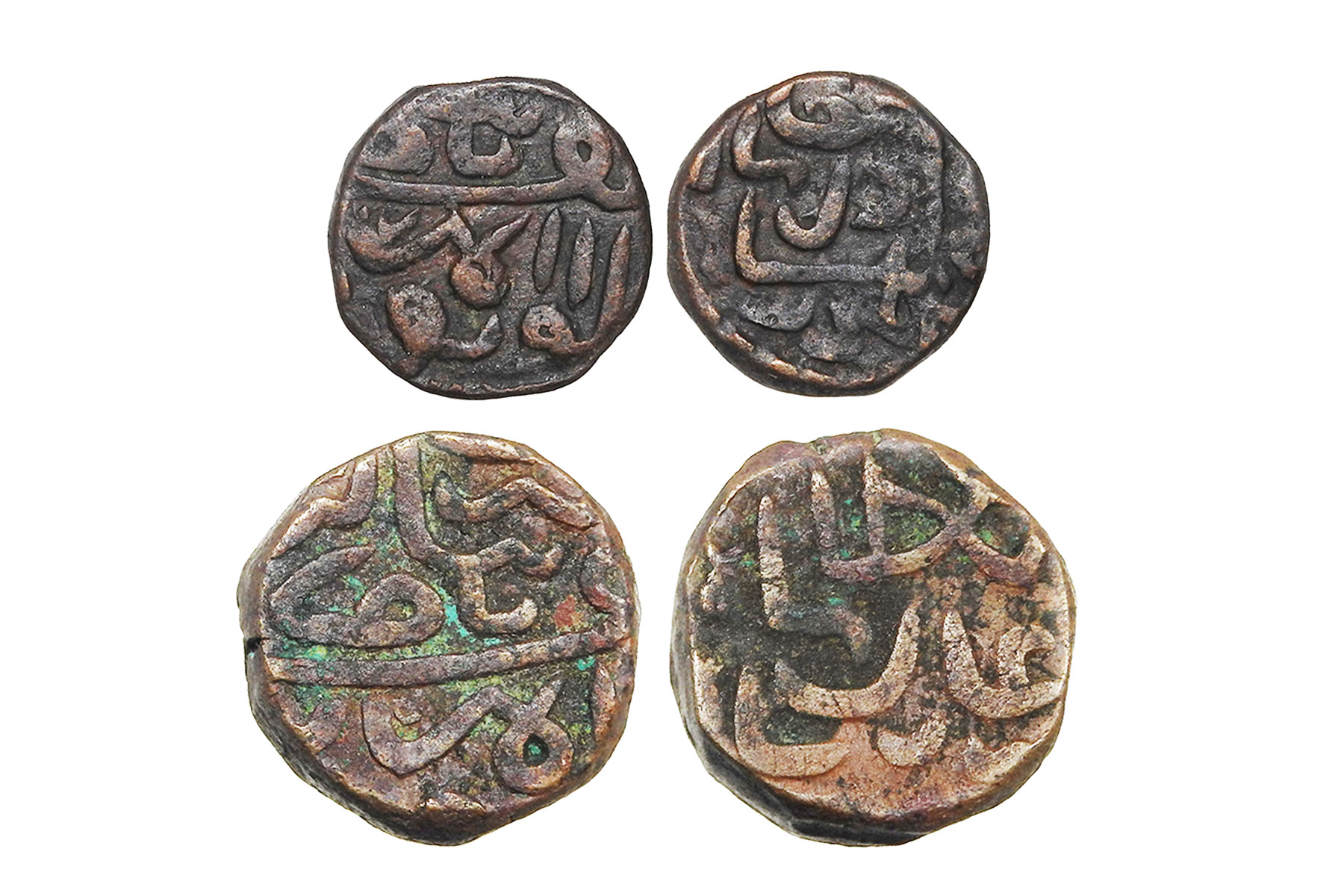
Khandesh Sultanate, Bahadur Shah (c. 1597-1601CE), 2 coins, (a) Heavy Falus, 17.30grms, G&G#KH4, (B) Half Falus, 8.50grms, G&G#KH3, Common legend al-wathiq billah al-mannān abü'l fath nāşir al-dunya wa'l dīn bahadur shah bin 'adil shah al-sulțān, Extra Fine, Very Rare.Khandesh Sultanate was located in northern Deccan, covering present-day north Maharashtra along the Tapti River valley, with Burhanpur as its capital and Asirgarh Fort as its key stronghold. Its position between Malwa (north), Gujarat (west), Ahmadnagar (south), and the Mughal frontier made it a critical buffer state. Control of Tapti trade routes gave Khandesh economic importance but also constant military pressure.Bahadur Shah Farooqi of Khandesh ruled amid constant regional conflict, fighting the Nizam Shahis of Ahmadnagar and resisting pressure from Gujarat and later the Mughals. Khandesh’s strategic position on the Tapti corridor made it a buffer state. Bahadur Shah alternated between resistance and diplomacy, eventually submitting to Emperor Akbar to preserve autonomy, marking the beginning of Mughal influence in the Deccan.
1700
Lot No : 113
Auction No : 8
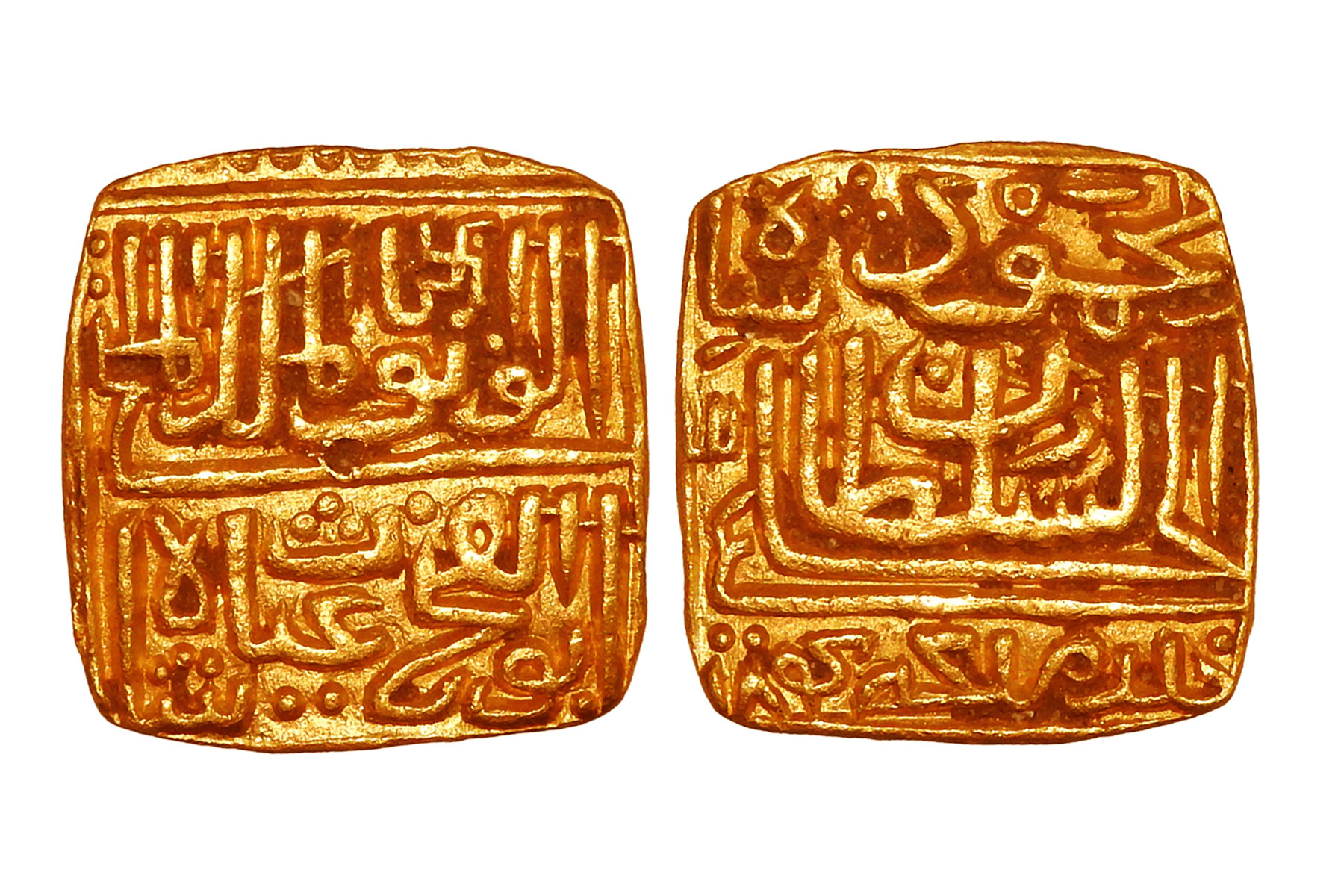
Malwa Sultan, Ghiyath Shah(c. 1469-1500CE), Gold Square Mohur, 10.70grms, AH884, G&G#M66, Swastika as mintmark, Obv. al-wathiq bi'l malik al-multajī abü'l fath ghiyāth shah bin mahmûd shah al-khaljī al-sultan khallada mulkahu, Rev. Abu`l Fath to the right of Ghiyath, Extra Fine+, Rare Ghiyath Shah ruled the Malwa Sultanate (central India), succeeding his father Mahmud Shah. His reign is noted for political stability, architectural patronage, and cultural flourishing, especially in Mandav (Mandavgad), the Malwa capital. He promoted literature, arts, and Sufi culture, built mosques, palaces, and gardens, and maintained alliances with neighboring kingdoms while repelling invasions. Ghiyath Shah’s rule strengthened Malwa’s administrative and cultural institutions, leaving a lasting legacy in architecture, urban planning, and regional governance.
160000
Lot No : 114
Auction No : 8
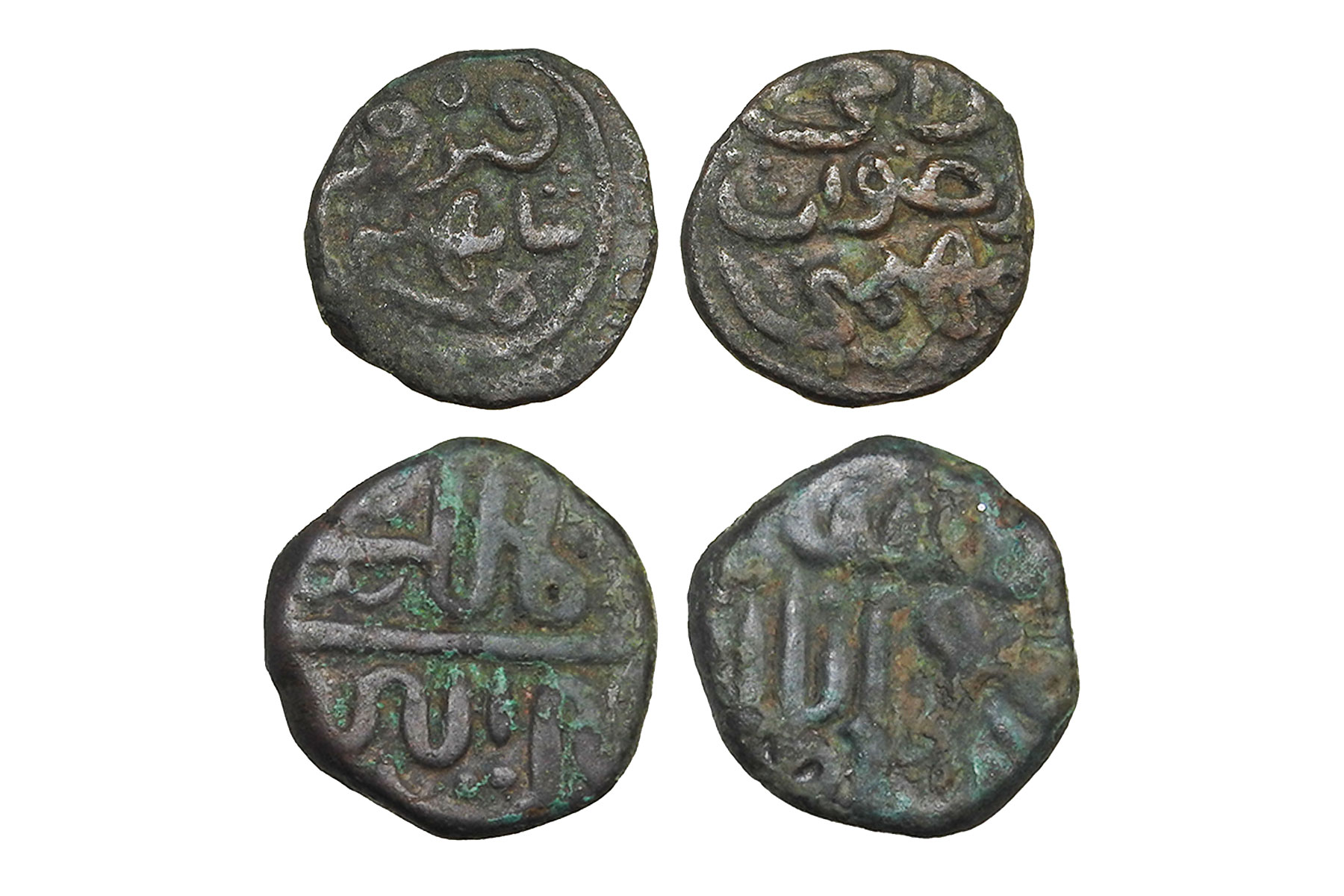
Indian Sultanate 2 coins, (a) Bahamani Sultanate, Taj al-din Firuz Shah, (c. 1397-1422CE), Copper Falus, 5.00grms, Minted at Ahsanabad, G&G#BH66, Very Fine+, (b) Malwa Sultanate, Hisam al-din Hushang Shah, (c. 1405-1435CE), Copper Falus, 3.90grms, G&G#M6, Minted at Dar al-Mulk Shadiabad, G&G#M6, Very Fine+
 WhatsApp