
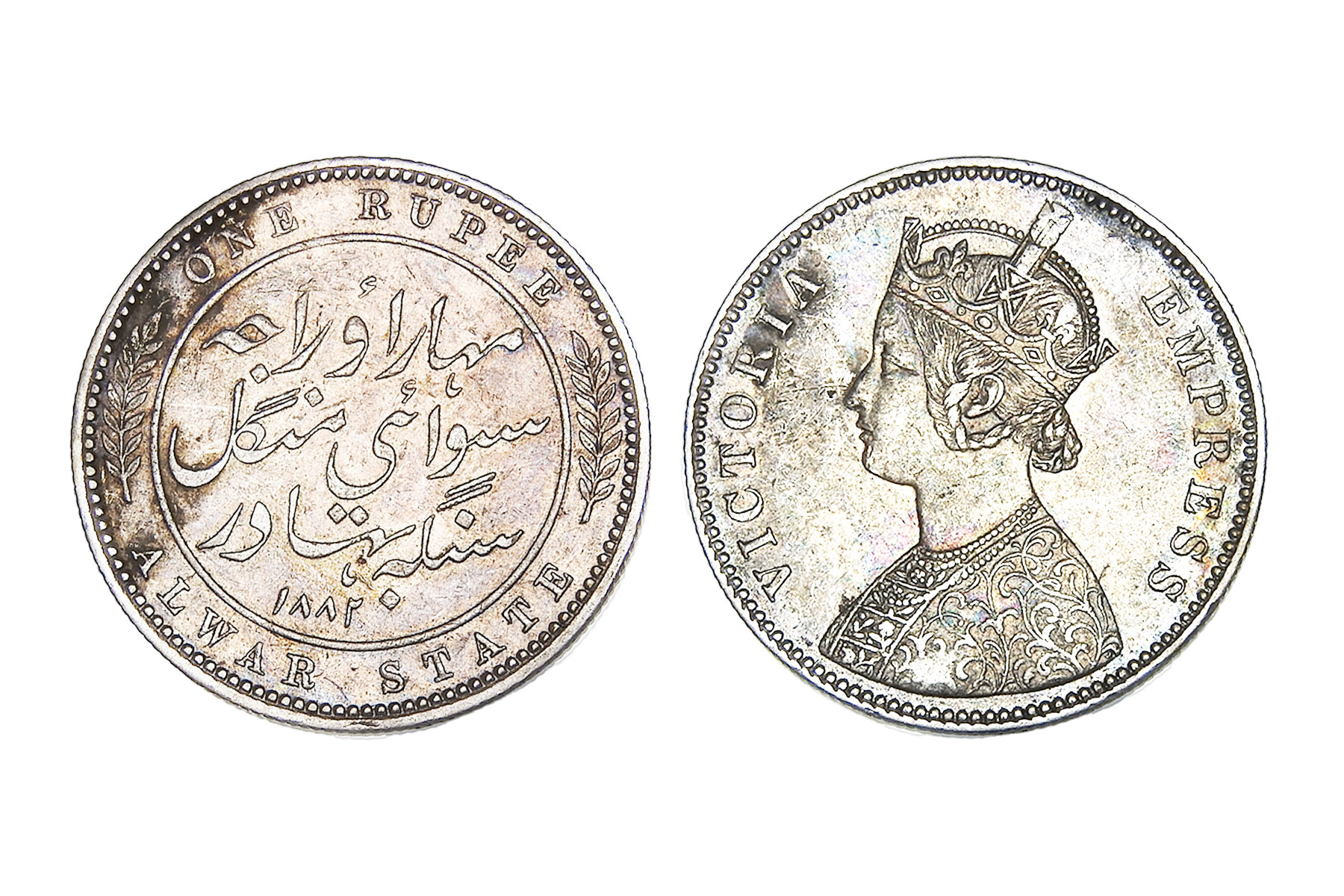
Lot No : 215
Auction No : 8
Alwar State, Mangal Singh(c. 1874-1892CE), Silver Rupee, 11.60grms, In the name of Victoria Empress, 1882, Almost Uncirculated, Very Scarce. Mangal Singh Prabhakar modernized Alwar’s infrastructure, building the Lansdowne Palace on Moti Doongari hill and establishing gardens and city enhancements. He strengthened administration and aligned with British India, but clashed with a British‑imposed Dewan, whose assassination marred his reign and reflected tensions with colonial authorities
4600
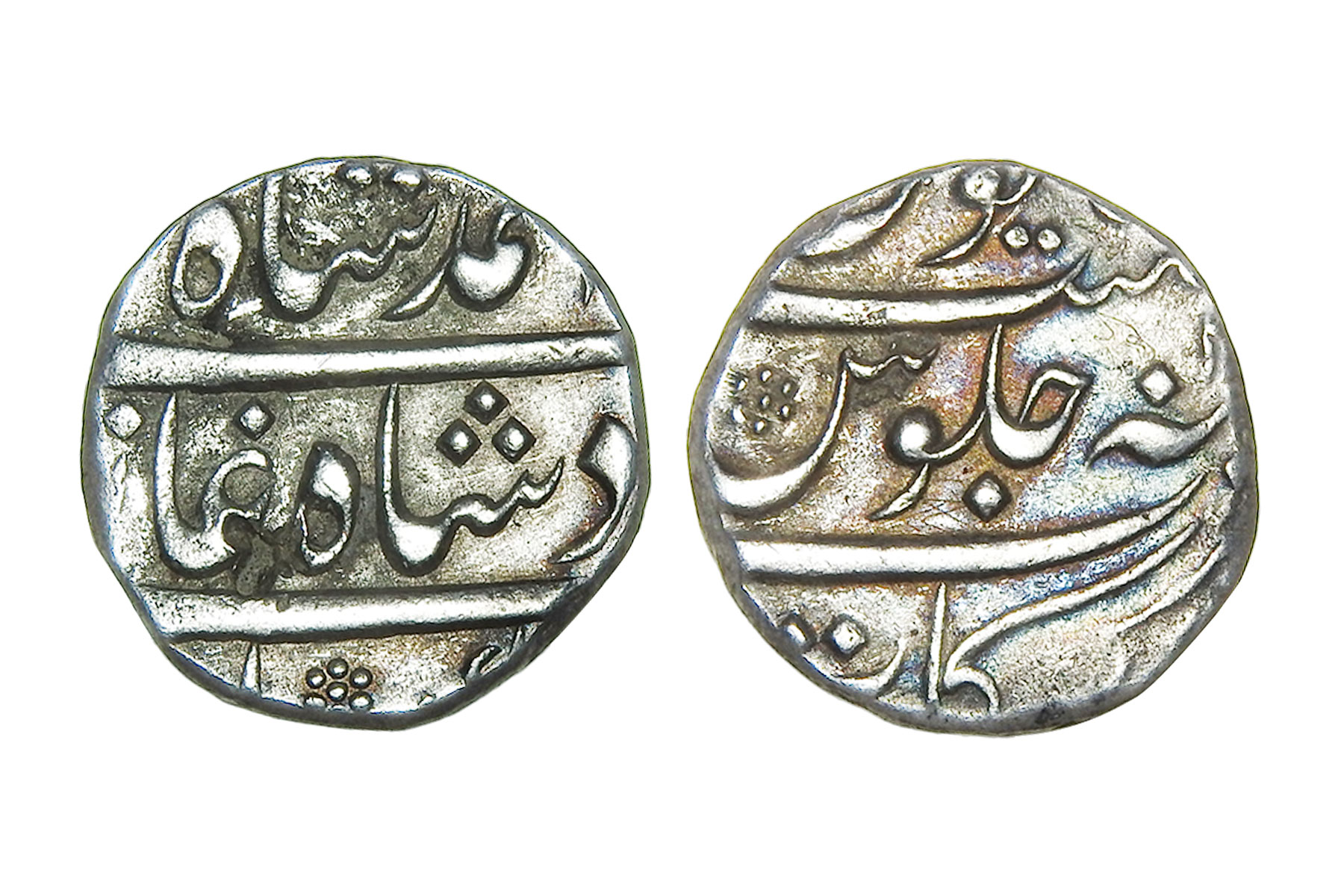
Lot No : 216
Auction No : 8
Arcot Nawabs, Saʿadatullah Khan I(c. 1710–1732CE), Silver Rupee, 11.40grms, In the name of Mughal Emperor- Muhammad Shah, Minted at Arcot, Extra Fine+, one of the earliest issues without the usual flower mintmark, Rare. Saʿadatullah Khan I (r. 1710–1732) was the first Nawab of Arcot under Mughal suzerainty. He consolidated the Carnatic region, strengthened administration, and maintained loyalty to the Mughals. He built fortifications and administrative buildings in Arcot city. His reign faced challenges from local chieftains and Maratha incursions, requiring careful diplomacy
8000
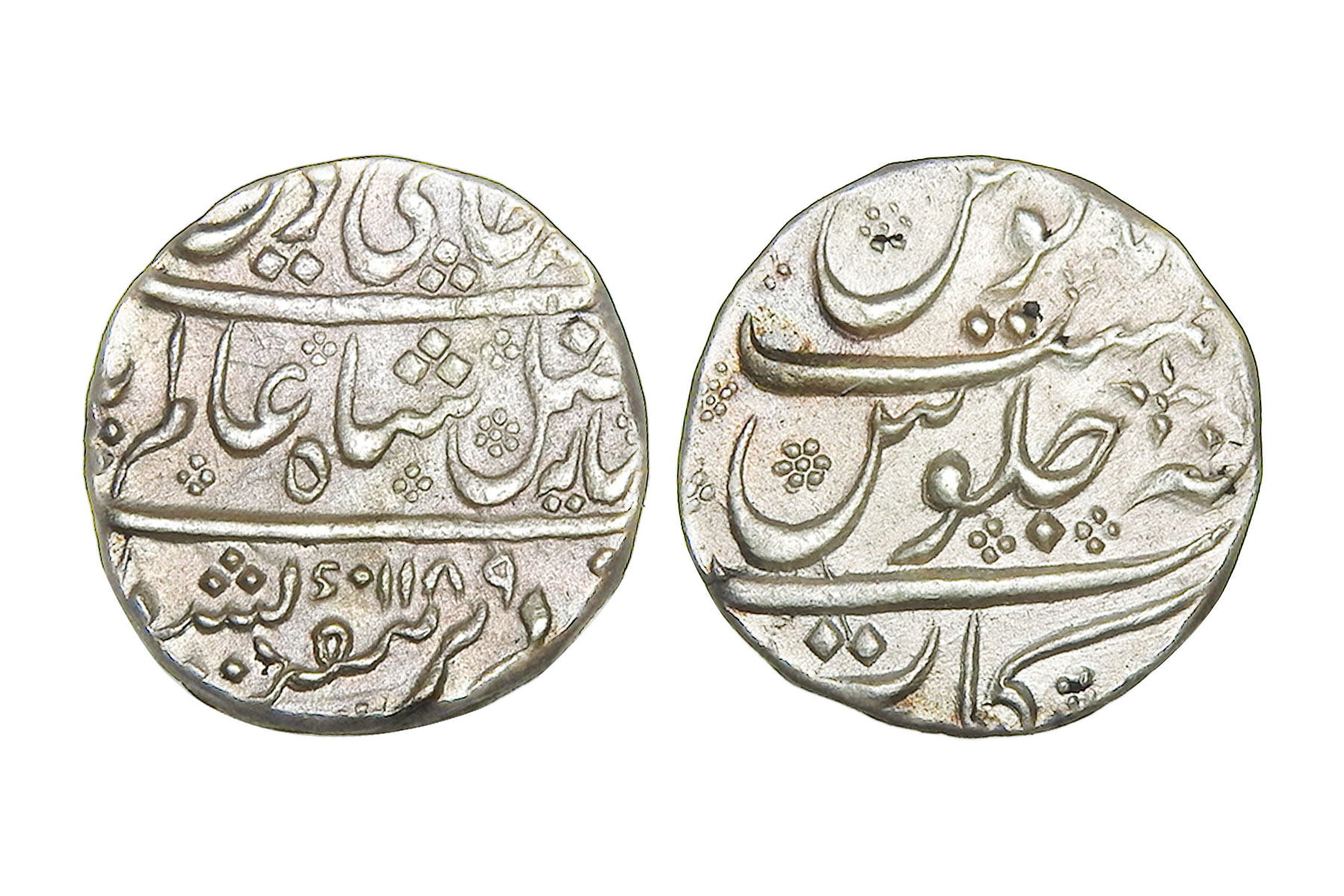
Lot No : 217
Auction No : 8
Arcot Nawabas, Muhammad Ali Khan Wallajah(c. 1749 – 1795CE), Silver Rupee, 11.30grms, In the name of Mughal Emperor- Shah Alam II, AH1189/RY10, Minted at Arcot, four petalled flower as mintmark, Extra Fine, Very Scarce. Muhammad Ali Khan Wallajah consolidated power after the Carnatic Wars, allied closely with the British East India Company, and commissioned the Chepauk Palace in Madras. His reign faced rivalries with French-backed forces and regional powers like Mysore, increasing British influence in South India
7500
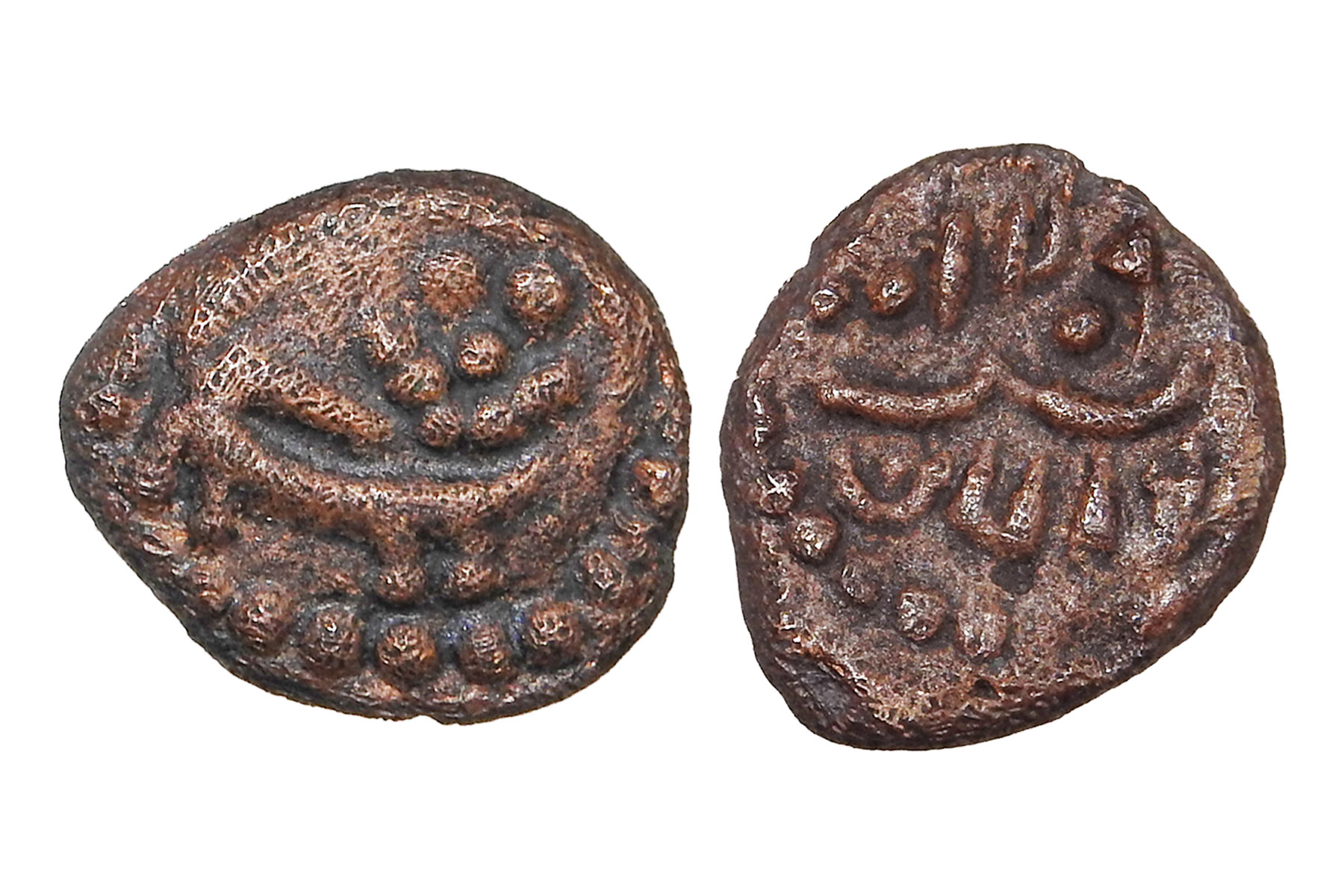
Lot No : 218
Auction No : 8
Arcot Nawabs, Umdat ul‑Umara(c. 1795 – 1801CE), Copper Kasu, 2.10grms, Obv. Lion facing right, Rev. Year and WALA JA written in Persian script, Minted at Nahtarnagar, Unlisted date in KM, Extra Fine+, Very Scarce. mdat ul‑Umara (Ghulam Husain Ali Khan) became Nawab of Arcot around AH 1209 (1794–1795 AD), succeeding Muhammad Ali Khan Wallajah. He maintained nominal Mughal authority while resisting British demands, was accused of aiding Tipu Sultan, and navigated political tensions with the East India Company until his death in 1801
900
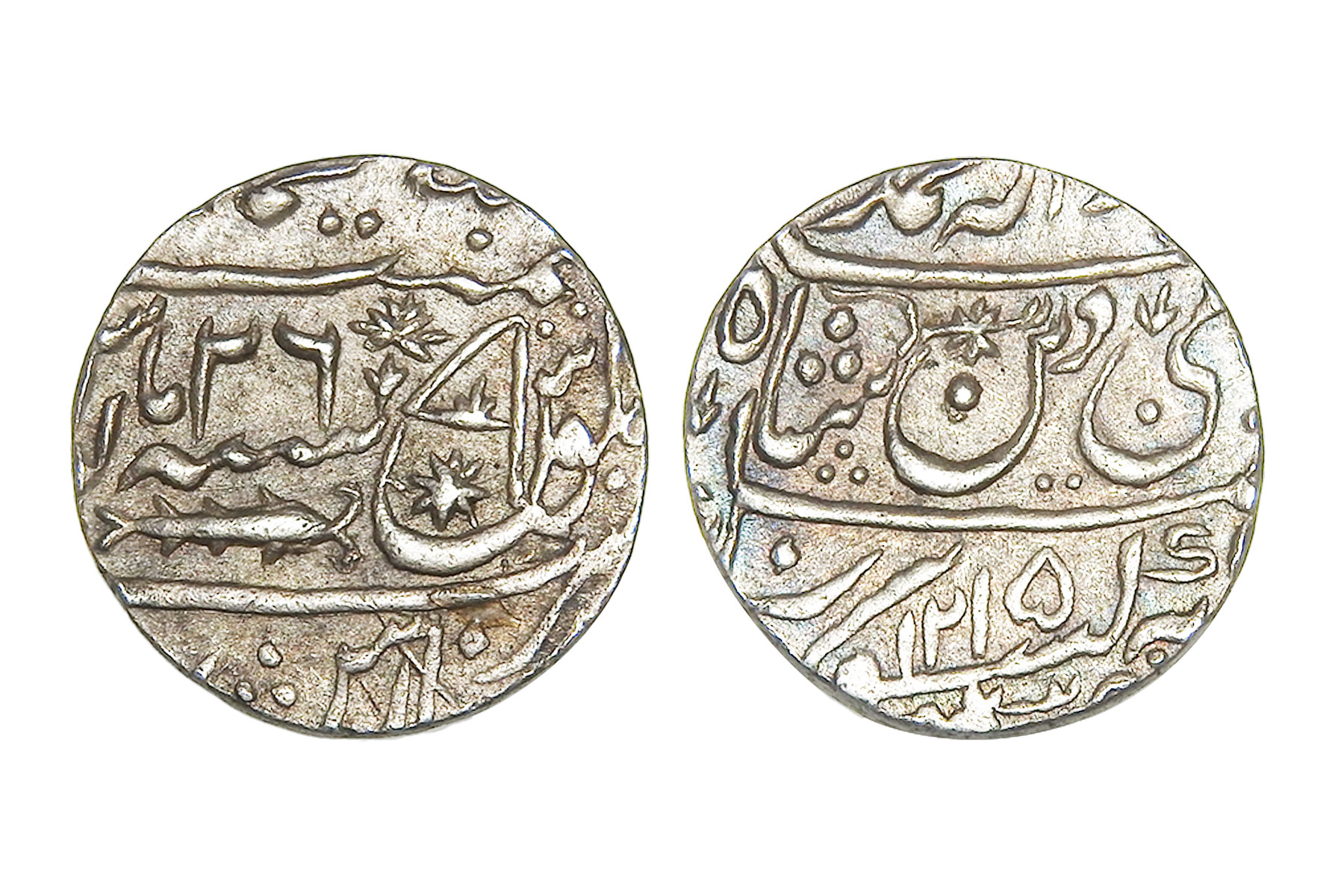
Lot No : 219
Auction No : 8
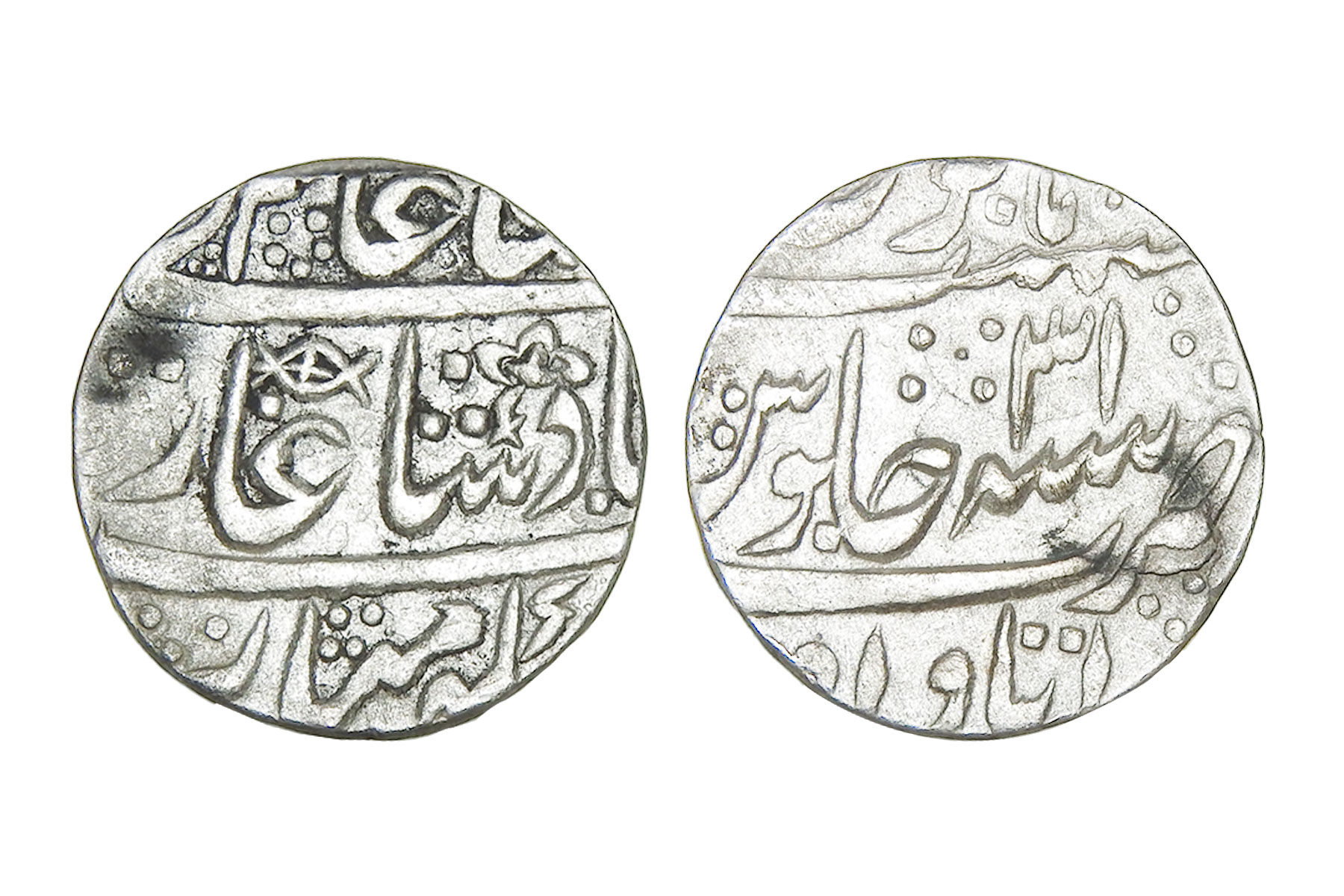
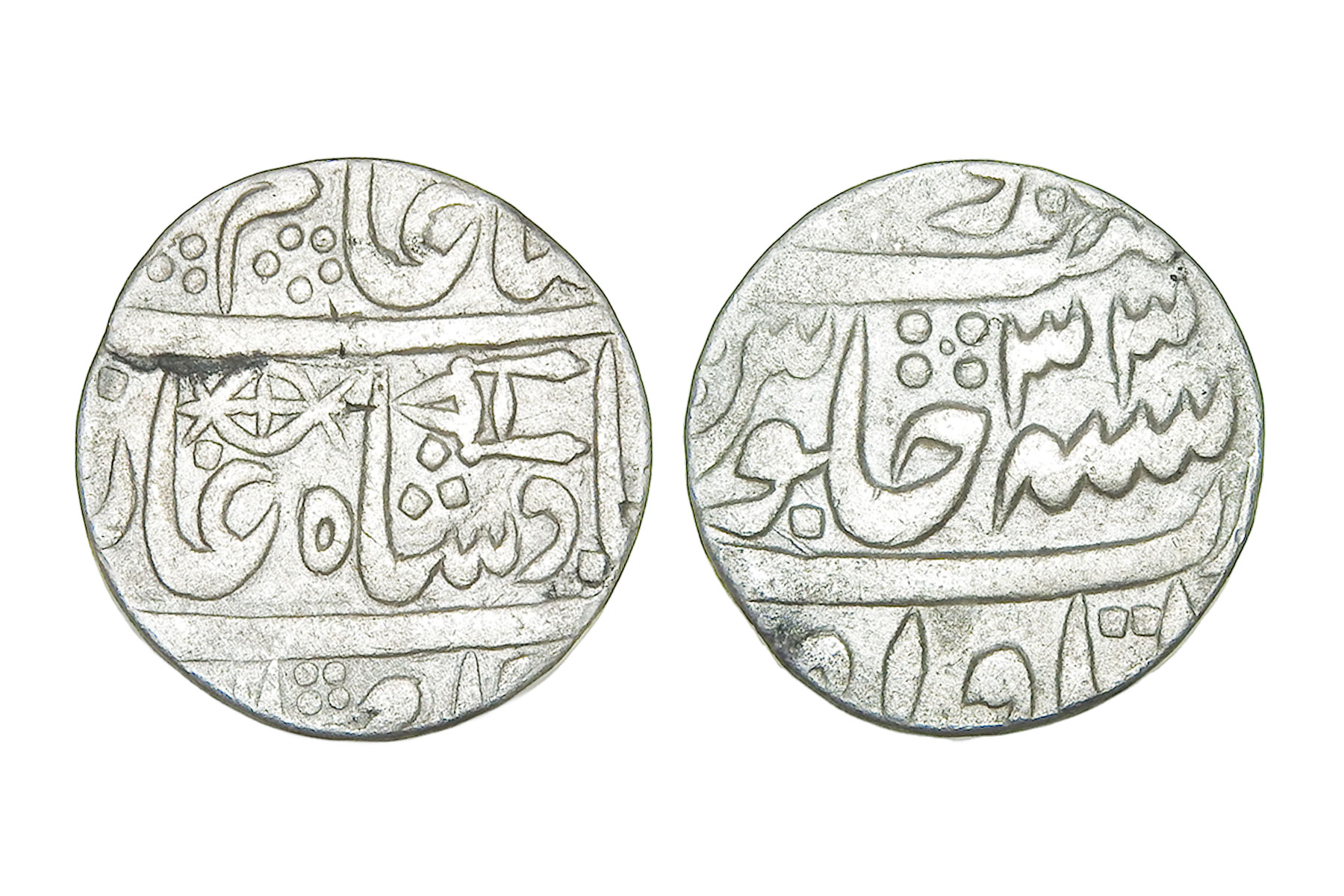
Awadh Nawabs, Sa'adat Ali Khan II(c. 1798–1814CE), Silver Rupee, 11.10grms, AH1215/RY26, Issued in the name of Mughal King Shah- Alam II, Minted at Muhammadabad Banaras, thin and crisp calligraphy since its one of early issues, Floral design and Fish as mintmark, Extra Fine+, Very Scarce. Saʿadat Ali Khan II after succeeding Shuja‑ud‑Daula’s line, ceded half of Awadh to the British in 1801, modernized administration, and developed Lucknow with palaces like Dilkusha Kothi. His reign balanced city construction, reforms, and British political pressure, leaving a lasting architectural and administrative legacy.
4300
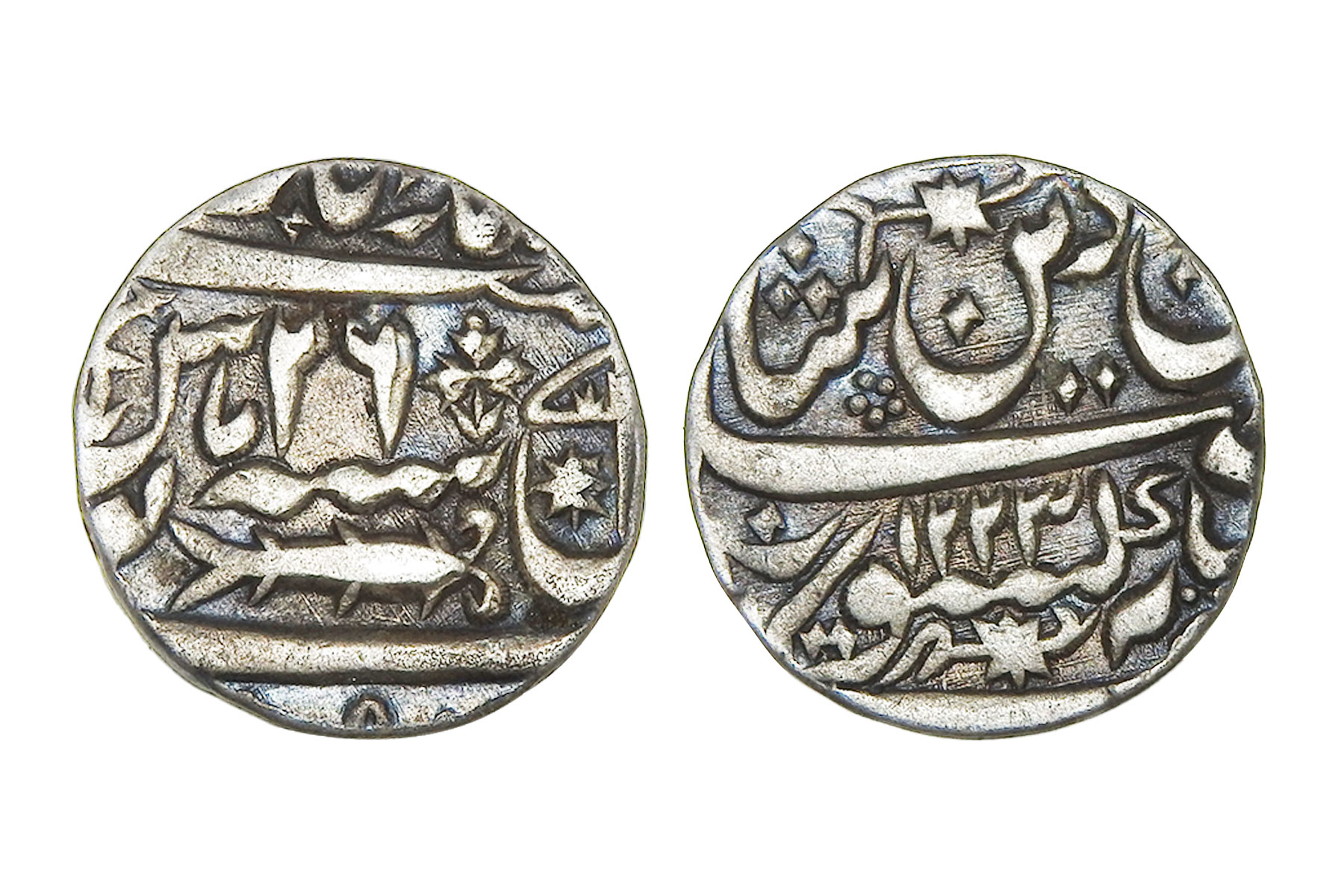
Lot No : 220
Auction No : 8
Awadh Nawabs, Sa'adat Ali Khan II(c. 1798–1814CE), Silver Rupee, 11.10grms, AH1223/RY26, Issued in the name of Mughal King- Shah Alam II, Minted at Muhammadabad Banaras, thin and crisp calligraphy since its one of early issues, Floral design and Fish as mintmark, Extra Fine+, Very Scarce. Saʿadat Ali Khan II after succeeding Shuja‑ud‑Daula’s line, ceded half of Awadh to the British in 1801, modernized administration, and developed Lucknow with palaces like Dilkusha Kothi. His reign balanced city construction, reforms, and British political pressure, leaving a lasting architectural and administrative legacy
4300
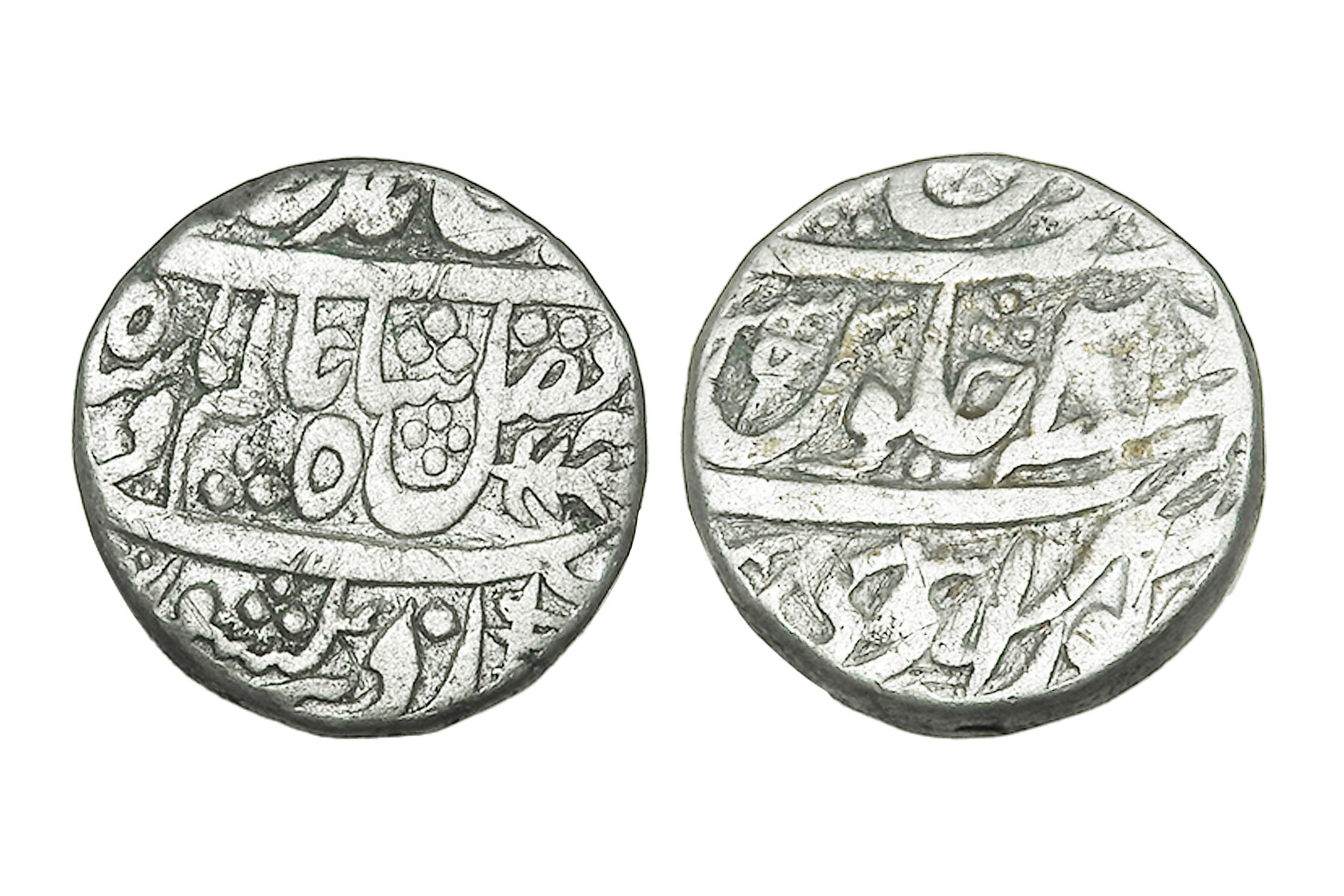
Lot No : 221
Auction No : 8
Awadh Nawabs, Asaf-ud-Daula (c. 1775–1797CE), Silver Rupee, 10.90grms, AH(1194)/RY20, Issued in the name of Mughal King- Shah Alam II, Minted at Kora, Horizontal fish as mintmark, Fazl-I-Shah Alam legend, Very Fine+, Scarce. Asaf-ud-Daula modernized administration, patronized arts, and transformed Lucknow with monumental projects like the Bara Imambara. Balancing court politics and growing British influence, his reign combined architectural grandeur, fiscal reforms, and strategic diplomacy, leaving a lasting cultural and political legacy
 WhatsApp