
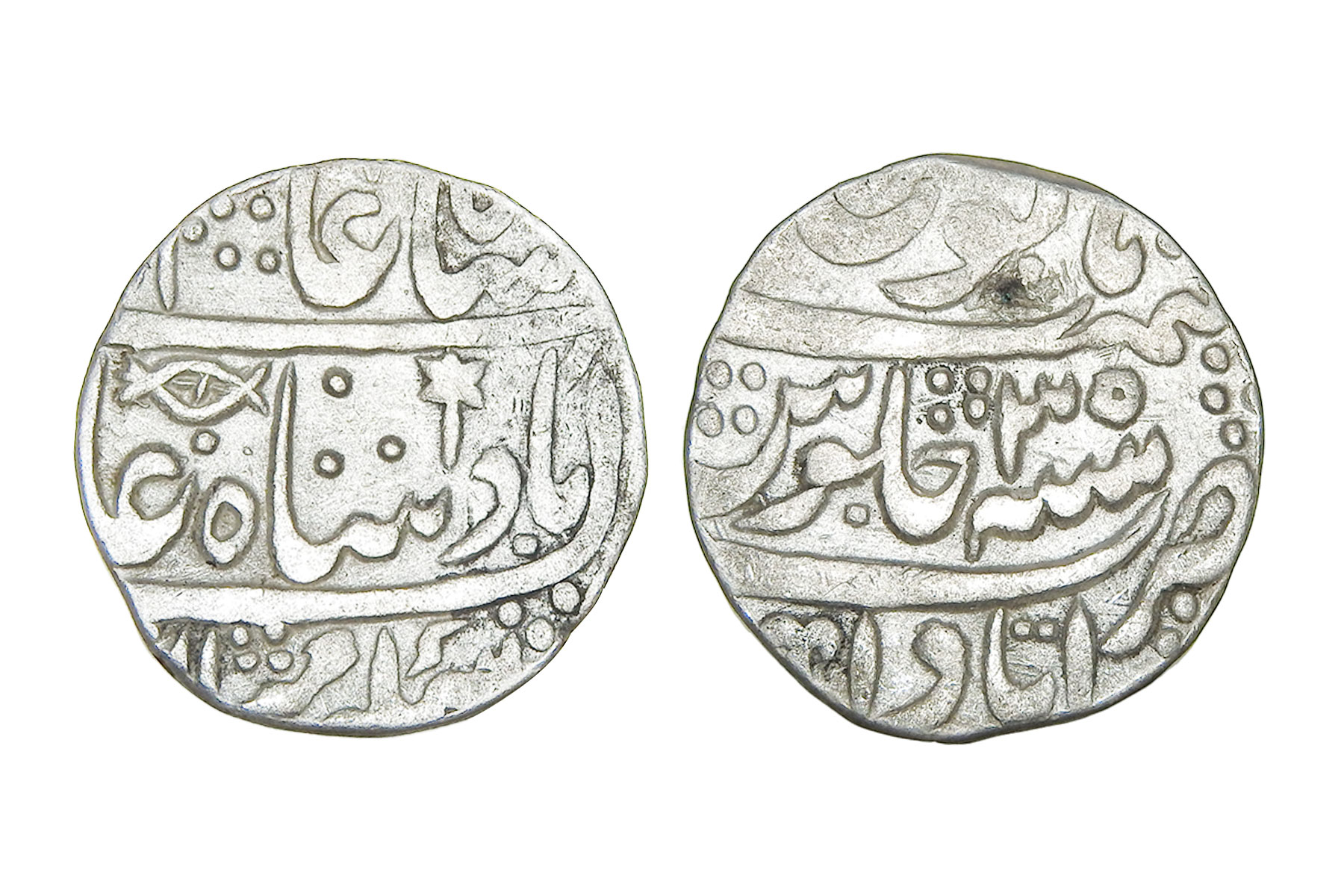
Lot No : 226
Auction No : 8
Awadh State, Ghazi ud-din Haidar (c. 1819-1827CE), Silver Nazarana Rupee, AH1236/RY02, dotted border with complete flan, Minted at Lucknow, Obv. Coat of arms of the king, Extra Fine, Rare. Ghazi-ud-Din Haidar was the last Nawab and first King of Awadh, elevated by the British in 1818, marking a shift from Mughal nominal authority to semi-sovereign rule. He modernized administration, strengthened the army, and commissioned grand palaces in Lucknow, including Chhota Imambara. His reign balanced internal reforms with diplomacy under British suzerainty, yet he clashed over revenue demands and territorial control, asserting authority while avoiding direct conflict. Ghazi-ud-Din Haidar’s era represents the transition of Awadh from Nawabship to kingship, blending architectural legacy, political reform, and complex British relations.
17000
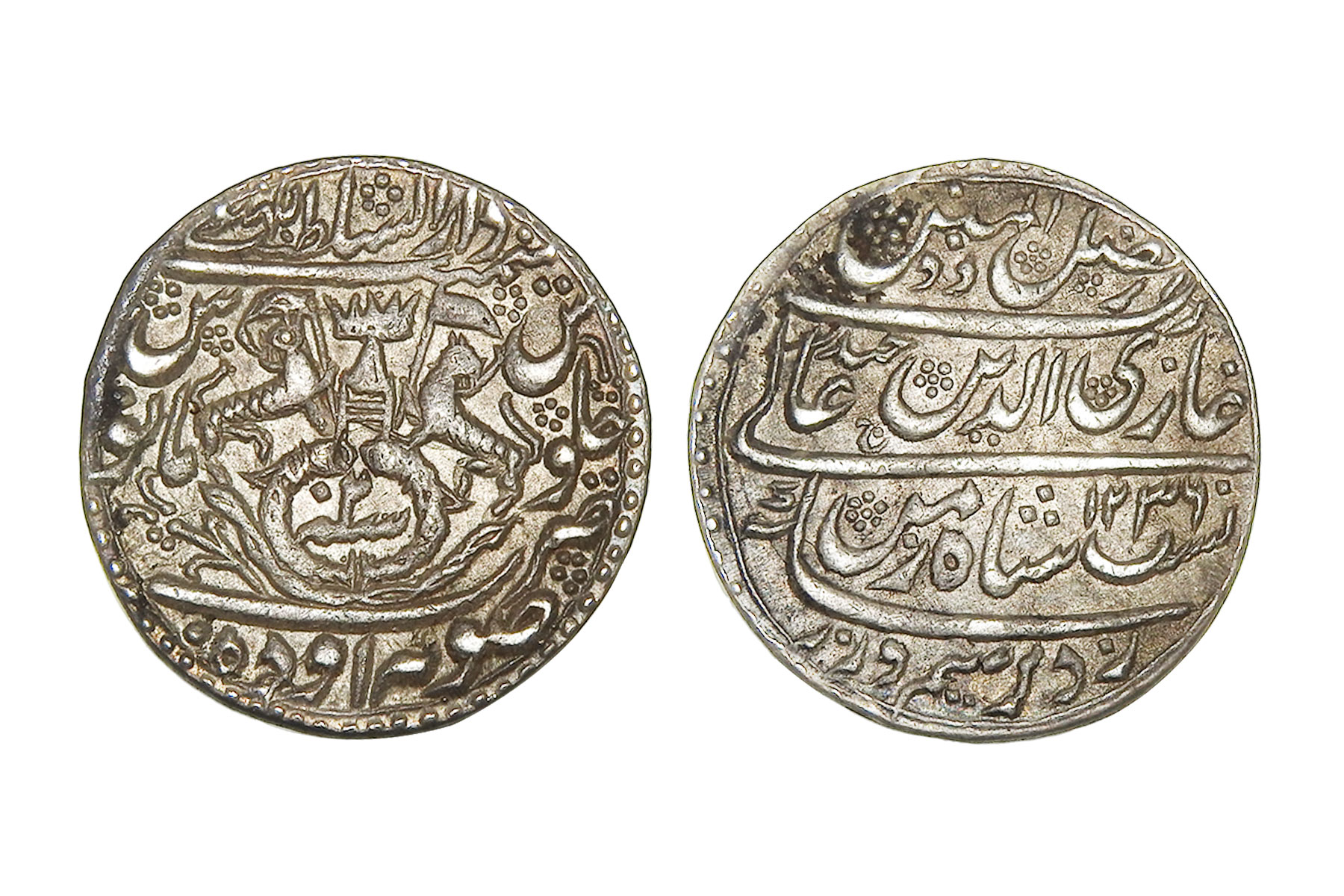
Lot No : 227
Auction No : 8
Awadh State, Nasir ud-din Haidar(c. 1827-1837CE), Silver Rupee, AH1251/RY08, Obv. Coat of arms of the king, Complete die impression on both sides probably struck with the 1/4 rupee die since the flan size is small in comparison, Minted in Lucknow, Unlisted date in KM, Beautiful wooden cabinet platina on bothside, Extra Fine+, Very Rare (being offered first time in any auction).Nasir‑ud‑Din Haidar Shah was the second King of Awadh, succeeding Ghazi-ud-Din Haidar. He expanded Farhat Bakhsh Palace, built Darshan Vilas and Tara Wala Kothi, promoting arts and astronomy. His reign faced court intrigues, political instability, and growing British influence, ending with his death by poisoning
13000
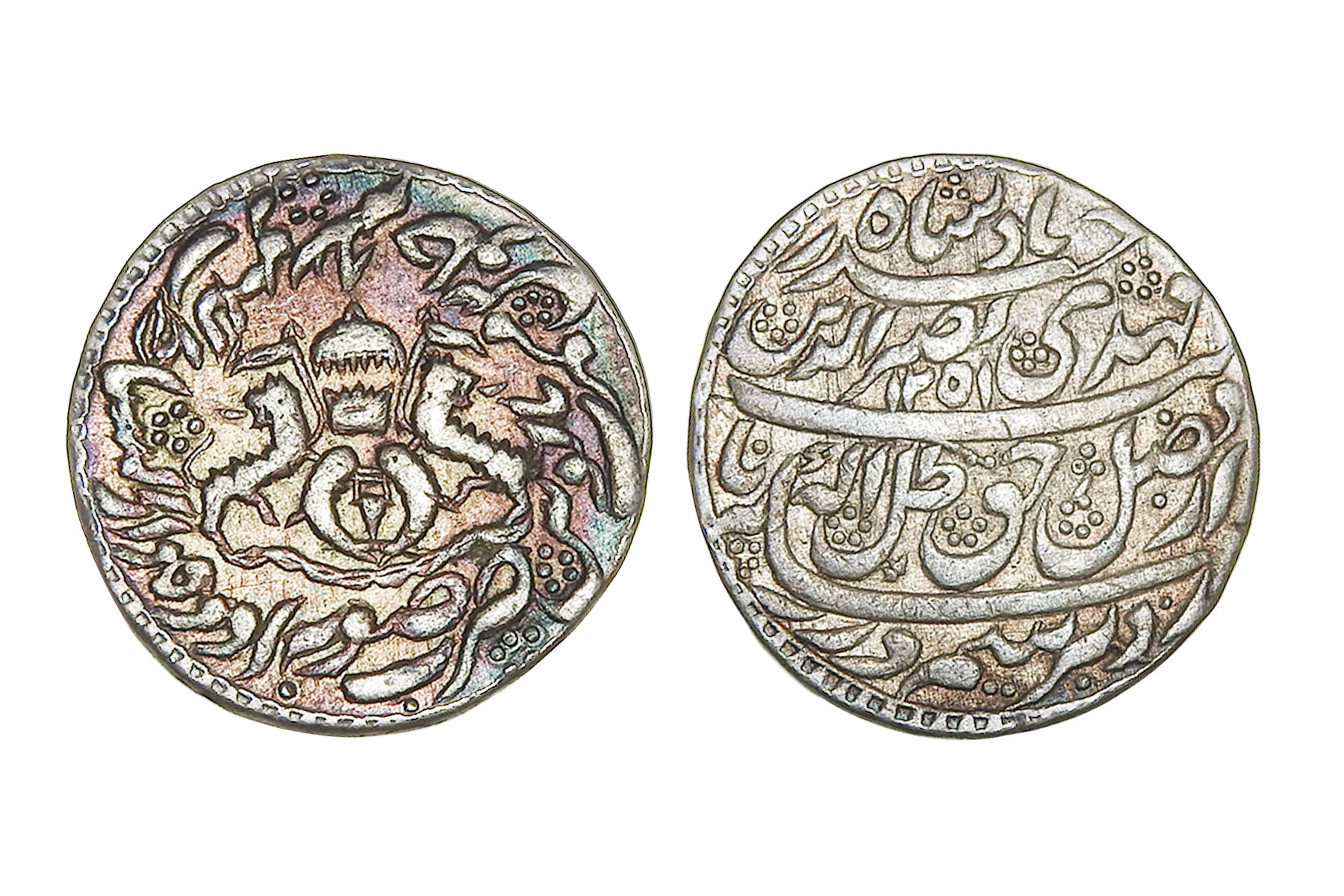
Lot No : 228
Auction No : 8
Awadh State, Wajid ali-Shah(c. 1847-1856CE), Silver Rupee, 11.20grms, AH1263/RY01, Obv. Coat of arms of the king, Complete die impression on both sides, First year issue, Minted at Muhammadabad Banaras, Extra Fine+, Early verity, Rare. Wajid Ali Shah was the last King of Awadh, renowned for his patronage of music, dance, and arts, especially Kathak. He built Imambaras, gardens, and palaces in Lucknow, including the famous Qaiserbagh complex. His reign was marked by weak political authority and mounting British interference, culminating in his deposition by the British in 1856, after which Awadh was annexed. He spent the rest of his life in exile in Calcutta, continuing his cultural patronage but losing political power entirely.
11000
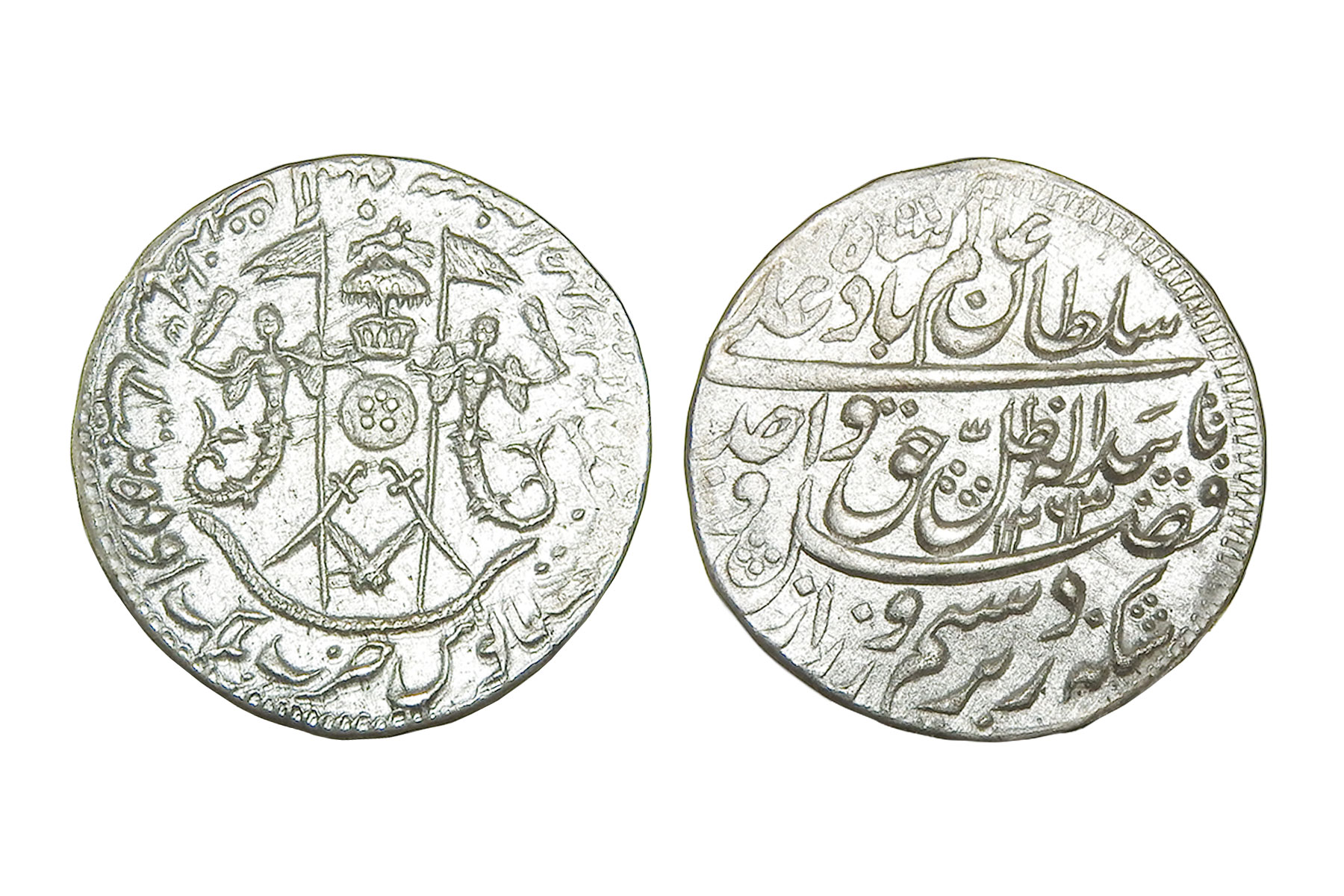
Lot No : 229
Auction No : 8
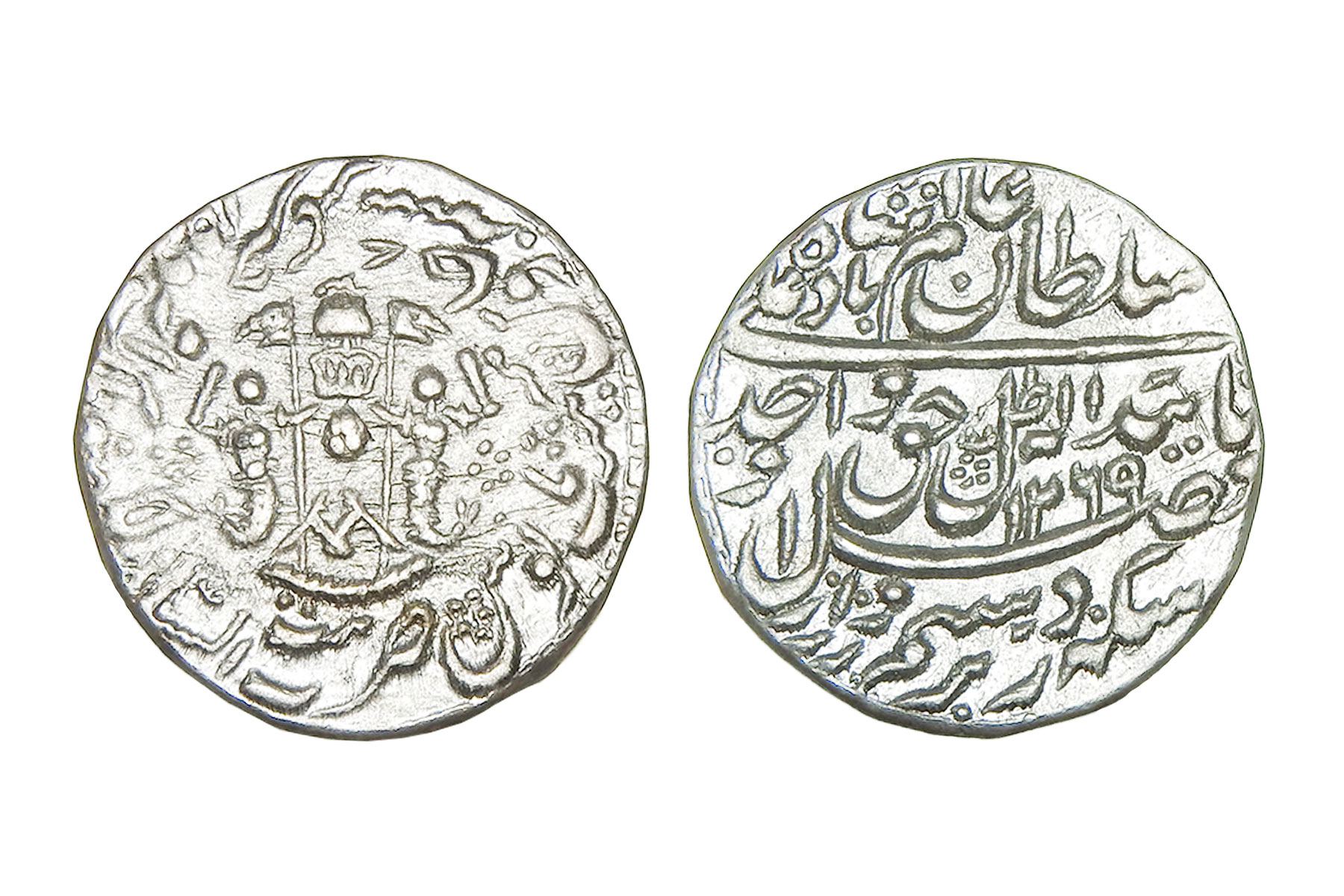
Awadh State, Wajid ali-Shah(c. 1847-1856CE), Silver Rupee, 11.20grms, AH1269/RY07, Obv. Coat of arms of the king, Complete die impression on both sides, Minted at Muhammadabad Banaras, Extra Fine, Bold callagraphy, Very Scarce.Wajid Ali Shah was the last King of Awadh, renowned for his patronage of music, dance, and arts, especially Kathak. He built Imambaras, gardens, and palaces in Lucknow, including the famous Qaiserbagh complex. His reign was marked by weak political authority and mounting British interference, culminating in his deposition by the British in 1856, after which Awadh was annexed. He spent the rest of his life in exile in Calcutta, continuing his cultural patronage but losing political power entirely
11000
Lot No : 230
Auction No : 8
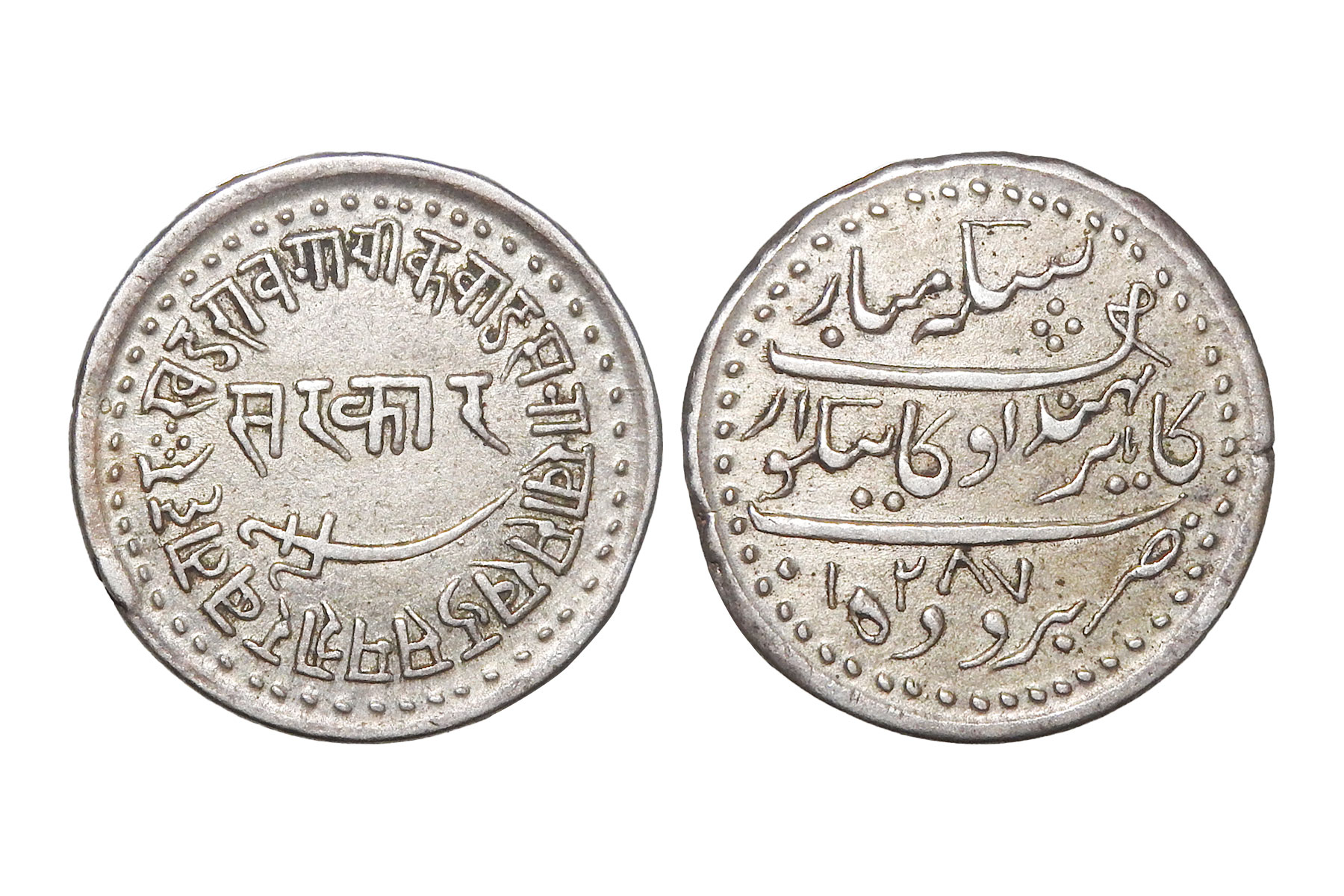
Baroda State, Khande Rao II Gaekwad(c. 1856-1870CE), Silver Nazarana Rupee, 11.40grms, AH1287, Obv. Nagari legend with kings name and sword as mintmark, Rev. Persian legend translating to commander of the sovereign band, Gem Uncirculated, Cross mark on the rim probably by the mint master, Very Rare in this condition. Khande Rao II Gaekwad succeeded his brother Ganpat Rao. He modernized infrastructure, strengthened the army, and promoted public works, including the Gaekwar’s Baroda State Railway. He commissioned the famous Pearl Carpet for Medina. His reign maintained loyalty to the British, balancing traditional authority with colonial oversight. Khande Rao’s sudden death in 1870 marked a brief but impactful period in Baroda’s political and cultural history.
30000
Lot No : 231
Auction No : 8
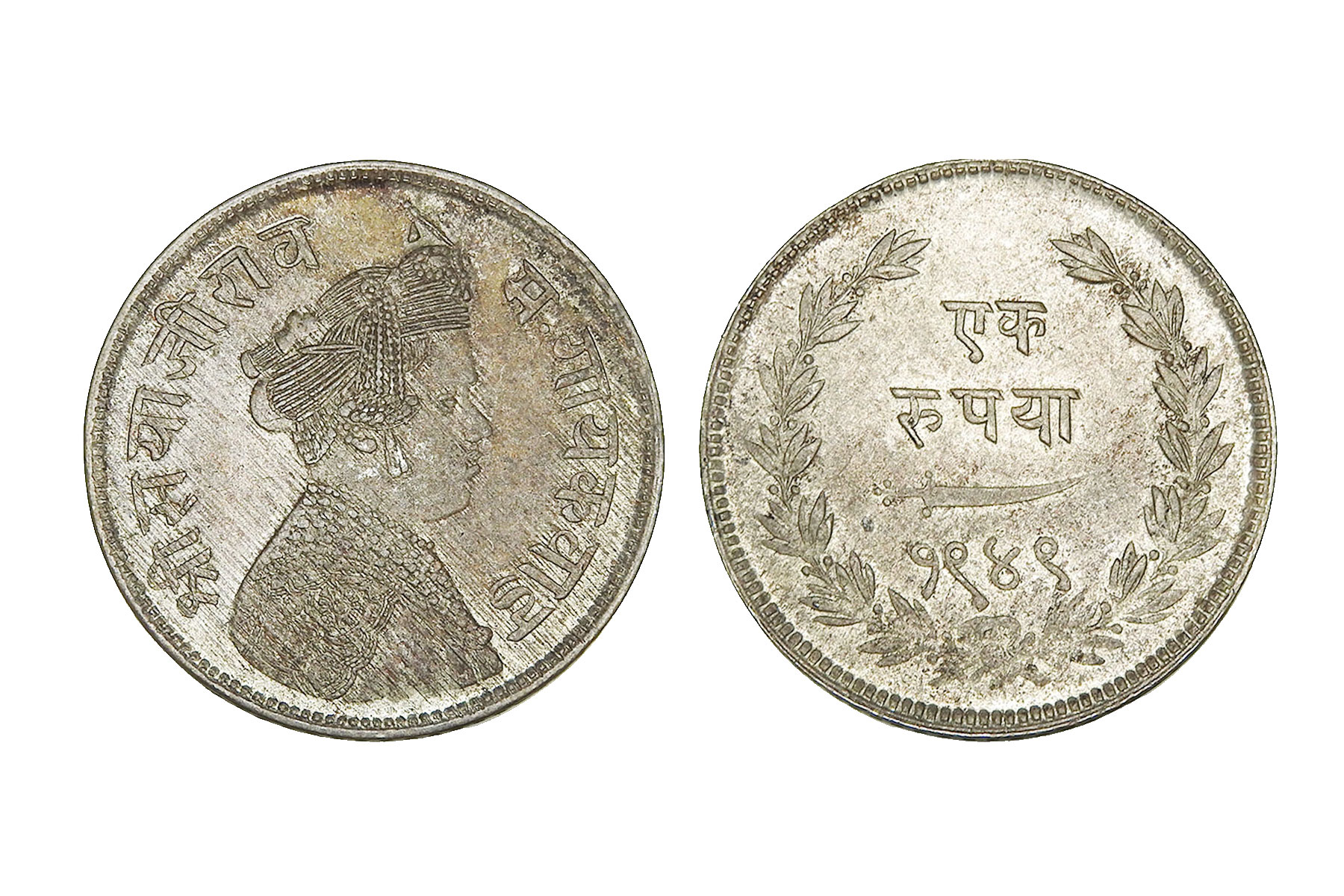
Baroda State, Sayaji Rao III Gaekwad(c. 1875-1938CE), Silver Rupee, 11.30grms, VS1949, Obv. Nagari legend "ek rupia" with sword which is the mint mark and date, Rev. Bust of the king facing right with name of the king, Gem Uncirculated with Cross lines on the reverse side indicating freshly made dies, beautiful brown platina on both side, Very Rare in this condition. Sayaji Rao III Gaekwad was the most progressive ruler of Baroda State, known for sweeping administrative, social, and educational reforms. He introduced free and compulsory primary education, modernized revenue and judiciary systems, and promoted industrial development. He patronized scholars like B. R. Ambedkar. Though ruling under British suzerainty, he asserted internal autonomy, making Baroda a model princely state in India
7000
Lot No : 232
Auction No : 8
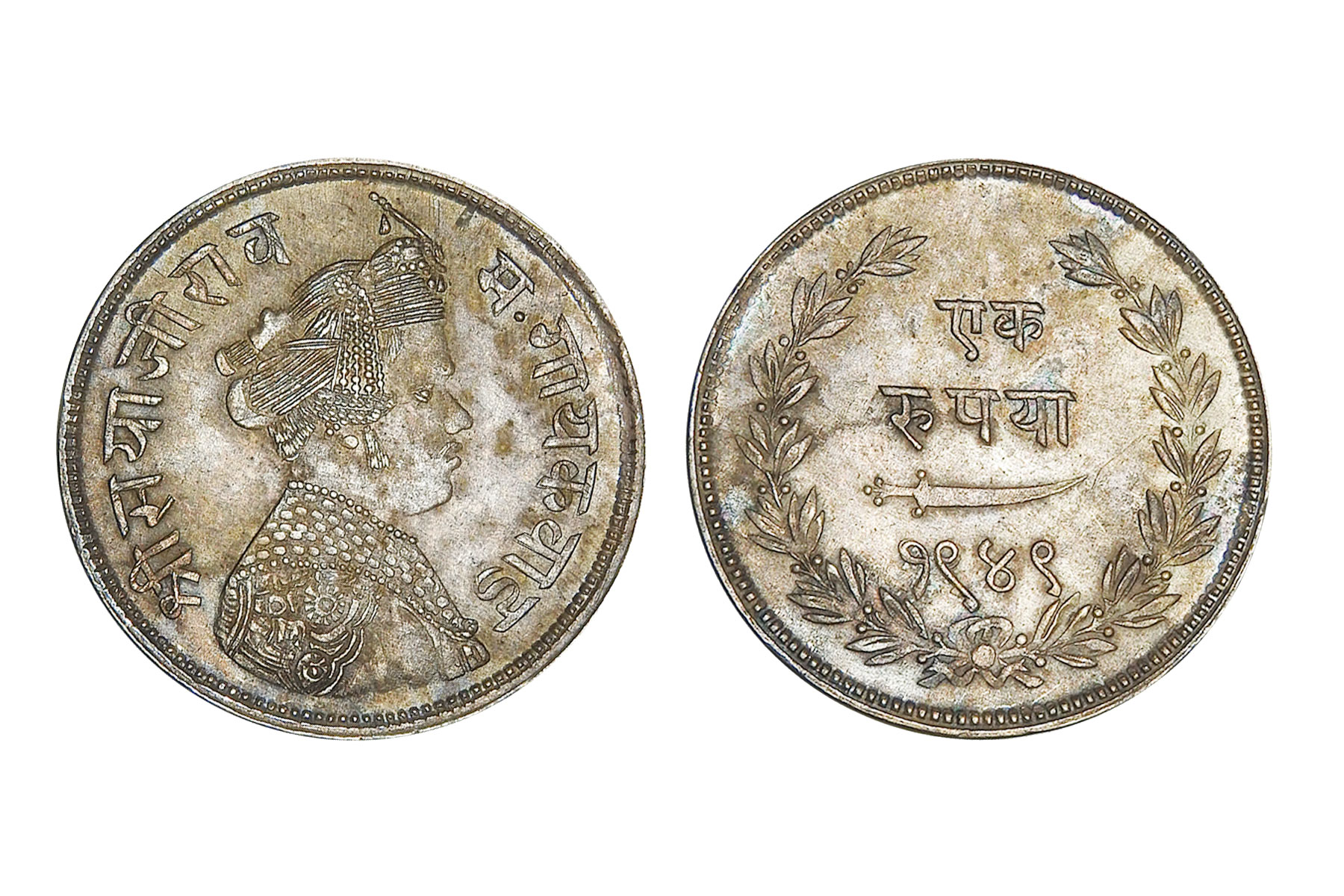
Baroda State, Sayaji Rao III Gaekwad(c. 1875-1938CE), Silver Rupee, 11.30grms, VS1949, Obv. Nagari legend "ek rupia" with sword which is the mint mark and date, Rev. Bust of the king facing right with name of the king, Gem Uncirculated with rainbow wooden cabinet platina on both sides, Very Rare in this condition. Sayaji Rao III Gaekwad was the most progressive ruler of Baroda State, known for sweeping administrative, social, and educational reforms. He introduced free and compulsory primary education, modernized revenue and judiciary systems, and promoted industrial development. He patronized scholars like B. R. Ambedkar. Though ruling under British suzerainty, he asserted internal autonomy, making Baroda a model princely state in India
7500
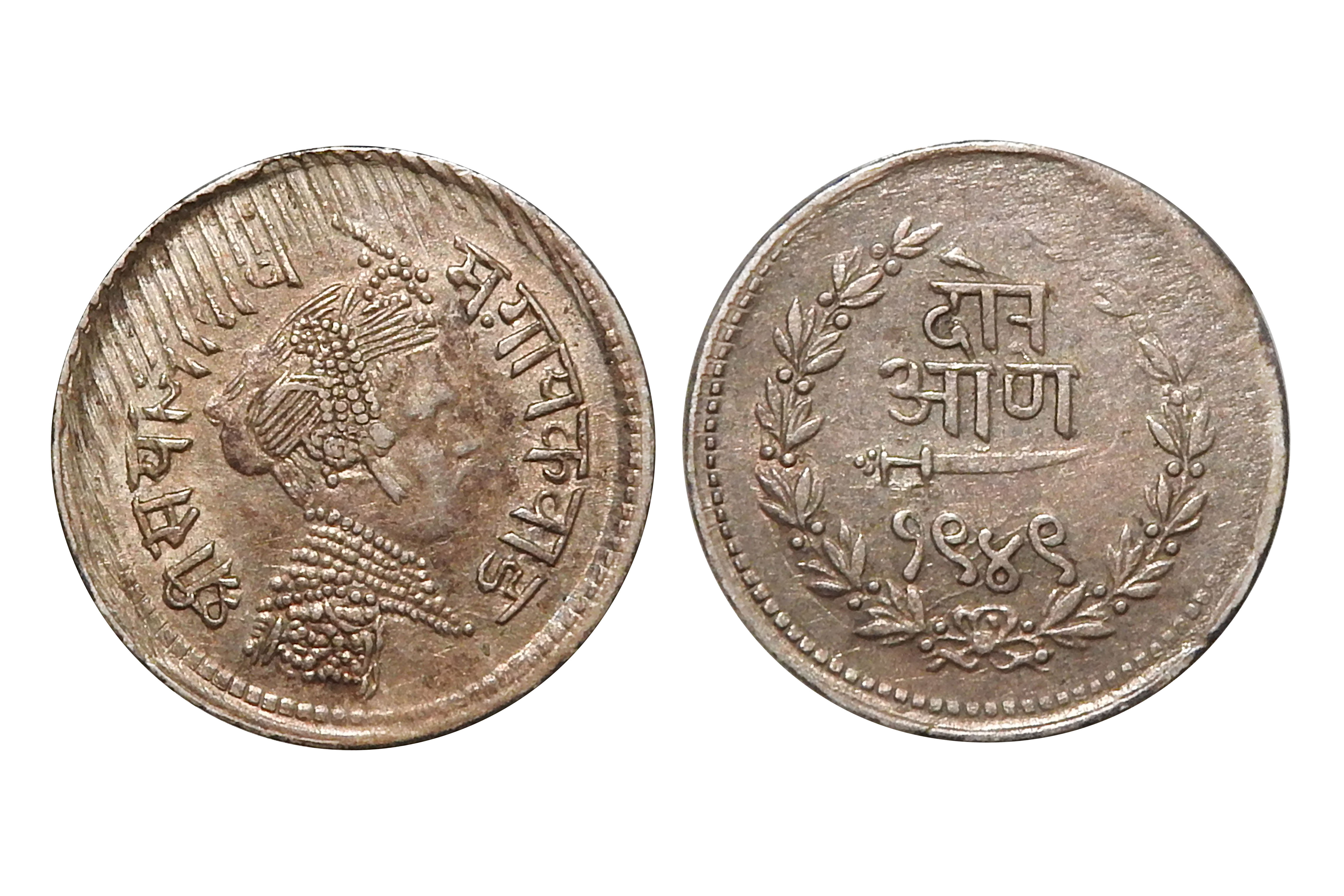
Lot No : 233
Auction No : 8
Baroda State, Sayaji Rao III Gaekwad(c. 1875-1938CE), Silver 2 annas, 1.40grms, VS1949, Obv. Nagari legend "do anna" with sword which is the mint mark and date, Rev. Bust of the king facing right with name of the king, Gem Uncirculated with Cross lines on the reverse side indicating freshly made dies, Very Scarce. Sayaji Rao III Gaekwad was the most progressive ruler of Baroda State, known for sweeping administrative, social, and educational reforms. He introduced free and compulsory primary education, modernized revenue and judiciary systems, and promoted industrial development. He patronized scholars like B. R. Ambedkar. Though ruling under British suzerainty, he asserted internal autonomy, making Baroda a model princely state in India.
4300
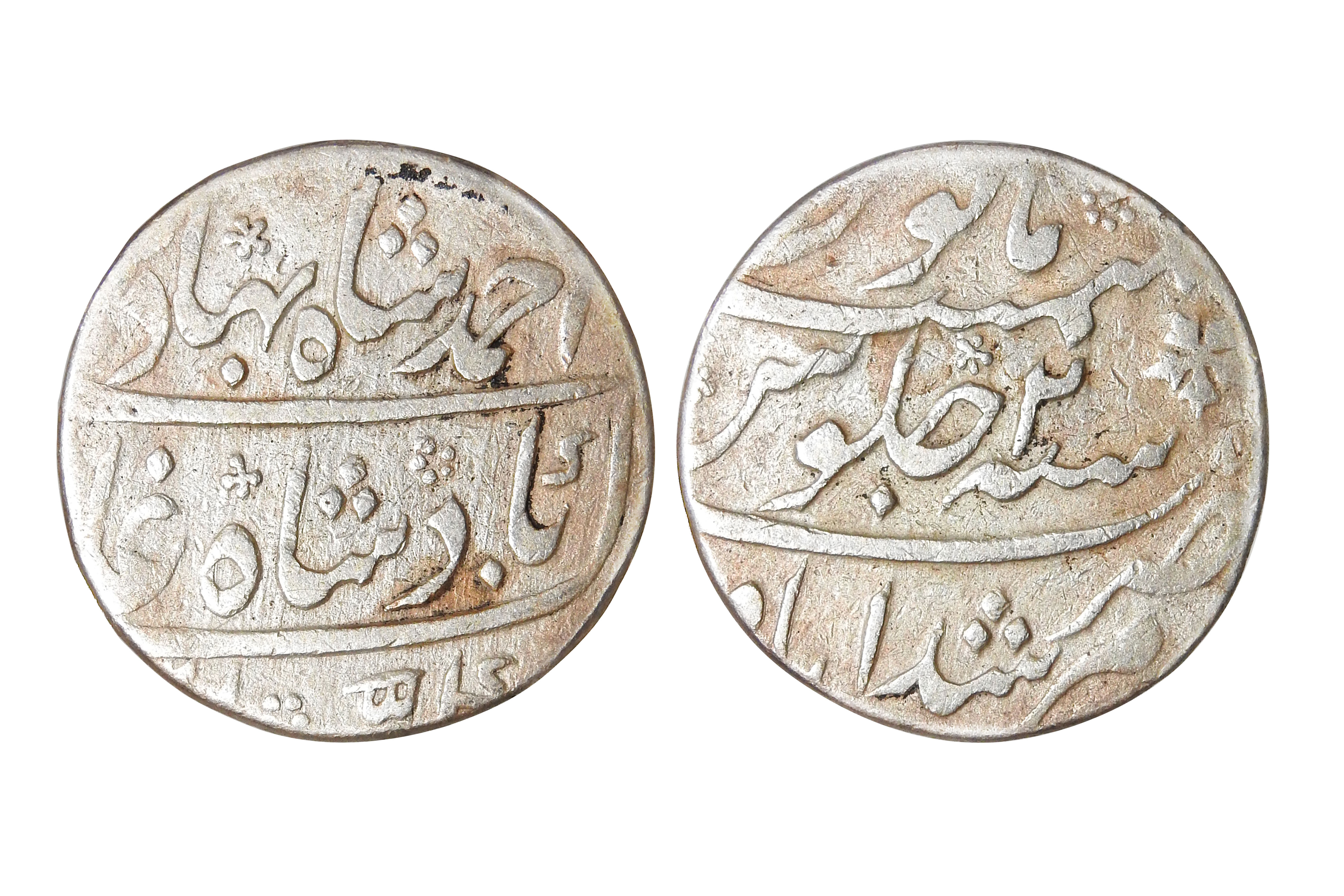
Lot No : 234
Auction No : 8
Bengal Nawabs, Alivardi Khan (c. 1676–1756CE), Silver Nazarana Rupee, 11.10grms, RY02, Issued in the name of Mughal King- Ahmed Shah Bahadur, Minted at Murshidabad, Very Fine+, Exceedingly Rare, Being offered for the first time in any auction. Alivardi Khan was the fourth Nawab of Bengal, Bihar, and Orissa, ruling from 1740 to 1756 after overthrowing Sarfaraz Khan and ending the Nasiri dynasty. His reign was dominated by repeated Maratha invasions under Raghuji Bhonsle, which devastated Bengal and forced the cession of Orissa in 1751. He also suppressed rebellions in Bihar and internal challenges, including tensions with his grandson Siraj-ud-Daulah. Alivardi later focused on rebuilding Bengal, patronized the arts, revived the fiscal policies of Murshid Quli Khan, and maintained strict neutrality toward European powers, preventing their conflicts within his territories. He was succeeded by Siraj-ud-Daulah in 1756.
 WhatsApp