
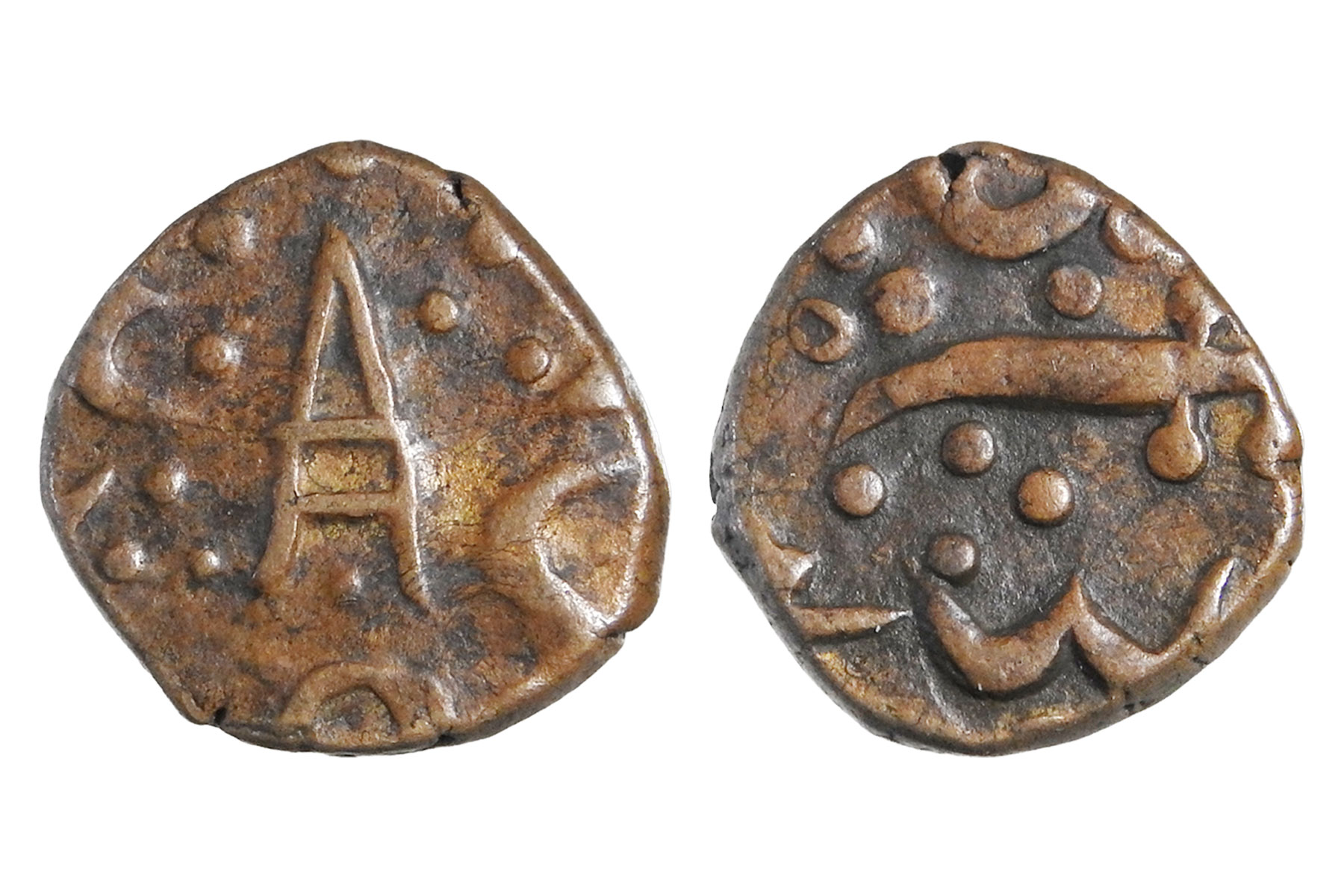
Lot No : 245
Auction No : 8
Dhar State, Kaccha 1/4 Paisa, 4.20grms, Obv. Katar with illegible Pasian legend surrounding the motif, Rev. Sword with Pasian legend surrounding the motif, Extra Fine+, Unlisted and Rare. Kaccha paisas were low-value copper coins used in India for everyday local transactions, especially in princely states and rural markets. The term kaccha means unofficial or loosely regulated, distinguishing them from pakka (official) coinage. These coins were often crudely struck, irregular in shape and weight, and issued by local rulers, zamindars, or mints without strict imperial standards. Kaccha paisas circulated alongside Mughal, Company, and princely coins, particularly during periods of weak central authority. Their variable quality reflects local economic needs rather than state-controlled monetary uniformity.
900

Lot No : 246
Auction No : 8
Gadwal State, Peda Reddy family of the Somanadri lineage, Silver Rupee, 11.30grms, Issued in the name of Mughal King- Shah Alam II, Feudatory issue under the Nizam of Hyderabad, AH1186/RY11, Extra Fine+, Rare. The Gadwal Deshmukhs governed parts of the Raichur Doab, providing military and administrative support to the Nizam. Known for temple patronage and the celebrated Gadwal sarees, their legacy blends governance, culture, and regional identity.
6000
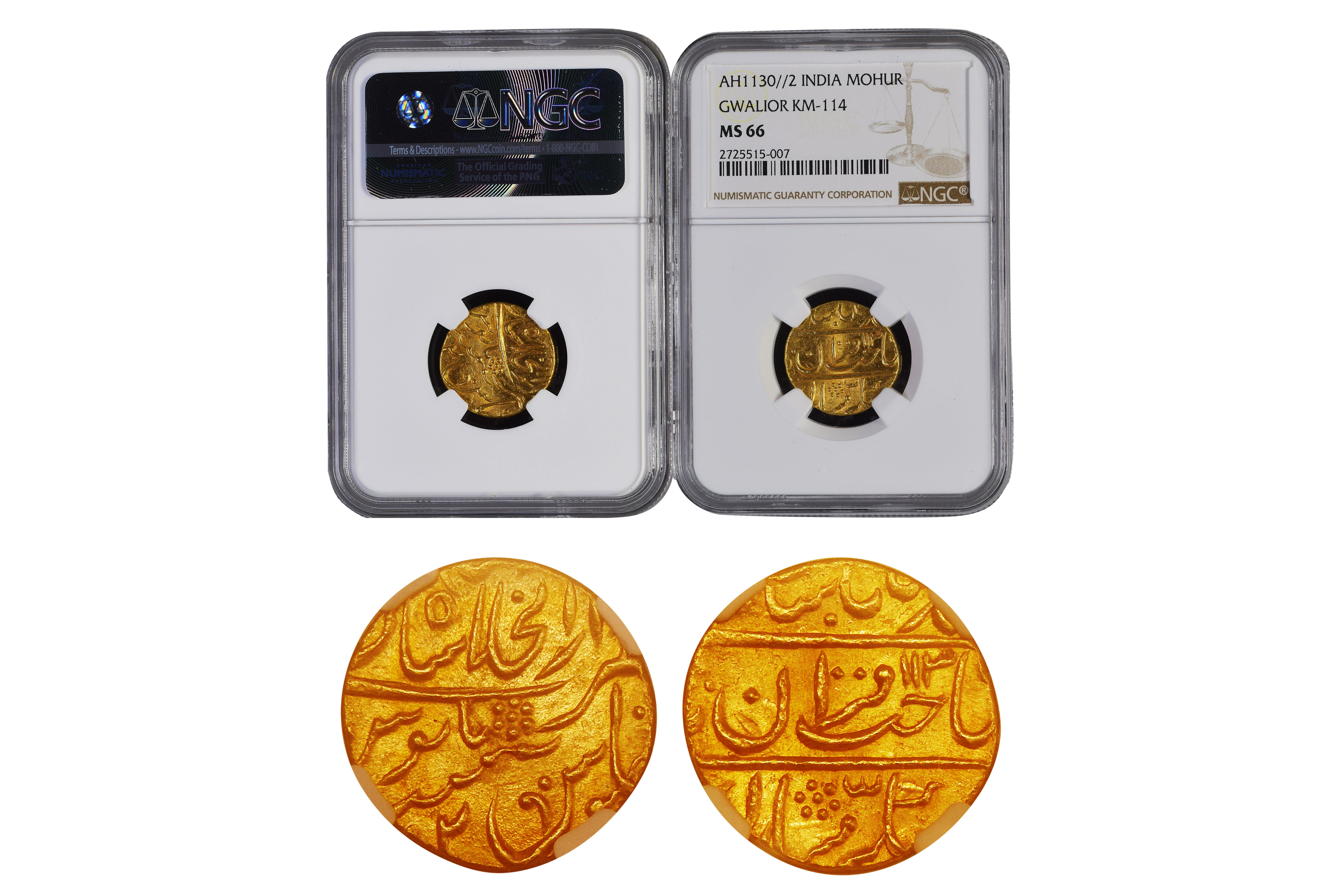
Lot No : 247
Auction No : 8
Gwalior State, Jankoji Rao(c. 1827-1843CE), Gold Mohur, MS66, Issued in the name of Mughal Emperor- Muhammad Shah, AH1130/RY02(Frozen), Minted at Lashkar, Mint State 66/ Top-Pop, Highest grade recorded by NGC - Worldwide, Very Rare Jankoji Rao Scindia was known for consolidating Maratha authority in North India during a turbulent political phase. He navigated conflicts with rival Maratha factions and external powers while maintaining control over Gwalior’s strategic fort and strengthening the state’s military position.
180000

Lot No : 248
Auction No : 8
Hyderabad State, Nizam Ali Khan a.k.a Asaf Jah II (c. 1762–1803 CE), Gold Pagoda, 3.38grms, Minted in Imtiyazgarh(Adoni), Obv. Shah Alam Sani insted of Shah Ali Gauhar with date AH1201, Rev. Mint name, Extremelly fine specimen with a great historic transformation, Very Rare. By AH 1201 (1786–1787 CE), Nizam Ali Khan (Asaf Jah II) had long established his authority as Nizam of Hyderabad—a position he consolidated after seizing power from his brother in 1762 and ending French dominance in Hyderabad’s court. During this period the Deccan was contested by multiple powers, and Adoni (Imtiyazgarh) stood as a key frontier fort on the southern edge of Hyderabad’s sphere. In 1786, Adoni was besieged by Tipu Sultan of Mysore, with forces of the Nizam and the Maratha Confederacy attempting to defend it; after a protracted siege, Tipu’s army successfully captured the fort, demonstrating the intense military pressure on Hyderabad’s territories. Nizam Ali Khan’s reign was marked by continuous wars against emerging powers like Mysore and the Marathas and shifting alliances, including cooperation with British forces later in his rule. For the people around Adoni in AH 1201, this meant a landscape shaped by conflict, fortified defenses, and local adaptation to the ebb and flow of regional power struggles, even as centralized Mughal authority declined.
100000
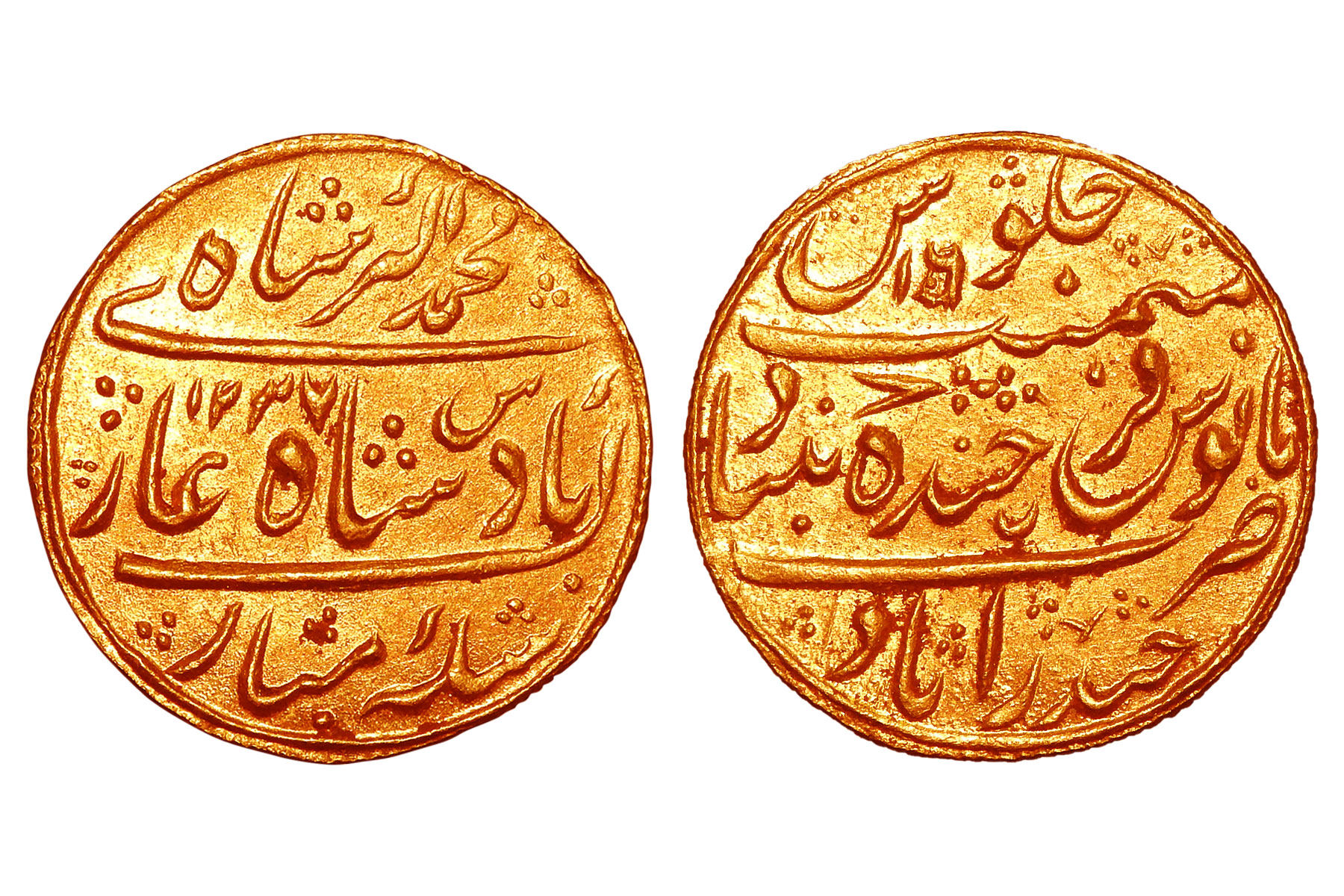
Lot No : 249
Auction No : 8
Hyderabad State, Sikandar Jah(c. 1803-1829CE), Gold Nazarana Mohur, 11.10grms, Oblique Milling, Mined in the name of Mughal Ruler- Muhammad Akbar II, Minted at Farkhanda Bunyad, AH1237/RY16 (re-engraved on RY15), Gem Uncirculated, Mint State, A magnificent Nazarana Mohur of exceptional presence, glowing with a rich, deeply mirrored luster that scintillates beautifully under light. The strike is razor-sharp, with every device and legend fully brought up, exhibiting remarkable precision and clarity. Surfaces are pristine and undisturbed, enhancing its commanding visual appeal. Sikandar Jah, also known as Mir Akbar Ali Khan Siddiqi, was the third Nizam of Hyderabad, He succeeded his father, Nizam Ali Khan (Asaf Jah II), at a time when the political landscape of India was increasingly shaped by British expansion. During his reign, Hyderabad remained one of the most powerful princely states in the Deccan, but its sovereignty operated under the growing influence of the British East India Company due to earlier subsidiary alliance arrangements. A significant development during his rule was the formal establishment of a British cantonment near Hyderabad, which was later named Secunderabad in his honor. This marked a deeper British military presence within his territory. While Sikandar Jah maintained internal authority over his dominions, external affairs and military matters were heavily influenced by British political interests. He ruled for over two decades before his death in 1829, after which he was succeeded by his son, Nasir-ud-Daulah.
 WhatsApp